
Blooming
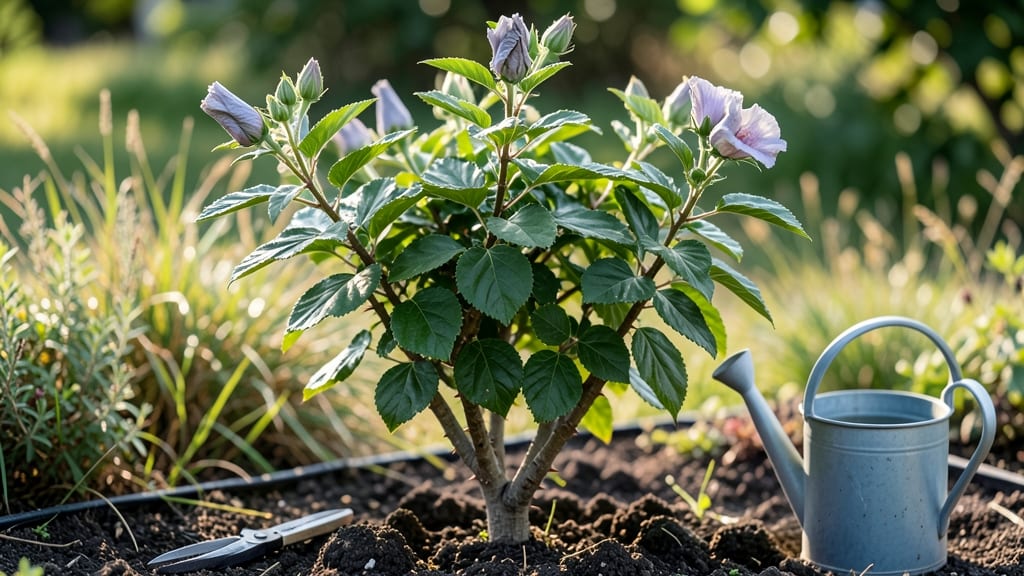
Before blooming, Rose of Sharon shows clusters of elongated, dark green buds with subtle reddish or purple hints at the base. Prune dead stems in late winter and feed with balanced fertilizer in early spring to set up showstopping summer flowers.
Recognizing these pre-bloom buds is key to timing your care right. 🌱 The buds typically form in late spring after the plant emerges from dormancy, growing in tight clusters along the woody stems.
What many gardeners miss is that these buds need strong stems to support their eventual blooms—so pruning out weak growth now prevents floppy flowers later. I always check for firm, plump buds rather than shriveled ones, as that tells me the plant is storing energy for the big show ahead.
For the best results, combine your late-winter pruning with a soil boost. Rose of Sharon thrives in well-draining soil with a pH between 6.0-7.0. Adding compost or a slow-release fertilizer in early spring gives roots the nutrients they need to produce those vibrant summer blooms.
Think of it like prepping a stage for a performance—the stronger the foundation, the more spectacular the finale.
💡 In This Article
- Identifying Rose of Sharon Buds and Growth Stages
- Pruning and Soil Prep for Peak Rose of Sharon Blooms
Identifying Rose of Sharon buds and growth stages
The pre-bloom buds of Rose of Sharon (Hibiscus syriacus) are fascinating botanical structures that reveal the plant's growth secrets. These buds form in late spring as the plant emerges from its winter dormancy, appearing as elongated, cylindrical shapes typically 1-2 inches long.
Their dark green color often develops subtle reddish or purplish undertones at the base, especially when exposed to cooler temperatures or morning sunlight. This color shift isn't just aesthetic—it's a sign of the plant's internal processes preparing for photosynthesis and energy storage.
What makes these buds unique is their woody stem attachment. Unlike many flowering plants, Rose of Sharon buds grow directly from the previous year's wood, which means they need strong structural support. The buds feel firm to the touch when healthy, almost like small, closed fists.
You'll notice they grow in tight clusters along the stems, with each cluster capable of producing 3-5 blooms once fully developed. The texture is slightly waxy, which helps protect them from early spring rains and pests. 🌱
Understanding the plant's dormancy cycle is crucial for identification. Rose of Sharon enters dormancy in late fall, shedding leaves to conserve energy. The buds begin forming in late winter as temperatures rise above 40°F, but they remain dormant until spring warmth triggers growth.
This is why pruning in late winter (before buds swell) is critical—it removes dead wood while preserving next year's blooms. Look for buds that are plump and upright rather than shriveled or drooping, which could indicate disease or nutrient deficiency.
Differentiating between healthy growth and disease signs requires close inspection. Healthy buds should have smooth surfaces without bumps or discoloration. Common issues include fungal spots (dark brown patches) or wilting (soft, mushy texture), both of which suggest overwatering or poor air circulation.
The leaves emerging alongside buds should be glossy and green, not yellowed or spotted. A quick sniff test can also help—healthy buds have a faint, sweet aroma, while diseased ones may smell musty or sour.
Consider these key factors when assessing your plant's health:
- Bud shape: Elongated and firm, not rounded or hollow
- Stem attachment: Directly on woody stems, not leaf axils
- Color variations: Dark green with subtle reddish/purple hints at base
- Cluster formation: Tight groups of 3-5 buds per stem section
The timing of bud formation also provides clues about your plant's vitality. Buds that appear earlier than late April in most climates may indicate the plant is stressed, while those forming too late (after June) suggest nutrient deficiencies.
Pay attention to how quickly the buds swell—healthy plants show noticeable growth within 2-3 weeks of warm weather arriving. This rapid development is your cue to start monitoring soil moisture and preparing for the blooming season ahead. ✨