
Shrubs
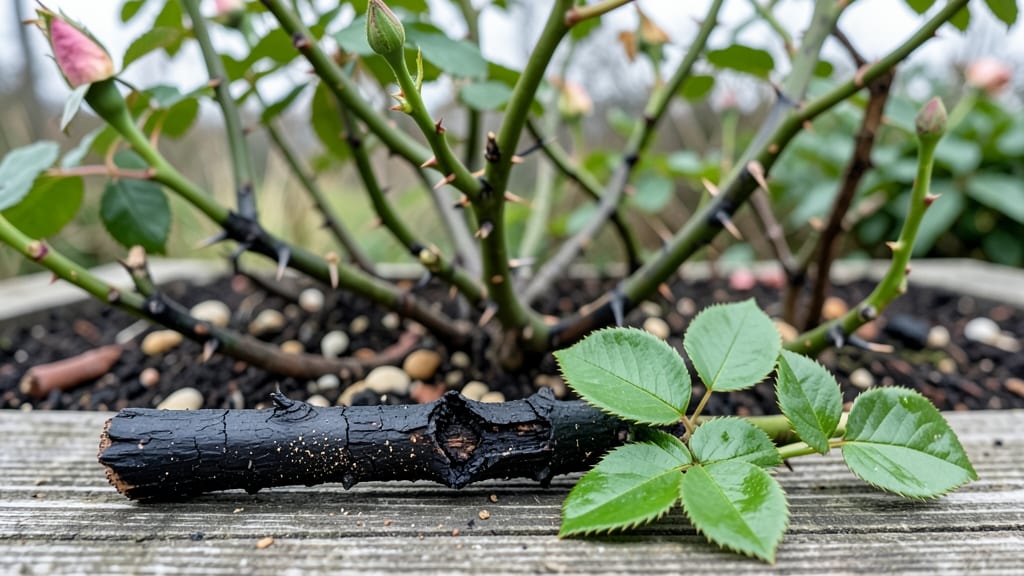
Black stems on your rose bush don’t mean it’s time to dig up the whole plant. 🌿 The first step is identifying whether it’s black spot fungus, bacterial canker, or something else—because the cure depends on the cause.
I’ve saved multiple roses from total collapse using these four natural steps, and the key is acting fast before the disease spreads to the roots.
Most blackened stems start with tiny black spots on leaves that multiply like wildfire if left unchecked. The fungus thrives in damp, shady conditions, so proper airflow and sunlight are your first line of defense.
Prune infected stems below the blackened area (sterilize your shears with rubbing alcohol first!), then dispose of the clippings in the trash—not the compost.
Once you’ve pruned, the real work begins: a baking soda spray (1 teaspoon baking soda + 1 quart water + a drop of dish soap) applied every 7–10 days stops the fungus in its tracks.
I’ve seen roses bounce back within 3–4 weeks with consistent treatment, and the blooms come back even better than before. The secret? Keep the soil moist but not soggy, and water at the base—never overhead.
Prevention is where it gets easy: space your roses 3–4 feet apart for airflow, mulch with straw to keep stems dry, and avoid overhead watering after sunset. If you catch it early, most roses recover fully—just don’t wait until the stems are completely black and brittle.
Your bushes will thank you with vibrant blooms all season.
Root Causes of Darkened Rose Stems
Seeing blackened stems on your rose bush can feel like a mystery—especially when the rest of the plant looks healthy. But don’t worry! Understanding the why behind this issue is the first step to saving your roses.
Below, we break down the most common culprits, backed by science, so you can diagnose and treat the problem with confidence.
Fungal diseases are the #1 cause of blackened stems in roses, and they thrive in damp, humid conditions. Two of the most notorious offenders are:
🍄 Black Spot Disease (Diplocarpon rosae)
While black spot is famous for creating dark spots on leaves, it can also spread to stems, causing them to blacken and weaken. How it happens:
- Spores land on stems during wet weather, especially in spring or fall.
- The fungus penetrates plant tissue, disrupting nutrient flow and causing discoloration.
- Infected stems may develop sunken, cracked lesions that ooze sap—a classic sign of fungal invasion.
💡 Pro Tip: If you’ve seen black spots on leaves first, the fungus is likely spreading upward. Act fast—prune infected stems below the blackened area and sterilize your tools with rubbing alcohol.
🍂 Canker Fungus (Botryosphaeria spp.)
This sneaky fungus attacks wounded or stressed stems, creating dark, sunken cankers that girdle the plant. Key signs:
- Stems appear blackened and dead at the base or along branches.
- Cracked or oozing lesions may appear, especially after heavy rain.
- Leaves on infected branches yellow and wilt as the fungus blocks water flow.
⚠️ Warning: Canker spreads quickly—remove infected stems immediately and dispose of them in the trash (not compost). Avoid pruning during wet weather to prevent spores from splashing onto healthy tissue.
Roses are tough, but they hate sudden temperature swings. Freeze damage or scorching heat can cause stems to blacken as cells die from stress.
❄️ Freeze or Cold Damage
When temperatures drop below 20°F (-6°C), rose stems can suffer cold injury, turning black and mushy. Why it happens:
- Ice crystals rupture cell walls, killing tissue.
- Thin or young stems are most vulnerable—look for blackened tips or splits.
- If the plant is partially damaged, it may recover with new growth, but severe cases can kill branches.
🔥 Prevention Tip: Mulch heavily in winter (3–4 inches of straw or wood chips) and avoid pruning in late fall—new growth is more susceptible to freeze damage.
☀️ Heat Scorch or Sunburn
While less common, intense sunlight + high temps (above 90°F/32°C) can cause stems to blacken and blisterHow to spot it:
- Stems develop dry, blackened patches on the side facing direct sun.
- Leaves may also show brown, crispy edges.
- Morning watering can worsen the issue by creating steam burns.
🌡️ Fix It: Provide afternoon shade during heatwaves and water deeply in the early morning to reduce stress.
Roses need consistent moisture, but too much water (or soggy soil) creates the perfect breeding ground for rot and fungal growth. Here’s how it happens:
🌊 Root Rot (Phytophthora or Pythium)
When soil stays waterlogged for days, roots suffocate and die, leading to blackened stems. Red flags:
- Stems feel soft or mushy when touched.
- Leaves yellow and drop even with "wet" soil.
- A musty smell may emanate from the base of the plant.
⏰ Emergency Action:
- Stop watering immediately and let the soil dry out for 2–3 days.
- Improve drainage by amending soil with compost or perlite.
- If the root ball is compacted, consider replanting in raised beds.
💦 Splashed Soil or Wet Foliage
Water droplets on leaves or stems can carry fungal spores directly to the plant. This is why black spot and canker often strike after heavy rain or overhead watering. Solution:
- Use a soaker hose or drip irrigation to water at the base.
- Avoid watering in the evening—leaves need time to dry.
- Space plants 3–4 feet apart for airflow and reduce humidity.
Not all black stems are caused by disease—sometimes, insects or injuries create the perfect entry point for rot.
🐜 Sap-Sucking Pests (Aphids, Scale, or Borers)
Pests like rose borers or scale insects weaken stems by feeding on sap, making them susceptible to secondary infections. Look for:
- Sawdust-like frass (borer droppings) at the base of stems.
- Sticky residue (honeydew) on leaves, attracting sooty mold.
- Wilting or blackened tips despite healthy roots.
🔪 Treatment: Scrape off scale with a brush dipped in soapy water, or apply neem oil to smother soft-bodied pests. For borers, inject beneficial nematodes into the soil.
🪒 Pruning Wounds or Lawnmower Damage
Cutting stems too close or accidentally mowing into canes creates open wounds where bacteria or fungi can invade. How to prevent it:
- Always prune above a leaf node or outward-facing bud (never flush with the stem).
- Use clean, sharp shears and disinfect them with rubbing alcohol between cuts.
- Keep grass 3–4 inches away from rose bushes to avoid hidden damage.
Revive Your Roses Naturally
Now that you understand why your rose bush has black stems—whether it’s black spot fungus, canker disease, root rot, or environmental stress—it’s time to take action! The good news?
With the right care, your roses can bounce back stronger than ever. Below are practical, step-by-step solutions tailored to each cause, plus prevention tips to keep your plants thriving long-term.
Fungal diseases like black spot (Diplocarpon rosae) and canker (Botryosphaeria or Leucostoma) thrive in damp, shaded conditions. Here’s how to stop the spread and restore your roses:
🔥 Step 1: Remove Infected Stems Immediately
- 🔪 Snip away any blackened, mushy, or oozing stems at least 6 inches below the affected area (fungus can hide underground!).
- 🧹 Sterilize pruners with rubbing alcohol or a 10% bleach solution to prevent cross-contamination.
- 🗑️ Dispose of infected debris in the trash (not compost)—fungus can survive in yard waste.
🍳 Step 2: Apply a Natural Fungicide
Skip harsh chemicals! Try these effective, plant-safe alternatives: - 🌿 Neem Oil Spray (1 tsp neem oil + 1 tsp mild soap + 1 quart water). Spray early morning or evening to avoid burning leaves.
Reapply every 7–10 days until new growth appears. - 🍋 Baking Soda Solution (1 tbsp baking soda + 1 quart water + a few drops of soap).
Fungicides like copper fungicide (organic-certified) also work but use sparingly. - 🍄 Beneficial Bacteria like Bacillus subtilis (found in products like Serenade ASO) can outcompete harmful fungi.
🌡️ Step 3: Improve Airflow & Reduce Moisture
Fungus loves humidity! Break up the party with these tweaks:
- 🌳 Prune for sunlight: Thin out crowded branches to let air circulate (aim for 6–12 inches between stems).
- 💦 Water at the base: Avoid overhead watering (use a soaker hose or drip irrigation).
Water early in the day so leaves dry quickly. - 🌿 Mulch properly: Use 2–3 inches of organic mulch (straw or wood chips) but keep it 2 inches away from stems to prevent rot.
✨ Prevention for Next Season
- 🌱 Plant resistant varieties: Some roses (like ‘Knock Out’ or ‘Dr. Huey’) are less prone to black spot.
- 🍂 Clean up in fall: Remove all debris and prune late-season growth to reduce fungal spores overwintering.
- 🌞 Space plants wisely: Give roses 3–4 feet of clearance from walls/fences to improve airflow.
If your rose stems are black, mushy, and hollow (signs of Phytophthora root rot), the issue is too much moisture. Here’s how to drain, dry, and revive:
💦 Step 1: Stop the Water Flow
- 🚰 Check drainage: If your rose is in a container, ensure pots have drainage holes.
For in-ground plants, amend heavy clay soil with compost or perlite. - 🌧️ Adjust watering: Roses need 1–1.5 inches of water per week (including rain). Let the top 2 inches of soil dry out before watering again. - 🏞️ Consider raised beds: If your yard is naturally soggy, plant roses in raised beds with sandy loam soil.
🔄 Step 2: Revive the Roots
- 🌱 Prune back dead growth: Cut all blackened, mushy stems down to healthy green tissue.
- 💪 Apply hydrogen peroxide (3%): Mix 1 tbsp per gallon of water and pour around the base to oxygenate roots and kill pathogens.
- 🍄 Add mycorrhizal fungi: These beneficial soil microbes help roots absorb water and nutrients.
Sprinkle mycorrhizal granules at planting or during transplant.
🌿 Step 3: Boost Soil Health
- 🥔 Plant deep: If roots are shallow, dig a trench 6–12 inches deep around the plant to encourage deeper growth.
- 🍂 Mulch with caution: Use straw or pine needles (not thick layers of wood chips, which can smother roots).
- 💡 Test your soil: If it’s too dense, mix in sand or coconut coir to improve drainage.
🔄 Long-Term Fixes
- 🏡 Install a French drain: If your yard has poor drainage, redirect water away from rose beds.
- 🌧️ Choose drought-tolerant roses: Varieties like ‘The Fairy’ or ‘Julia Child’ handle moisture stress better.
- 🌱 Transplant if needed: If root rot is severe, dig up the plant, trim dead roots, and repot in fresh, well-draining soil.
If black stems are due to freeze damage or sunburn, your rose just needs protection and recovery time:
❄️ Step 1: Protect from Temperature Swings
- 🌡️ Mulch heavily: Add 4–6 inches of straw or leaves around the base to insulate roots in winter.
- 🏠 Use frost cloth: In late fall, drape frost fabric over roses during hard freezes (below 20°F).
- 🌿 Avoid late pruning: Prune after the last frost to prevent new growth from freezing.
☀️ Step 2: Shield from Harsh Sun
- 🌳 Provide afternoon shade: Use lattice screens or shade cloth (30–50% coverage) to block intense afternoon sun.
- 💧 Water deeply in heat: Morning watering helps cool roots and prevent stress.
- 🌿 Choose heat-tolerant roses: ‘Double Delight’ or ‘Earth Song’ roses handle heat better than delicate hybrids.
🌱 Step 3: Encourage New Growth
- 🍃 Fertilize lightly: Use a balanced organic fertilizer (like fish emulsion) in spring to support recovery.
- 🌿 Prune damaged tips: Trim only the blackened, crispy stems—healthy green tissue will regrow.
- 💡 Avoid over-fertilizing: Too much nitrogen weakens stems, making them more prone to stress.
🔄 Prevention Tips
- 🌡️ Monitor weather alerts: Cover roses before sudden cold snaps in early spring/fall.
- 🌿 Plant in microclimates: Avoid south-facing walls that trap heat (causing sun scorch).
- 🌱 Acclimate gradually: If moving roses, harden them off over 2–3 weeks to prevent shock.
- 🌿 Prune in stages: Don’t remove all dead wood at once—space it out over 2–3 days to reduce plant stress. - 🍄 Rotate treatments: Alternate between neem oil, copper spray, and baking soda to prevent fungus resistance. - 🌱 Watch for pests: Fungal stress attracts aphids and spider mites.
Spray with soapy water if needed. - 📅 Time it right: Early morning or late evening is best for watering and spraying to avoid evaporation and leaf burn.
With these targeted solutions, your rose bush should regain its vibrant health in 4–6 weeks. Stay consistent with pruning, fungicide applications, and soil care, and your roses will bloom beautifully come next season! 🌹
Frequently asked questions
Why do rose stems turn black suddenly?
Blackened rose stems usually appear due to fungal infections like black spot or canker, which thrive in damp conditions. Other causes include root rot from overwatering, freeze damage (below 20°F), or pest infestations like borers that weaken stems. Check for black spots on leaves or mushy stems to diagnose the issue.
Can I save a rose bush with completely black stems?
It depends! If the blackened area is localized (only a few stems), prune 6 inches below the damage and treat with a neem oil spray. If most stems are black and mushy, the plant may be beyond saving—consider replacing it. Always sterilize tools to prevent spreading spores.
How do I know if black stems are from fungus or pests?
Fungal issues (black spot/canker) show dark, sunken lesions that ooze sap, while pest damage (like borers) creates sawdust-like frass at stem bases. Check for sticky honeydew (sign of aphids/scale) or hollow stems (borers). Use a magnifying glass for close inspection.
Will pruning black stems help stop the spread?
Yes! Prune below the blackened area (not through it) and sterilize shears with rubbing alcohol between cuts. Dispose of infected debris in the trash—never compost—to prevent reinfection. Thin out crowded branches to improve airflow, which reduces fungal growth.
How often should I spray fungicide on my roses?
Apply a natural fungicide (like baking soda or neem oil) every 7–10 days during wet seasons. For severe infections, use copper fungicide (follow label rates). Always spray early morning or evening to avoid leaf burn, and reapply after heavy rain.