
Advice
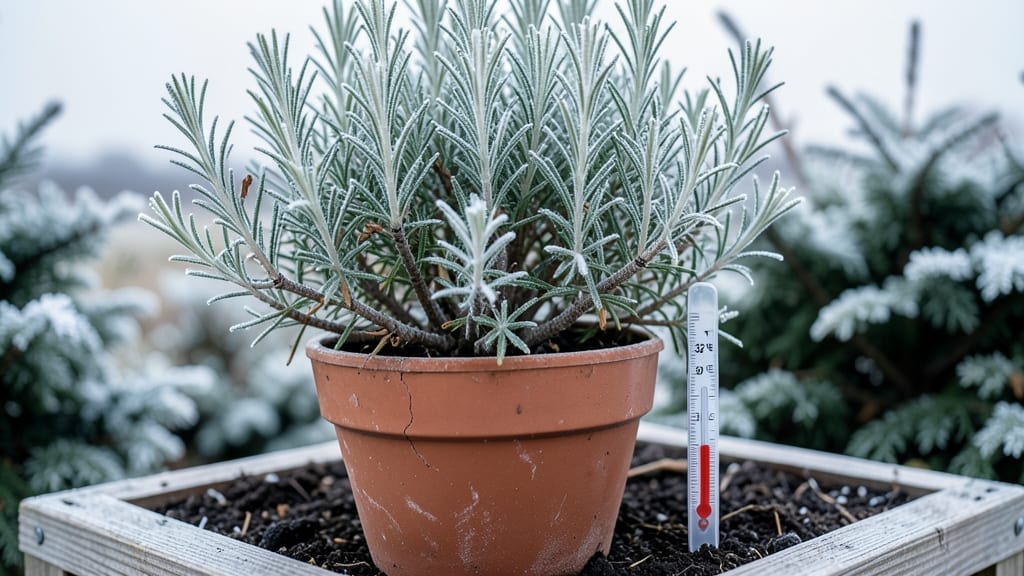
Can rosemary survive frost? It can endure brief chills down to 20°F (-6°C), but prolonged freezing or heavy frost—especially with wind or moisture—will damage its woody stems and leaves. Using mulch, containers, or protective covers significantly boosts its cold resistance.
Rosemary's Mediterranean roots mean it's tougher than many think, but its limits depend on duration and conditions. A single night at 20°F (-6°C) is survivable, but prolonged exposure below 15°F (-9°C) risks browning or death. 🌬️ Wind and wet conditions accelerate damage by increasing moisture retention in the leaves.
For gardeners in USDA zones 7-9, overwintering strategies like moving potted plants to sheltered spots or covering outdoor plants with burlap can make all the difference.
What's key is understanding rosemary's woody nature—its stems are more resilient than its leaves, so protecting foliage is critical. Unlike hardier herbs like thyme, rosemary lacks built-in antifreeze mechanisms, making proactive care essential.
I've found that mulching with straw or pine needles (2-3 inches deep) creates an insulating barrier that mimics its native rocky soils.
💡 In This Article
- Rosemary’s Cold Hardiness: How It Handles Frost
- Protecting Rosemary from Frost: Step-by-Step Winter Care
Rosemary’s cold hardiness: how it handles frost
Rosemary’s ability to handle frost stems from its Mediterranean heritage, where it evolved in rocky, arid climates with hot summers and mild winters. While it can tolerate brief dips to 20°F (-6°C), its woody stems act like natural insulation, protecting the plant’s core.
The key is that rosemary lacks the antifreeze proteins found in cold-hardy plants like thyme, which can survive down to 10°F (-12°C). Instead, rosemary relies on its leathery leaves and dense growth habit to minimize water loss and frost penetration.
The real damage happens when frost lingers or combines with wind and moisture. Wind desiccates leaves, making them more vulnerable to ice crystals forming in their cells.
Wet conditions worsen this by increasing moisture retention, which can freeze and rupture cell walls—visible as brown, mushy spots. 🌬️ In my garden, I’ve seen rosemary plants in USDA zone 8 survive a single night at 18°F (-7°C) but suffer leaf burn when temperatures hover around 25°F (-4°C) for multiple days.
Contrast this with oregano, which thrives in USDA zones 5-9 and can handle 0°F (-18°C) thanks to its fibrous root system. Rosemary’s roots are more delicate, so protecting the above-ground growth is critical.
The plant’s natural oils also play a role—they create a slight hydrophobic barrier, but this isn’t enough against prolonged cold. That’s why gardeners in marginal zones often treat rosemary more like a tender perennial than a hardy one.
Here’s what happens at different temperature thresholds:
- 20-25°F (-6 to -4°C): Leaves may show minor browning but recover with warmth.
- 15-19°F (-9 to -7°C): Stem damage becomes likely; new growth may die back.
- Below 10°F (-12°C): Severe damage or death occurs, especially with wind exposure.
Rosemary’s resilience also depends on its maturity. Younger plants with softer stems are more vulnerable, while established 3-5 year-old bushes have thicker, more insulating bark. This is why many gardeners prioritize protecting younger plants with extra mulch or containers during their first winter. The plant’s ability to regrow from woody stems is its secret weapon—even if leaves are lost, the stem can often sprout new foliage once temperatures rise.
Understanding these mechanics helps explain why rosemary thrives in coastal climates with moderating ocean breezes but struggles inland where temperature swings are sharper. The lesson?
Rosemary isn’t a cold-hardy herb by nature, but with the right protection, it can push its limits—and reward you with aromatic harvests year after year. 🌿