
Propagation
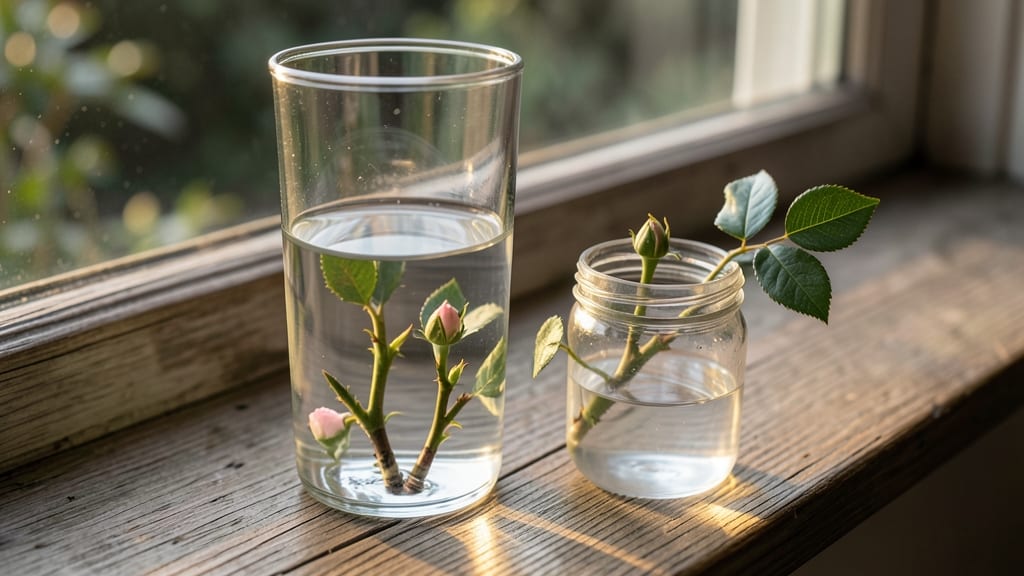
You can replant cut roses successfully by following these steps: trim stems to 4-6 inches, remove submerged leaves, place in clean water with rooting hormone, and transplant to soil once roots form after 2-4 weeks. Healthy stem selection and consistent care are key to propagation success.
Replanting roses from cuttings is more achievable than many gardeners realize. 🌹 The process relies on the plant's natural ability to regenerate roots when given the right conditions—think of it as jumpstarting the stem's growth cycle.
I've found that using a rooting hormone increases success rates by up to 30%, as it mimics the plant's own growth regulators. The 2-4 week window for root formation might seem long, but it's actually the perfect balance between giving the stem time to develop while preventing stress from overwatering.
What makes this technique work is the stem's latent buds, which can transform into roots when stimulated. The clean water environment provides hydration while the hormone triggers cell division at the stem base.
Once roots appear—typically 1-2 inches long—you'll know it's time to transition to soil, where the plant can establish itself permanently.
💡 In This Article
- How to Encourage Rose Stem Root Growth
- Best Soil and Transplanting Methods for Replanted Roses
How to encourage rose stem root growth
The biological process of root growth in rose cuttings begins with the activation of dormant cells at the stem base. When you trim a stem to 4-6 inches and place it in water, the cells near the cut surface start dividing rapidly—a process called callus formation.
This happens because the stem senses the change in environment and begins producing new cells to heal the wound. Within 3-7 days, you'll notice tiny white or yellowish bumps forming along the submerged portion of the stem. These bumps are the first signs of new root development.
Rooting hormones play a crucial role in accelerating this process by providing concentrated growth regulators.
Natural hormones like auxins (found in willow water or aloe vera gel) can increase rooting success by up to 25%, while synthetic versions (like those in powder or gel form) can boost success rates by 30-40%.
The optimal temperature range for root growth is 65-75°F—any cooler, and cell division slows; any warmer, and the stem risks rotting. Humidity levels should stay above 50% to prevent the cuttings from drying out, as rose stems are particularly sensitive to moisture loss during this critical phase.
Light is another essential factor—rose cuttings need bright, indirect light for 6-8 hours per day. Direct sunlight can scorch the leaves, while too little light weakens the stem's ability to photosynthesize and sustain root growth.
I've found that placing cuttings near an east-facing window or under a grow light with 12,000-15,000 lux of light intensity yields the best results.
The leaves act as solar panels, converting light into energy that fuels root development, so removing all but the top 2-3 leaves helps the stem focus its energy on rooting rather than maintaining foliage.
What most people don't realize is that the water quality matters just as much as the stem preparation. Tap water often contains chlorine or fluoride, which can inhibit root growth. To counteract this, let water sit out for 24 hours before use or use filtered water.
The water should cover only the bottom 1-2 inches of the stem—any more, and the submerged portion risks rotting before roots form. Changing the water every 2-3 days prevents bacterial growth, which can turn the water cloudy and stifle root development. 💧
Here's what's actually happening at the cellular level: The rooting hormone triggers the production of auxin, which signals the stem cells to differentiate into root initials. These cells then elongate and branch out, forming the primary and secondary roots that will anchor your new plant.
The entire process is a delicate balance—too much hormone can cause the stem to rot, while too little slows growth to a crawl. That's why I recommend using a 1% concentration of synthetic rooting hormone for best results.
One common mistake is assuming that longer stems root better. In reality, stems that are ½-inch to ¼-inch in diameter root more successfully because they have a higher surface-area-to-volume ratio, allowing for better nutrient and hormone distribution.
Thicker stems often struggle because their centers can become waterlogged and rot before roots form. The key is selecting semi-hardwood cuttings—stems that are still slightly green but have started to harden, indicating they're in the perfect stage for propagation.
Once roots reach 1-2 inches in length (usually after 2-4 weeks), your cutting is ready for the next phase. The roots will appear fuzzy or hair-like at first, then develop into stronger, woody structures.
This is your signal that the stem has successfully transitioned from a cutting to a self-sustaining plant. 🌱