
Advice
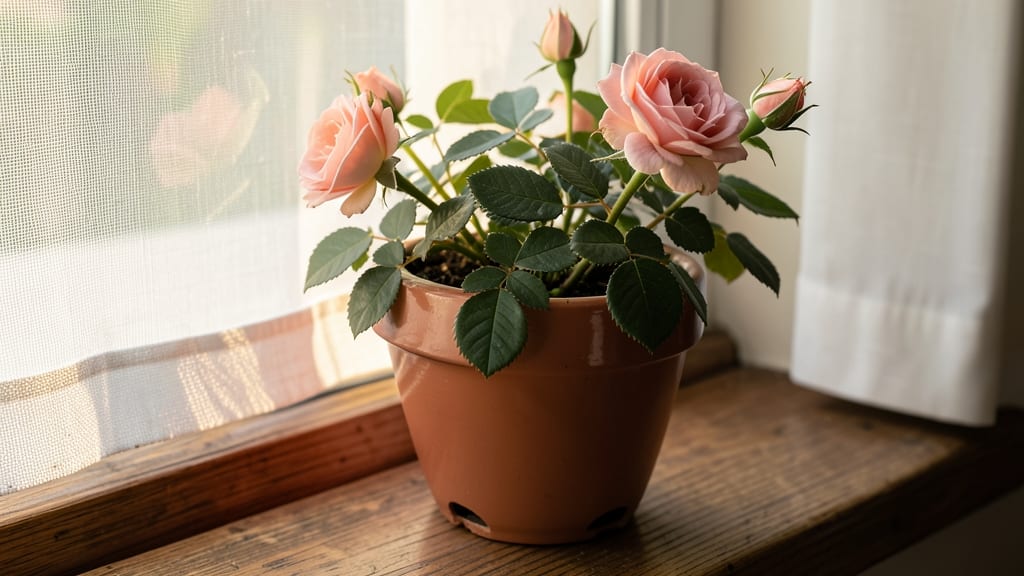
Caring for miniature roses indoors means providing bright indirect light for 6-8 hours daily, keeping humidity between 40-60% with a pebble tray, and pruning faded blooms and dead foliage to promote fuller growth while preventing overwatering that can cause root rot.
Miniature roses thrive indoors when you mimic their natural growing conditions. 🌸 The right light spectrum—especially blue and red wavelengths—boosts photosynthesis, so south-facing windows or grow lights with full-spectrum LEDs work best.
If leaves turn yellow or stems stretch too tall, it’s a sign they need more light or a shorter distance from the source. Humidity is equally critical; dry indoor air causes buds to drop, so a pebble tray with water beneath the pot raises moisture levels without soggy roots.
Pruning isn’t just about looks—it’s about health. Cutting back wilted blooms and dead leaves redirects energy to new growth, while shaping the plant encourages bushier stems. Use sharp, sterilized shears to make clean cuts at a 45-degree angle just above a leaf node.
Repotting every 1-2 years with fresh, well-draining soil prevents nutrient depletion, and always water from the bottom to avoid fungal issues. The key? Consistency—these roses reward patience with vibrant blooms year-round.
💡 In This Article
- Indoor Light Requirements for Miniature Roses
- Step-by-Step Pruning and Maintenance Guide for Indoor Miniature Roses
Indoor light requirements for miniature roses
Miniature roses rely on light to produce chlorophyll, which fuels their growth through photosynthesis—specifically, blue wavelengths (400-500nm) drive leaf expansion, while red wavelengths (600-700nm) trigger flowering. Without enough light, these roses become "leggy," with weak stems stretching toward the nearest light source in search of energy.
A south-facing window provides the brightest indirect light (about 5,000-10,000 lux), but east or west windows work too—just rotate the plant weekly for even exposure. 🌞
Artificial grow lights can bridge the gap if natural light falls short. Full-spectrum LEDs with a color temperature of 5,000-6,500K mimic daylight, while adding a red LED bulb (around 660nm) boosts blooming.
Position lights 6-12 inches above the plant and provide 12-16 hours of light daily during winter months. For comparison, a standard office light delivers only 300-500 lux, far below what roses need.
Watch for these red flags: Yellowing leaves signal too much direct sun or overwatering, while dark green, sparse foliage and stems stretching 3+ inches between leaves mean insufficient light. If leaves develop a reddish tint, it’s often a sign of stress from either too much light or low humidity.
Adjust by moving the plant 1-2 feet farther from the window or reducing light exposure by 2-3 hours daily.
Seasonal adjustments matter too. In summer, filter harsh afternoon sun with sheer curtains to prevent leaf burn, while winter’s shorter days may require supplemental lighting. A simple trick: Place your plant near a window during the day, then switch to a grow light in the evening to extend daylight hours.
This mimics natural seasonal changes and keeps your roses blooming consistently. 🌿
For optimal results, pair light with proper spacing. Crowding near windowsills can block airflow, increasing humidity around the plant and promoting fungal diseases. Aim for at least 6 inches of space between plants to ensure even light distribution and reduce competition for nutrients.
This balance is key to preventing leggy growth while maintaining vibrant, healthy foliage.