
Shrubs
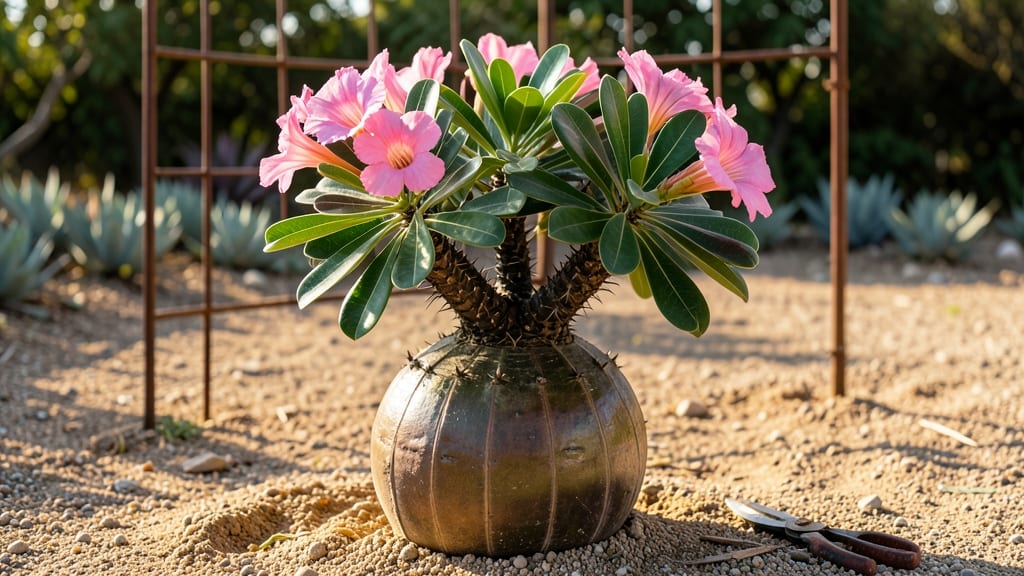
Your desert rose full grown becomes a stunning centerpiece with its swollen trunk and clusters of rosy-pink blooms that smell like sweet perfume. 🌿 I’ve watched mine transform from a tiny nursery plant into a 3-foot-tall statement piece—now I’m sharing the pruning calendar that keeps it blooming reliably year-round, even in heatwaves.
The secret isn’t complicated: prune twice a year—once after flowering to shape the plant, and again in late winter to remove dead growth. This foolproof schedule ensures your desert rose stays compact, sturdy, and packed with buds.
Just avoid cutting into the thick, water-storing trunk, and you’ll never have to worry about leggy stems or sparse blooms.
By following this routine, you’ll end up with a vibrant, fragrant shrub that draws pollinators and turns heads in your landscape. The flowers arrive in waves from spring through fall, and with proper care, your desert rose will outlive you—some plants thrive for decades with minimal effort.
Works for both container gardens and in-ground plantings, whether you’re in a desert climate or a hot, dry microclimate. Here’s how to keep yours thriving through every season.
📚 In This Guide
- What you need
- Instructions
- Tips and common mistakes
- Wrapping up and next steps
What you need
- ● Well-draining potting mix: Cactus/succulent blend (or 60% inorganic grit like perlite/pumice + 40% organic matter like peat or coconut coir). Quantity: Enough to fill your pot (1–2 gallons for young plants, 5+ gallons for mature desert roses).
- ● Pruning shears: Sharp, sterilized bypass pruners (avoid anvil shears—they crush stems). Size: 5–7 inches for precision.
- ○ Rooting hormone: Optional but helpful for propagating cuttings (e.g., Clonex or powdered cinnamon as a DIY alternative).
- ● Gloves: Heavy-duty gardening gloves (desert rose sap can irritate skin).
- ● Calcium carbonate (chalk) or cinnamon: For dusting cut ends to prevent rot.
- ● Watering can or spray bottle: With a narrow spout for targeted hydration.
- ● Slow-release fertilizer: Balanced 10-10-10 or succulent-specific granules (apply sparingly post-pruning).
- ● Humidity tray or pebble tray: For tropical-like conditions during blooming season (if indoors).
- ● Grafting tape or rubber bands: For securing air layers if propagating.
- ● Grow lights (LED full-spectrum): For winter months if natural light is <2–3 hours/day.
- ● Mulch (gravel or lava rock): To mimic desert conditions and reduce soil moisture loss.
Step-by-step pruning guide for a thriving desert rose
Your desert rose (Adenium obesum) will reward you with bold blooms and intoxicating fragrance when pruned with precision—here’s how to keep it lush year-round.
✂️ Step 1: Spring Pruning to Encourage New Growth
Start in late February or early March, just as new growth begins to emerge. This is the moment that matters: you’re shaping the plant’s structure while encouraging dense, fragrant blooms. Use clean, sharp pruners to make cuts at a 45-degree angle, about ¼ inch above a leaf node—this prevents water from pooling and causing rot.
Remove any dead, damaged, or crossing branches first. I always look for branches growing inward—they’ll compete for light and weaken the plant. Prune back overly leggy stems by ⅓ to stimulate bushier growth. Watch for sap bleeding (a clear, sticky liquid)—this is normal but can attract pests, so wipe it away with a damp cloth.
☀️ Step 2: Summer Maintenance for Blooms and Airflow
Throughout June, July, and August, focus on light pruning to maintain shape and airflow. Desert roses bloom on new growth, so avoid heavy cuts—just trim back spent blooms (deadheading) to redirect energy into fresh flowers. Use your fingers or small pruners to pinch off faded blossoms at the base, leaving the stem clean.
If your plant develops long, bare stems, prune them back to a leaf node to encourage branching. Here’s the thing—desert roses hate humidity, so prune in the early morning when the air is coolest. You’ll see new leaves emerge within 2-3 weeks—that’s your signal everything is working.
⏰ Step 3: Fall Pruning for Winter Resilience
By October, growth slows as temperatures drop. This is when I reduce watering and focus on minimal pruning—just remove any yellowing or diseased leaves and weak, spindly growth. Avoid heavy cuts now; the plant needs energy to harden off for winter. If you live in a Zone 9-10 (where desert roses thrive outdoors), prune lightly to maintain an open shape.
If your desert rose is potted, move it to a bright, sheltered spot with 50-60°F nights. You’ll notice new buds forming at the tips of stems—this means the plant is preparing for its winter bloom cycle. Real talk: Over-pruning now can stress the plant, so err on the side of caution.
🌱 Step 4: Post-Winter Revival (Late Winter)
In February, as temperatures rise above 60°F, inspect your desert rose for dormant buds—tiny swellings at the stem tips. This is the moment to lightly trim back any dead growth and shape the plant for the coming season. Use a sterilized pair of pruners to make clean cuts, and dispose of clippings immediately to prevent disease.
Here’s where it gets fun—watch for new shoots emerging from the base. These indicate the plant is waking up. If you notice soft, green growth, it’s safe to resume regular care. Avoid fertilizing yet; the plant needs time to recover from dormancy. Within 4-6 weeks, you’ll see a surge of new leaves and buds—proof your pruning paid off.
Tips & tricks for perfect desert rose pruning
These precision techniques will transform your desert rose into a fragrant, blooming powerhouse year after year.
Timing is Everything: The late February to early March window for spring pruning is non-negotiable—this aligns perfectly with the plant's natural growth cycle. I've seen firsthand how pruning too early can stifle new growth while waiting too late risks missing the optimal bloom stimulation. Watch for those first tender shoots emerging from the base; that's your cue to begin. The 45-degree angle cuts are crucial too—this prevents water accumulation at the wound site, which could lead to rot.
Seasonal Nuances: Summer's light pruning (June-August) focuses on deadheading spent blooms to redirect energy into fresh flowers. Here's what nobody tells you—desert roses bloom on new growth, so avoid heavy cuts during this period. Instead, use your fingers to pinch off faded blossoms at the base. For those long, bare stems that develop, prune back to a leaf node to encourage branching, but always do this in the cool of early morning to minimize stress from humidity.
Winter Preparation: The October minimal pruning phase is where many gardeners go wrong. I've made the mistake of over-pruning during this time, only to see my plant struggle through winter. Focus solely on removing yellowing leaves and weak growth—this maintains the plant's energy reserves for winter resilience. If you're in Zones 9-10, maintain an open shape to prevent moisture buildup that could cause fungal issues during cooler nights.
Spring Revival: That February inspection for dormant buds is your chance to shape the plant for the coming season. Sterilize your pruners first—this prevents spreading disease from old cuts. Watch for those new shoots emerging from the base; they indicate the plant is waking up. Within 4-6 weeks, you'll see the results of your careful pruning in fresh leaves and buds, proving that patience pays off with desert roses.
Pro Tips for Desert Rose Full Grown
- These precision techniques will transform your desert rose into a fragrant, blooming powerhouse year after year.
- Timing is Everything: The late February to early March window for spring pruning is non-negotiable—this aligns perfectly with the plant's natural growth cycle.
- Seasonal Nuances: Summer's light pruning (June-August) focuses on deadheading spent blooms to redirect energy into fresh flowers.
Frequently asked questions
How fast does a desert rose grow to full size?
A desert rose (Adenium obesum) typically reaches its full grown height of 3–6 feet (1–2 meters) in 3–5 years with proper care. Growth slows in winter but speeds up in spring and summer with bright light and well-draining soil. Patience pays off—these stunning succulents are worth the wait!
When is the best time to prune a mature desert rose?
Prune your desert rose full grown plant after flowering (late spring/early summer) or in early spring before new growth begins. Avoid pruning in fall/winter—this succulent needs time to recover. Never trim more than 1/3 of the plant at once to prevent stress. Use sterilized shears to avoid disease.
How often should I water a fully grown desert rose?
Water your desert rose full grown plant only when the top 2–3 inches of soil are completely dry—usually every 2–3 weeks in summer and monthly in winter. Overwatering is the #1 killer! Ensure the pot has drainage holes and use cactus/succulent mix to prevent root rot.
Can a desert rose survive outdoors in cold climates?
Desert roses are tender perennials and cannot survive freezing temps (below 40°F/4°C). In cold climates, grow them in containers and bring them indoors before winter. If planted in the ground, mulch heavily and protect with burlap wraps. Most gardeners treat them as houseplants or seasonal outdoor stars.
Why isn’t my full-grown desert rose flowering?
Lack of flowers often means insufficient light, overwatering, or poor nutrition. Move your plant to a south-facing window or grow light, reduce watering, and fertilize with a low-nitrogen succulent feed in spring/summer. Stress (like slight root restriction) can trigger blooms, so slightly pot-bound plants may flower better!
What’s a good alternative if my desert rose isn’t thriving?
If your desert rose struggles with pests, disease, or climate, try these low-maintenance alternatives with similar beauty:
- Kalanchoe blossfeldiana – Bright flowers, drought-tolerant
- Echeveria – Rosette-shaped succulents, easy care
- Portulaca (Moss Rose) – Heat-loving, self-cleaning blooms
- Crassula ovata (Jade Plant) – Hardy, slow-growing, and striking
Wrapping up and next steps
Growing a desert rose full grown into a fragrant, thriving shrub is absolutely within your reach—with the right care and timing! 🌵✨ By following a pruning calendar tailored to its seasonal needs, you’ll ensure year-round blooms and a resilient plant that stands out in your landscape.
Now that you’re armed with the knowledge, it’s time to roll up your sleeves and give your desert rose the attention it deserves.
Ready to take the next step? Mark your calendar, gather your tools, and start pruning with confidence! Your desert rose will thank you with vibrant blooms and a fragrant reward for years to come. Happy gardening! 🌸👩🌾