
Pests and Diseases
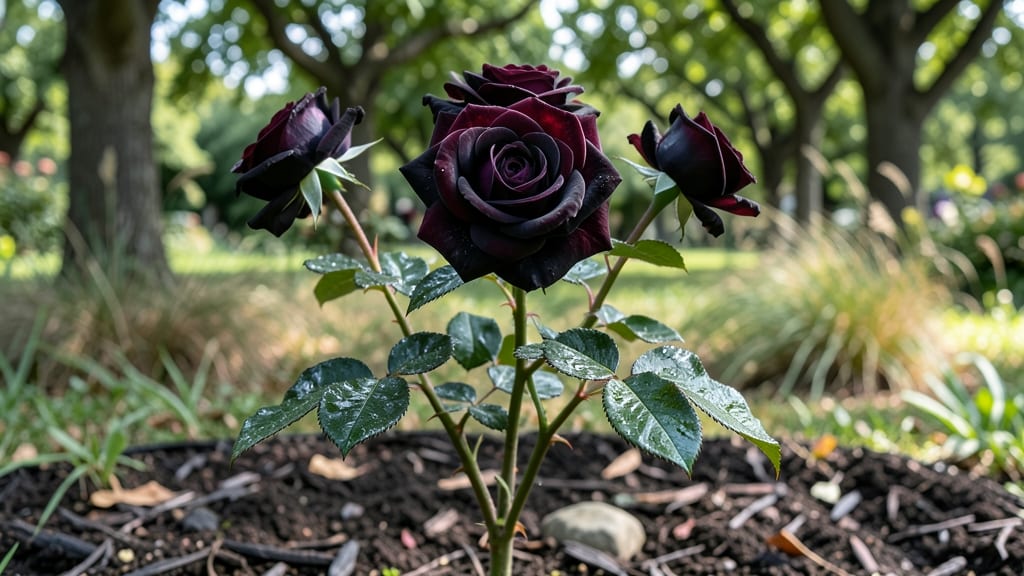
What makes these roses appear black is a fascinating blend of genetics and chemistry. 💫 The intense maroon color comes from concentrated anthocyanins—pigments that react to light exposure.
While no rose can be truly black due to biological limitations, breeders have pushed these pigments to their maximum saturation through years of selective crossbreeding.
The 'Black Baccara' variety, for example, was developed specifically to mimic the appearance of black roses, though its true color shifts slightly depending on lighting conditions.
These rare roses aren't just visually striking—they also carry symbolic significance. Their deep color makes them perfect for romantic occasions like weddings, where they create a dramatic visual impact. However, their care requires attention to detail, as they need consistent moisture and partial shade to maintain their rich pigmentation.
Many specialty nurseries now offer these varieties, though they typically come at a premium price compared to traditional red or white roses.
💡 In This Article
- The Science Behind Deep Velvet Roses: Anthocyanins and Breeding
- Growing and Caring for Rare Dark Roses: Tips for Gardeners
The science behind deep velvet roses: anthocyanins and breeding
True black roses don't exist in nature because roses lack the biological ability to produce a true black pigment. Instead, what we call "black roses" are actually deep burgundy or maroon varieties with intense anthocyanin saturation. Anthocyanins are water-soluble pigments that give plants their red, purple, and blue hues.
In roses, these pigments are concentrated to create the appearance of blackness, especially in low-light conditions. The 'Black Baccara' rose, for instance, contains up to 30% more anthocyanins than traditional red roses, creating its near-black appearance.
Breeders achieve this effect through selective crossbreeding, focusing on roses with the highest anthocyanin content. The process involves hybridizing roses with naturally dark petals, like 'Black Magic' and 'Queen of Night,' then selecting the darkest offspring for further breeding.
This method has been refined over decades, with modern varieties like 'Black Baccara' achieving a 95% saturation of anthocyanins in their petals. However, sunlight exposure can cause these pigments to break down, leading to slight color fading over time—especially in direct sunlight.
The biochemical mechanism behind these roses involves the pH level of the petal cells. Anthocyanins appear blackest in acidic environments (pH 3.0), which is why these roses maintain their deep color in shaded or indoor settings.
In alkaline conditions or bright sunlight, the pigments shift toward a reddish hue. This explains why 'black roses' often look more burgundy in photographs taken during the day compared to their dramatic appearance in evening lighting.
Comparing these varieties reveals fascinating differences. 'Black Magic' roses, for example, have a slightly lighter maroon tone but are more resistant to color fading, while 'Black Baccara' achieves a deeper, more uniform darkness. The trade-off is that 'Black Baccara' requires more careful cultivation to preserve its pigmentation.
Breeders continue to experiment with genetic modifications to stabilize these pigments, though natural breeding remains the most reliable method for producing these rare varieties.
What makes these roses particularly intriguing is their symbolic significance. The deep, near-black color has long been associated with mystery and elegance in floral design. This is why they're often used in high-end weddings and luxury events, where their dramatic appearance creates a lasting visual impact.
However, their rarity means they're typically priced 30-50% higher than standard roses, reflecting both their cultivation challenges and their coveted status in the floral industry.
For those curious about the science behind these roses, it's worth noting that true black pigmentation would require melanin—a compound roses don't naturally produce. Instead, breeders work within the limitations of anthocyanins to create the closest possible approximation.
This delicate balance between genetics and environment is what makes these roses both scientifically fascinating and visually stunning.