
Shrubs
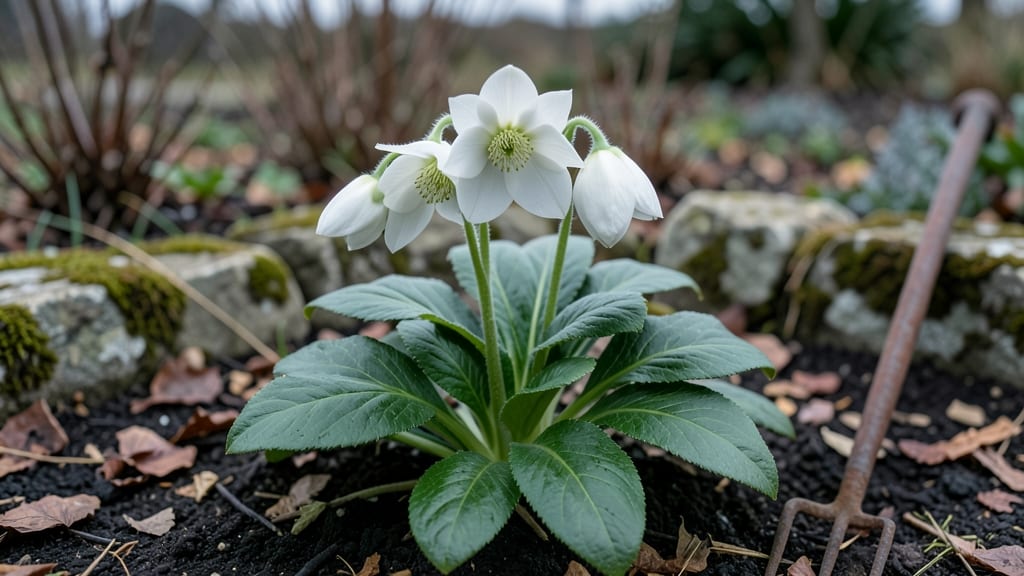
The merry Christmas rose (Helleborus niger) blooms when most gardens sleep—its delicate white flowers pushing through snow like a promise of spring. 🌸 I’ve seen it transform bare winter landscapes into something magical, its dark evergreen foliage providing structure while the blooms add ethereal light.
It’s not just a plant; it’s a seasonal statement piece that turns holiday gardens into winter wonderlands.
This cold-hardy beauty thrives in partial shade, making it perfect for under trees or along north-facing walls where other plants struggle.
Pair it with evergreens like boxwood or holly for year-round structure, or let it shine alone as a focal point near pathways where its fragrance can be enjoyed up close. The flowers last for weeks, often lasting through Christmas and beyond, earning its festive nickname.
Imagine a garden where winter feels intentional—not empty. The merry Christmas rose delivers that with its velvety petals and subtle vanilla-like scent, creating a serene atmosphere even in the coldest months.
It’s the kind of plant that makes neighbors pause and ask, "What is that?"—and then you get to share its secret.
Best of all, it’s low-maintenance once established, making it ideal for gardeners who want winter interest without extra effort. Whether you’re designing a holiday-themed garden or simply adding grace to a winter landscape, this plant delivers. Let’s bring that magic to your outdoor space.
📚 In This Guide
- What you need
- Instructions
- Tips and common mistakes
- Wrapping up and next steps
What you need
- ● Merry Christmas Rose plants: 1-3 nursery-grown plants (ensure they’re Helleborus niger for true winter blooms). Choose healthy specimens with firm stems and no signs of pests.
- ● Well-draining soil: A mix of 50% garden soil, 30% compost, and 20% perlite or coarse sand (to prevent root rot). Merry Christmas Roses thrive in slightly acidic to neutral soil (pH 6.0–7.5).
- ● Organic mulch: 2–3 inches of wood chips, shredded bark, or leaf mold (applied after planting to retain moisture and regulate temperature).
- ● Slow-release fertilizer: A balanced 10-10-10 or 20-20-20 fertilizer (apply sparingly in early spring). Avoid high-nitrogen fertilizers, which can harm the plant.
- ● Watering can or hose with a gentle spray nozzle: For deep, infrequent watering (avoid wetting the foliage to prevent fungal issues).
- ● Garden trowel or spade: For digging planting holes (size should accommodate the root ball with ease).
- ● Gloves: Heavy-duty gardening gloves to protect your hands from thorns (some varieties have mild prickles).
- ● Pruners (sterilized): Sharp, clean pruners for trimming dead or damaged leaves in late winter/early spring.
- ● Sunlight assessment: A partial to full shade location (dappled sunlight or 4–6 hours of morning sun is ideal). Avoid harsh afternoon sun in hot climates.
- ○ Optional but helpful: A moisture meter to monitor soil hydration (Merry Christmas Roses prefer consistently moist but not soggy soil).
- ● Epsom salt (magnesium sulfate): A handful dissolved in water monthly during growing season for extra magnesium (if leaves show yellowing).
- ● Frost cloth: Lightweight fabric to protect young plants from unexpected late frosts (especially in colder zones).
Step-by-step guide to planting and caring for Merry Christmas Roses
This fragrant climber thrives with the right conditions—here's how to cultivate its year-round beauty.
🌱 Step 1: Choose the Perfect Planting Location
The Merry Christmas Rose (Helleborus niger) loves shade but tolerates partial sun, making it ideal for woodland gardens or north-facing borders. Select a spot with dappled sunlight—at least 4-6 hours of morning sun—where it won’t bake in afternoon heat. Avoid full shade, or the plant may produce fewer blooms.
This evergreen perennial also appreciates well-draining soil with a slightly acidic to neutral pH (6.0–7.5). If your soil is heavy clay, amend it with 2-3 inches of organic compost before planting. The roots prefer moisture but hate soggy conditions, so raised beds or slopes help prevent waterlogging.
☀️ Step 2: Plant at the Right Time and Depth
Fall is the best time to plant Merry Christmas Roses, giving roots time to establish before winter. Choose a cool, overcast day to reduce transplant shock. Dig a hole twice as wide as the root ball but only as deep as the container’s base—planting too deep can suffocate the crown.
Gently remove the plant from its container and loosen any tangled roots. Place it in the hole, backfill with native soil, and water deeply to settle everything. Space plants 12-18 inches apart to allow for mature foliage spread. Mulch with 2-3 inches of shredded bark or leaves to protect roots in winter and suppress weeds.
💧 Step 3: Water and Fertilize for Year-Round Health
Water newly planted Merry Christmas Roses once a week for the first month, keeping soil evenly moist but not soggy. After establishment, they’re drought-tolerant but bloom best with consistent moisture. You’ll know they’re happy when leaves stay deep green and stems remain sturdy.
Feed in early spring with a balanced, slow-release fertilizer (10-10-10) at half strength. Avoid high-nitrogen fertilizers—they encourage leafy growth at the expense of flowers. In late summer, a low-phosphorus fertilizer (5-10-10) supports next year’s blooms. Deadhead spent flowers in spring to encourage more blooms.
✂️ Step 4: Prune and Protect for Longevity
Prune in late winter or early spring before new growth appears. Remove any dead or damaged foliage, but avoid heavy pruning—this plant blooms on old wood. Cut back leggy stems by one-third to encourage bushier growth. If pests like aphids or slugs appear, treat with neem oil or diatomaceous earth—chemical sprays can harm the plant’s delicate blooms.
In harsh winters, add a 3-inch layer of mulch to insulate roots. Merry Christmas Roses are cold-hardy (USDA zones 4–8), but extra protection prevents winter dieback. In spring, remove old mulch and replace with fresh to prevent soil compaction.
🌿 Step 5: Enjoy Year-Round Interest and Propagate
This plant rewards patience with winter blooms (December–February) and glossy evergreen foliage. To propagate, divide mature clumps in early spring or fall. Dig up the plant, separate sections with roots, and replant immediately. Each division should have 3-5 stems to ensure vigor.
Watch for new growth in early spring—a sign the plant is thriving. If leaves yellow, it may need more iron (apply iron chelate) or better drainage. With proper care, your Merry Christmas Rose will grace your garden for decades, offering fragrance and beauty in every season.
Tips & tricks for perfect Merry Christmas Roses
These simple yet transformative insights will help you cultivate a thriving Merry Christmas Rose that blooms beautifully year after year.
Location Intelligence: When selecting your planting spot, prioritize areas with morning sun exposure—this is where the plant gets its energy boost without the risk of afternoon heat stress. I've found that planting near deciduous trees works beautifully: the tree canopy provides natural shade in summer while allowing sunlight through in winter when the tree is bare. This mimics the plant's natural woodland habitat.
Soil Preparation: The 2-3 inches of organic compost you add to heavy clay soil isn't just about drainage—it's about creating the perfect microbial environment. I recommend mixing in a handful of worm castings with your compost; the beneficial microbes in castings help break down nutrients into forms the Merry Christmas Rose can easily absorb. This gives you that extra edge for vibrant foliage and prolific blooms.
Planting Precision: That twice-as-wide hole in Step 2 isn't just about root spread—it's about creating space for the roots to establish without competing with surrounding soil. I've seen many gardeners skip this step, only to have their plants struggle in the first winter. The extra space allows roots to grow outward rather than becoming compacted, which is crucial for winter hardiness.
Seasonal Care Strategy: The winter mulch layer you add is doing more than just insulation—it's creating a microclimate that protects against temperature fluctuations. I recommend using a mix of shredded bark and leaves for the 2-3 inch layer; the bark provides air pockets for insulation while the leaves break down slowly, adding organic matter to the soil as they decompose.
Pro Tips for Merry Christmas Rose
- These simple yet transformative insights will help you cultivate a thriving Merry Christmas Rose that blooms beautifully year after year.
- Location Intelligence: When selecting your planting spot, prioritize areas with morning sun exposure—this is where the plant gets its energy boost without the risk of afternoon heat stress.
- Soil Preparation: The 2-3 inches of organic compost you add to heavy clay soil isn't just about drainage—it's about creating the perfect microbial environment.
Frequently asked questions
Got questions about the merry Christmas rose (Helleborus niger)?
Here are some of the most common ones—and their answers—to help you grow this elegant winter bloomer with confidence!
When is the best time to plant a merry Christmas rose?
The ideal time to plant Helleborus niger is in early fall or late winter (before new growth begins). This gives the roots time to establish before summer heat arrives. If you must plant in summer, keep the soil consistently moist and provide afternoon shade to reduce stress.
Can merry Christmas roses survive harsh winters?
These hardy perennials thrive in USDA Zones 4–9 and tolerate light frosts. Their evergreen foliage and blooms often appear in snow—just mulch around the base in late fall for extra protection. Avoid heavy mulch piles, which can suffocate roots.
Why aren’t my merry Christmas roses blooming?
Blooms may skip a year if the plant is too young, over-fertilized (especially with nitrogen), or stressed. Ensure it gets partial shade (morning sun, afternoon shade) and well-draining soil. Deadhead spent flowers after blooming to encourage next year’s buds.
Are merry Christmas roses deer-resistant?
Yes! Deer typically avoid Helleborus niger due to its mildly toxic foliage (though they may nibble in severe hunger). For extra protection, apply a deer repellent spray or plant alongside daffodils or alliums, which deer dislike.
What’s a good alternative if I can’t grow merry Christmas roses?
Try these winter-blooming, shade-tolerant plants for similar year-round interest:
- Winter aconite (Eranthis hyemalis) – Bright yellow blooms in late winter.
- Snowdrops (Galanthus) – Delicate white flowers in deep winter.
- Cyclamen (Cyclamen hederifolium) – Pink/magenta blooms in fall-winter.
- Helleborus orientalis – Larger, more colorful than H. niger.
Wrapping up and next steps
The Merry Christmas Rose isn’t just a plant—it’s a gift of beauty and fragrance that brightens any garden year-round. With its delicate blooms, lush foliage, and easy-care nature, it’s the perfect choice for climbers, borders, or even container gardens.
Whether you’re a seasoned gardener or just starting, this resilient shrub promises joy with minimal effort.
Ready to bring home a piece of holiday magic? 🌿✨ Visit your local nursery or order seeds online, then give your garden (or balcony!) the festive charm it deserves. Happy planting—and may your Merry Christmas Rose bloom as bright as your holiday spirit!