
Pests and Diseases
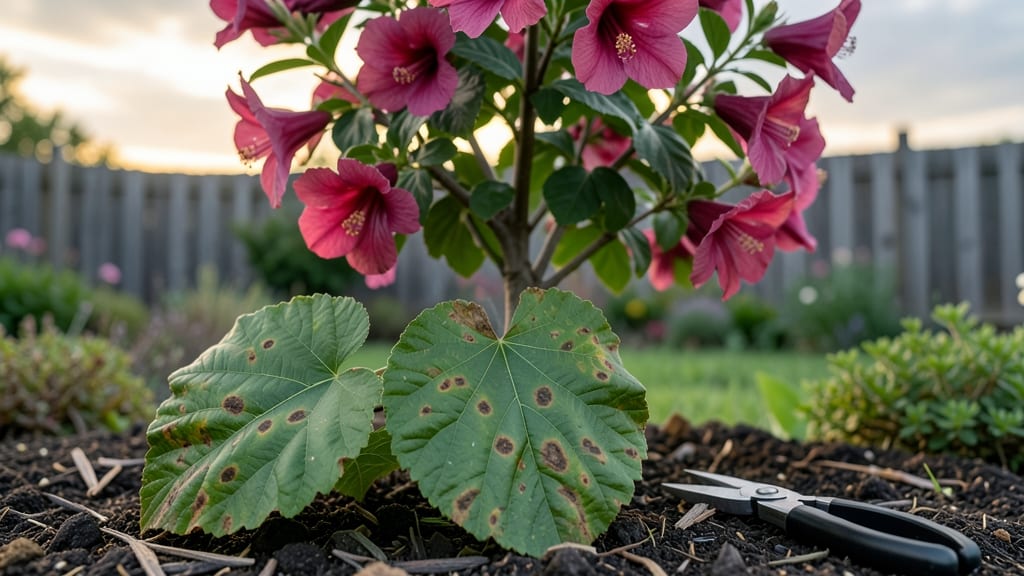
Check out these Rose of Sharon disease pictures to instantly spot the dark, spreading spots on your plant’s leaves—here’s how to ID and treat leaf spot or fungal blight fast. These diseases start as tiny specks but turn into unsightly patches that weaken your shrub if ignored.
The good news? Recognizing the symptoms early means you can stop them before they spread.
Most fungal issues appear as brown or black spots with yellow halos, often with a white powdery coating underneath. Powdery mildew loves humid summers, while leaf spot thrives when leaves stay wet too long.
I’ve seen these problems ruin entire shrubs in just a few weeks, but proper care can bring them back to vibrant health.
Your first move: prune infected leaves immediately and remove fallen debris. For stubborn cases, a copper fungicide spray or neem oil mix works wonders—just apply it on a dry, breezy day. With the right treatment, your Rose of Sharon can bounce back stronger than ever.
Still unsure? Snap a photo and compare it to trusted disease guides online. When in doubt, a local nursery or extension office can confirm the issue and suggest tailored solutions. Prevention is key—keep your shrub well-spaced and water at the base, not overhead.
Root Causes of Rose of Sharon Issues
When your Hibiscus syriacus—commonly called the Rose of Sharon—starts showing signs of decline, it’s often due to a mix of environmental stressors, microbial invaders, or poor cultural practices. Understanding the why behind these problems is the first step to restoring your plant’s health.
Below, we break down the key culprits behind leaf spot, fungal blight, and other common diseases, with actionable science-backed explanations.
Fungal pathogens are the primary cause of Rose of Sharon diseases, thriving in warm, humid conditions. These microscopic organisms latch onto weak spots in leaves and stems, leading to unsightly spots, wilting, or even plant death. Here’s how they exploit your plant:
- High Humidity + Stagnant Air: Fungi like Septoria and Alternaria (common leaf spot culprits) spread rapidly when humidity hovers above 70% for prolonged periods. Poor airflow—often caused by overcrowded plants or dense foliage—traps moisture on leaves, creating a fungal buffet. Pro tip: 🌡️ Aim for 40–60% humidity and prune for airflow.
- Wet Leaves Overnight: Morning dew or overhead watering keeps leaves damp for hours, giving fungi the perfect entry point. Did you know? Fungal spores can germinate within 4–6 hours of prolonged leaf wetness. Switch to drip irrigation or water at the base.
- Old or Damaged Leaves: Fungi target stressed tissue first. Yellowing, torn, or senescent leaves act as gateways. Action step: Remove affected foliage immediately and dispose of it in the trash (not compost)—fungi can survive in organic matter.
🔬 The Science: Fungal spores release enzymes that break down the plant’s cuticle (its protective skin), allowing them to penetrate and feast on nutrients. Some, like Botrytis (gray mold), even produce toxins that trigger leaf necrosis.
While pests don’t cause diseases directly, their feeding weakens the Rose of Sharon, making it vulnerable to infections. Here’s how they pave the way:
- Japanese Beetles & Leafhoppers: These insects skeletonize leaves (eat the soft tissue, leaving veins), reducing the plant’s ability to photosynthesize. Weakened leaves are 3x more likely to develop fungal spots. Pro tip: 🐛 Handpick beetles early in the morning or use neem oil as a deterrent.
- Aphids & Spider Mites: Their honeydew secretions create a sticky residue that traps moisture and spores. This sticky layer also encourages sooty mold, a secondary fungus that blackens leaves. Solution: Blast off pests with water or apply insecticidal soap.
- Boring Insects (e.g., Rose Chafers): Larvae tunnel into stems, disrupting nutrient flow and creating entry points for bacterial or fungal invaders. Watch for: Sawdust-like frass (insect droppings) at the base of stems.
💡 Key Insight: A single pest outbreak can trigger a cascade of diseases. For example, aphid damage + high humidity = powdery mildew in 7–10 days.
Diseases don’t just appear out of nowhere—they exploit environmental imbalances. These factors create the ideal conditions for pathogens to take hold:
| Factor | How It Weakens the Plant | Actionable Fix |
|---|---|---|
| Poor Drainage | Waterlogged soil suffocates roots, starving the plant of oxygen and nutrients. Result: Stunted growth + fungal root rot (Phytophthora). | Amend soil with compost or perlite. Ensure pots have drainage holes. |
| Nutrient Deficiencies | Low nitrogen = pale, weak leaves. Low potassium = poor disease resistance. Fungi love malnourished plants! | Test soil and fertilize with a balanced 10-10-10 formula in spring. |
| Extreme Temperature Shifts | Sudden cold snaps or heatwaves shock the plant, opening stomata (pores) and inviting fungal entry. Example: Anthracnose thrives in 60–80°F with high moisture. | Mulch with 3–4 inches of wood chips to moderate soil temp. Avoid late-season fertilizing. |
| Overhead Irrigation | Splashing water spreads spores from soil to leaves. Stat: 60% of fungal diseases spread via water droplets. | Upgrade to soaker hoses or drip systems aimed at the soil. |
✨ Pro Tip: Healthy Rose of Sharon plants resist diseases better. Focus on preventive care—like proper spacing (3–5 feet apart) and regular pruning—to reduce stress.
By addressing these root causes, you’ll not only treat existing issues but also prevent future outbreaks. Next, we’ll explore how to spot these problems early using visual clues from your plant.
How to Treat and Prevent Rose of Sharon Diseases
When your Hibiscus syriacus (Rose of Sharon) starts showing signs of leaf spot, fungal blight, or other diseases, acting quickly can save your plant—and your sanity. Below, we’ve mapped out practical solutions based on the most common causes, along with prevention tips to keep your shrub thriving.
Think of this as your step-by-step guide to a healthier, happier Rose of Sharon! 🌿💪
If you’re seeing dark brown or black spots with yellow halos (classic fungal leaf spot), here’s how to tackle it:
🍳 Remove Infected Foliage
- Step 1: Snip off all infected leaves with clean pruners (sterilize with rubbing alcohol between cuts).
- Step 2: Dispose of them in the trash —not the compost—to prevent spores from spreading.
- Pro Tip: 💡 If the spots are severe, remove up to 30% of the plant’s foliage to improve airflow and reduce humidity.
👨🍳 Apply Fungicide
- Step 1: Choose a copper-based fungicide (like Cupric Hydroxide) or a neem oil solution (1 tsp neem oil + 1 quart water + a drop of dish soap).
- Step 2: Spray both sides of the leaves thoroughly, focusing on the undersides where spores love to hide.
- Step 3: Reapply every 7–10 days or after rain, as fungicides wash off.
🌡️ Improve Air Circulation
- Step 1: Prune back overcrowded branches to create space between stems.
- Step 2: Space plants at least 3–4 feet apart to reduce humidity buildup.
- Pro Tip: ✨ If your Rose of Sharon is in a container, ensure it has drainage holes and isn’t sitting in saucers of water.
Seeing a white, powdery film on leaves? Powdery mildew thrives in shady, humid conditions. Here’s how to banish it:
🔪 Prune for Sunlight
- Step 1: Thin out dense foliage to let more sunlight reach the inner branches.
- Step 2: Consider relocating the plant to a sunnier spot (at least 6 hours of direct sun/day).
🥘 Homemade Spray Remedy
- Step 1: Mix 1 tbsp baking soda + 1 tsp dish soap + 1 gallon water.
- Step 2: Spray early in the morning (so the leaves dry quickly) and repeat every 5–7 days.
- Pro Tip: 🌡️ For severe cases, add 1 tbsp hydrogen peroxide (3%) to the mix for extra antifungal power.
🎯 Prevent Future Outbreaks
- Step 1: Water at the base (avoid wetting leaves) and early in the day so foliage dries fast.
- Step 2: Space plants 6+ feet apart to improve airflow.
Pests weaken plants, making them more susceptible to disease. Here’s how to evict them:
🚿 Blast Off Pests with Water
- Step 1: Use a hose with a strong stream to knock off aphids and mites (do this early in the day).
- Step 2: Repeat every 2–3 days until pests are gone.
🍃 Neem Oil or Insecticidal Soap
- Step 1: Apply neem oil spray (2 tbsp neem oil + 1 tsp soap + 1 quart water) or insecticidal soap.
- Step 2: Spray until leaves are glistening and reapply every 5–7 days.
🐞 Introduce Beneficial Insects
- Step 1: Release ladybugs or lacewings (available at garden centers) to eat aphids naturally.
- Pro Tip: 💡 Plant marigolds or dill nearby to attract these helpful predators.
An ounce of prevention is worth a pound of cure! Use these strategies to keep your Rose of Sharon disease-free:
| Problem | Solution |
|---|---|
| Poor Airflow | Prune regularly to open up the center of the shrub. |
| Overwatering | Water deeply but infrequently—let the top 2 inches of soil dry out between waterings. |
| Fungal Spores Lingering | Clean up fallen leaves and debris around the plant year-round. |
| Nutrient Deficiency | Fertilize in early spring with a balanced 10-10-10 or rose-specific fertilizer. |
| Stress from Transplant Shock | Wait 2–3 weeks after planting before fertilizing or pruning. |
With these targeted fixes and preventive habits, your Rose of Sharon will bounce back faster—and stay disease-resistant for years. Happy gardening! 🌸🌿
Frequently asked questions about Rose of Sharon diseases
How can I tell if my Rose of Sharon has powdery mildew vs. leaf spot?
Powdery mildew appears as a white, powdery coating on leaf surfaces, often starting on the undersides. Leaf spot shows as dark brown or black spots with yellow halos—check both sides of leaves for these differences. The key is that powdery mildew looks like dust, while leaf spot creates distinct discolored patches.
What's the fastest way to stop fungal diseases from spreading?
Remove all infected leaves immediately and dispose of them in the trash (not compost). Then apply a copper fungicide or neem oil spray to healthy foliage. Prune for better airflow and water at the base instead of overhead. These steps can halt spread within 3–5 days if done consistently.
Can I use household items to treat Rose of Sharon diseases?
Yes! For mild cases, mix 1 tbsp baking soda + 1 tsp dish soap + 1 gallon water and spray leaves. For fungal spots, try a 1:10 hydrogen peroxide (3%) to water solution. Always test on a small leaf first. These work best for prevention or early-stage issues—severe infections need stronger fungicides.
Why does my Rose of Sharon keep getting diseases even after treatment?
This usually means the root cause isn't fixed. Check for poor drainage, overcrowding, or overhead watering—fungi love these conditions. Also verify you're applying treatments every 7–10 days (fungicides wash off quickly). A soil test can reveal nutrient deficiencies that weaken resistance.
Is it safe to prune diseased Rose of Sharon branches?
Yes, but sterilize your pruners with rubbing alcohol between cuts to prevent spreading spores. Remove only 30% of foliage max—pruning too much stresses the plant further. Always prune in dry weather and dispose of infected clippings properly.