
Shrubs
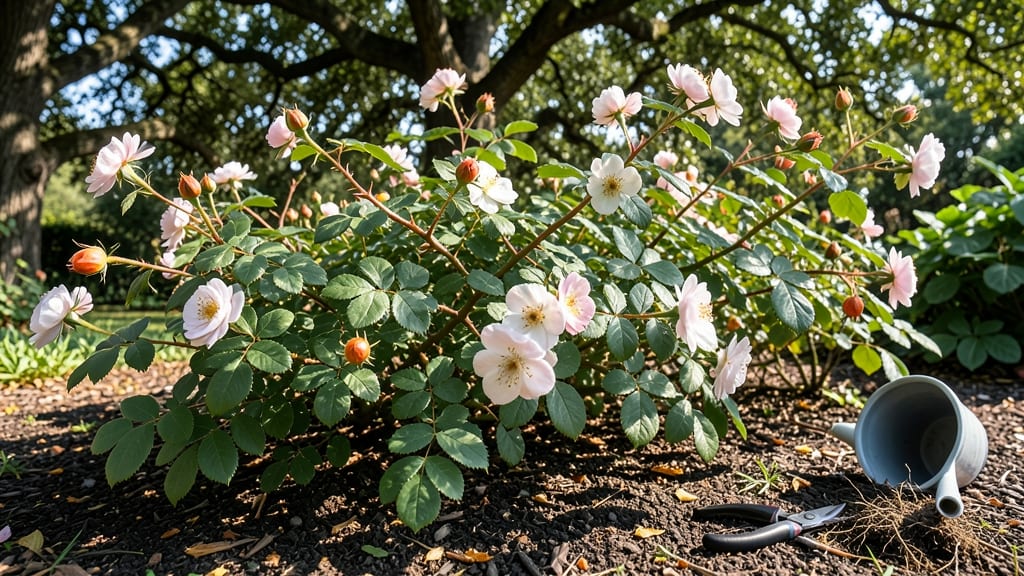
A briar rose refers to thorny, fragrant roses from the Rosa genus, famously tied to fairy tales like Sleeping Beauty as symbols of both enchantment and peril. These hardy shrubs flourish in gardens, offering dense foliage and showy blooms ideal for hedges or decorative borders.
A briar rose isn't just a fairy-tale plant—it's a real, resilient shrub with deep cultural roots. 🌹 The term often refers to Rosa rubiginosa, the dog rose, whose thorny vines and delicate blooms inspired classic stories.
Unlike modern hybrid roses, these varieties thrive with minimal care, making them perfect for both cottage gardens and urban landscapes. Their hardiness and adaptability let them survive in various climates, while their fragrant flowers attract pollinators year-round.
What sets briar roses apart is their dual nature: their beauty hides sharp thorns, much like the duality in folklore where magic and danger coexist. In gardening, this means they're excellent for natural privacy screens or dramatic focal points.
Many varieties, like Rosa rugosa, also resist pests and diseases better than fancier hybrids, proving that old-school roses pack modern practicality.
💡 In This Article
- Briar Rose Origins: Myths, Fairy Tales, and Botanical Roots
- Growing and Caring for Briar Roses in Your Garden
Briar rose origins: myths, fairy tales, and botanical roots
The term "briar rose" was immortalized by Charles Perrault's 1697 fairy tale Sleeping Beauty, where Princess Aurora pricks her finger on a spindle and falls into a magical sleep surrounded by thorny roses. 🌹 This story drew from older European folklore about enchanted forests and cursed beauty—think of the German tale Dornröschen or the Roman myth of Rosamund, who was said to have been entombed in a rose thicket.
The symbolism of roses as both beautiful and dangerous aligns perfectly with their botanical reality: their delicate petals hide razor-sharp thorns that can reach 1-2 inches in length.
Botanically, the classic "briar rose" refers to Rosa rubiginosa (dog rose), a species native to Europe with arching stems and clusters of 5-petaled pink blooms that smell faintly of almonds. Unlike modern hybrid roses bred for showy petals, these wild roses prioritize hardiness and fragrance over size.
Their thorns aren't just for defense—they help the plant climb and support its sprawling growth habit. 🌿 What's fascinating is how these plants reproduce: their hips (the bright red seed pods) are packed with vitamin C and were historically used to prevent scurvy, proving their practical value beyond fairy tales.
The contrast between folklore and reality is striking. In stories, briar roses are often depicted as magical barriers—like the thorny hedge surrounding Sleeping Beauty's castle—while in nature, they're opportunistic growers that spread aggressively through suckers and bird-dispersed seeds.
This duality explains why they've been used in both romantic symbolism and practical hedging. For example, Rosa rugosa, another "briar-like" rose, has been planted along coastlines to stabilize dunes because its thick roots and thorns withstand salt spray and erosion.
What most people don't realize is that the "sleeping" aspect of the tale has botanical parallels. Many rose species enter a dormant state in winter, their canes appearing "asleep" until spring warmth triggers new growth. This natural cycle mirrors the fairy tale's themes of time passing while the princess waits.
The thorns themselves tell a story too—they're modified stems that protect the plant's energy reserves, much like how the princess's curse preserved her life force until the true love's kiss.
Culturally, briar roses have appeared in everything from Victorian wreaths to modern tattoos, often representing resilience. Their ability to regrow from cuttings (a trait called "rooting") symbolizes renewal, while their thorns warn against blind trust—just as the spindle in Sleeping Beauty was disguised as harmless.
This dual symbolism makes them perfect for gardeners who want both beauty and boundaries in their landscapes.
For those curious about growing them, start with Rosa canina (the dog rose) or Rosa rugosa—both are tough, fragrant, and thrive in USDA zones 4-9. Their adaptability means they'll grow in poor soil or full sun, though they reward patience with 3-4 seasons of blooms per year.
The key is managing their vigor: prune in late winter to shape them and remove dead wood, but leave some thorns intact—they're nature's built-in security system. 🌟