
Pests and Diseases
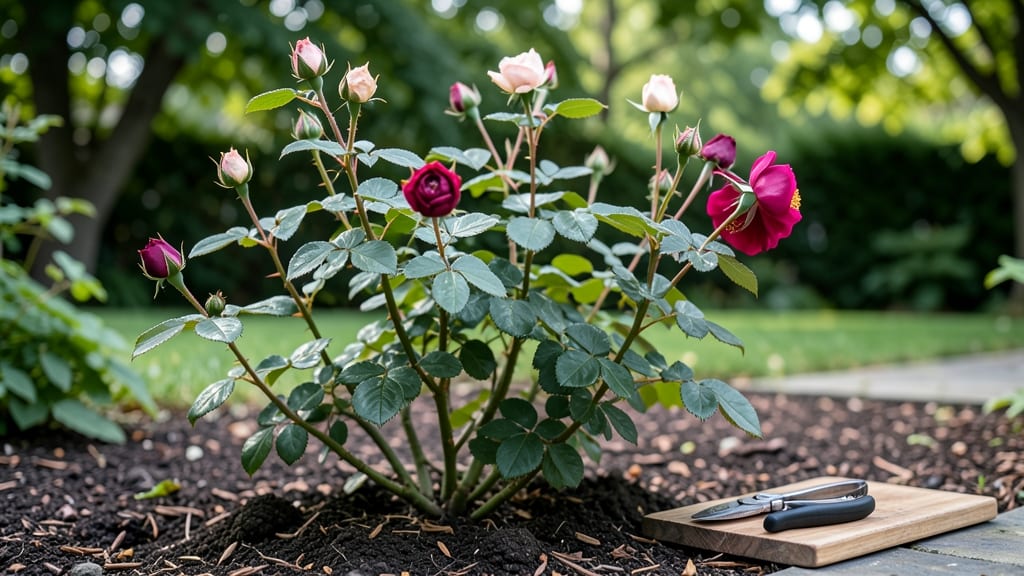
Rose thorns are not poisonous but can cause painful punctures and minor infections if they break the skin, leading to redness, swelling, or irritation. Always handle roses with care to avoid injury.
While rose thorns won't poison you, their sharp edges can easily pierce skin and create entry points for bacteria. 🌹 These modified stems are designed to protect the plant, not harm humans—but their barbed structure makes them surprisingly effective at drawing blood.
Even a small puncture can lead to localized swelling or infection if not cleaned properly, which is why gardeners and florists always recommend wearing gloves when handling roses.
What's particularly interesting is how these thorns form: they're actually modified stems, not leaves, which makes them stronger and more resilient than you might expect. This biological adaptation explains why even delicate-looking roses can deliver surprisingly painful pricks.
💡 In This Article
- Understanding Rose Thorns: Pain and Infection Risks
- Safe Handling and First Aid for Rose Thorn Injuries
Understanding rose thorns: pain and infection risks
Rose thorns aren't poisonous, but their biological design makes them surprisingly effective at puncturing skin. These aren't simple leaves or branches—they're modified stems called prickles, which grow from the plant's epidermis rather than its vascular system.
This unique structure gives them a sharp, curved shape that can penetrate skin with 1-2 millimeters of pressure, creating tiny wounds that may not bleed visibly but are still vulnerable to infection.
The pain comes from these thorns' micro-barbed edges, which catch on skin fibers as they're withdrawn. Think of it like a tiny fishhook—each prick can feel more painful than it looks due to the way the barbs resist removal.
The deeper the puncture, the higher the risk of introducing bacteria like Staphylococcus or Streptococcus, which thrive in the moist environment of fresh wounds. 🌿 In garden settings, thorns often carry soil particles that can introduce additional pathogens.
Infection symptoms typically appear within 12-48 hours and may include localized redness, warmth, swelling, or even pus formation. Severe cases—especially with deep punctures or pre-existing skin conditions—can lead to systemic symptoms like fever or swollen lymph nodes.
The risk increases with thorny rose varieties like Rosa rugosa or Rosa canina, whose thorns are particularly dense and sharp, compared to hybrid teas which have softer, more flexible thorns.
What makes rose thorns particularly tricky is their hollow core structure, which acts like a microscopic syringe. When they pierce skin, they can inject small amounts of plant sap containing mild irritants, though nothing toxic.
This explains why some people experience itching or mild allergic reactions even without visible wounds. The sap's pH is slightly acidic (around 5.5-6.0), which can further irritate fresh punctures.
Interestingly, the thorn's angle matters too. Thorns grow at 30-60 degree angles from the stem, which means pricks often happen when you brush against roses rather than poke yourself directly.
This explains why gardeners frequently get thorn injuries on their forearms and hands—areas that make incidental contact during pruning or handling. The combination of sharpness, barbs, and angle makes roses one of the most common plant sources of punctures in gardening.
For comparison, cactus spines—while sharper—don't penetrate as deeply because they're solid and don't have the same curved structure. Rose thorns, however, are designed to catch and hold, which is why they can create wounds that feel more painful than their size suggests.
This evolutionary adaptation protects the plant's delicate blooms and leaves from herbivores, but it comes with a downside for anyone handling roses without protection.