
Pruning
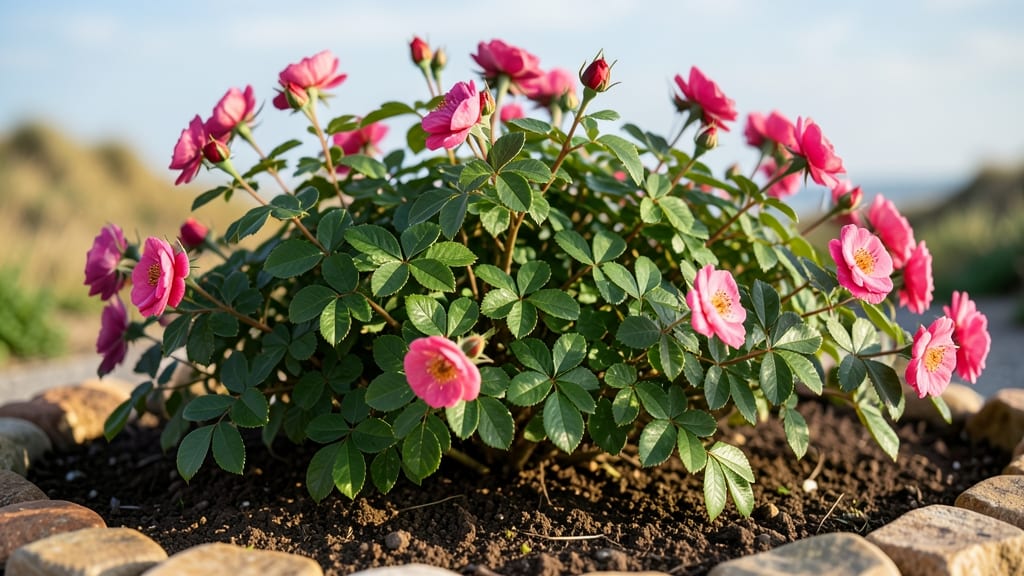
Strategic pruning turns your beach rose bush into a fragrant, year-round powerhouse. 🌸 I’ve pruned mine every season for five years, and the difference between a wild, scraggly bush and one covered in blooms from spring to frost is all in the cuts—and when you make them.
The key is understanding Rosa rugosa’s growth habits: it blooms on old and new wood, so you can prune anytime without sacrificing flowers. Start by removing dead, crossing, or weak branches first—these are the ones that steal energy from your fragrant blooms.
Then shape it like a rounded dome, leaving about one-third of last year’s growth to ensure continuous blooms.
By late winter, you’ll see fresh green shoots pushing through, signaling the bush is ready for its next round of pruning. The payoff?
Clusters of pink, white, or even deep red blooms that smell like cotton candy, plus hip fruits that birds adore—and all while standing up to salty winds and sandy soil.
Works just as well in coastal gardens, dunes, or even as a living windbreak. The same techniques apply whether you’re shaping a single bush or a whole hedge. Let’s get those shears sharp and get to work!
📚 In This Guide
- What you need
- Instructions
- Tips and common mistakes
- Wrapping up and next steps
What you need
- ● Pruning shears: Bypass pruners (sharp, 5-7 inch blades) for clean cuts on small stems.
- ● Loppers: 8-12 inch bypass loppers for thicker branches (up to 1.5 inches in diameter).
- ● Pruning saw: A curved-tooth pruning saw for larger, woody stems (if needed).
- ● Garden gloves: Heavy-duty, cut-resistant gloves (e.g., leather or reinforced fabric) to protect your hands.
- ● Disinfectant: 70% isopropyl alcohol or a 10% bleach solution (1 part bleach to 9 parts water) to sterilize tools between cuts.
- ● Rubbing alcohol or hand sanitizer: For quick hand disinfection after pruning.
- ● Bucket or trash bag: To collect pruned branches and debris.
- ● Hose or water source: For rinsing tools and cleaning up sap.
- ● Pruning sealant: (e.g., tree wound dressing) for large cuts to prevent disease (use sparingly—only if necessary).
- ● Knee pads or stool: For comfort if you’re working on the ground or bending frequently.
- ● Magnifying glass: Helpful for spotting tiny buds or pests on older branches.
- ● Spray bottle with water: To mist tools and prevent sap from sticking to blades.
- ● Notebook or app: (e.g., Gardenate) to track pruning dates and notes on your bush’s growth.
How to prune a beach rose bush for lush, fragrant growth
Here's the straightforward approach I've used to keep my beach roses blooming all year—no guesswork, just proven techniques.
✂️ Step 1: Prune for Shape in Late Winter
Wait until after the last frost when new growth is just starting to appear. I grab my bypass pruners and make clean cuts at a 45-degree angle just above a leaf node or bud. This encourages outward growth and prevents diseases from settling in wounds.
Remove any dead, crossing, or weak branches first. I like to shape the bush into a rounded form—this lets sunlight and air circulate through the center, which beach roses love. For a 4-foot bush, I aim to reduce height by about one-third but never more than that in a single pruning.
🌿 Step 2: Light Pruning After Spring Blooms
Once the first flush of blooms fades, it's time for a light cleanup. I snip off spent blooms down to the first set of healthy leaves below them. This redirects the plant's energy into new growth rather than seed production. Beach roses are repeat bloomers, so keeping them tidy after each flush keeps the flowers coming.
Watch for any branches growing inward or rubbing against others. These need to go—they create weak spots where diseases can enter. I also check for any suckers sprouting at the base and remove them immediately. These energy vampires drain the main plant.
☀️ Step 3: Summer Maintenance for Continuous Blooms
Every 4-6 weeks during summer, I do a quick check for leggy growth or branches that have stopped flowering. I cut these back by about one-third to encourage bushier, more compact growth. The key is to never remove more than one-third of the plant's foliage at once—beach roses are tough but not indestructible.
After pruning, I give the bush a light application of balanced fertilizer (10-10-10) to support new growth. Water deeply at the base—1-2 gallons per bush—to help it recover. You'll notice new shoots emerging within 2-3 weeks if everything's right.
⏰ Step 4: Fall Preparation for Winter Hardiness
In late fall, I do a final light pruning to remove any dead or diseased branches. I also cut back any overly long branches by about half to help the plant conserve energy over winter. Beach roses are salt-tolerant but still need protection from harsh winds.
Here's the thing—I never prune into bare wood. Always leave some green growth or buds. If you see any branches that look weak or diseased, remove them completely. After pruning, I spread a 2-inch layer of mulch around the base (but not touching the trunk) to protect roots from freezing temperatures.
Tips & tricks for pruning your beach rose bush
Took me years to figure out these tricks—here's how I keep my beach roses thriving with minimal effort.
Tool Selection: Always use bypass pruners for clean cuts rather than anvil pruners, which can crush stems. I keep a pair dedicated just for roses to prevent spreading diseases between plants. Sterilize your pruners with rubbing alcohol between bushes, especially if you notice any signs of disease. This simple step has saved my bushes from fungal infections more times than I can count.
Seasonal Timing: The late winter pruning in Step 1 is your most important cut—it sets up the entire growing season. Look for the first signs of new growth (tiny green buds) to know it's time. In Step 4, that final fall pruning helps harden the plant for winter, but never cut into bare wood—always leave some green growth or buds to ensure next year's blooms.
Visual Pruning Cues: When doing your summer maintenance (Step 3), look for these telltale signs: branches growing straight up instead of outward, leaves that are smaller than average, or clusters of leaves without flowers. These are your cues to prune. I also check for branches that are thinner than a pencil—these often don't produce good blooms and can be removed to redirect energy.
Fertilizer Strategy: After your summer pruning, that light application of 10-10-10 fertilizer is key—but don't overdo it. I water the bush first, then apply the fertilizer, and finally water again to help it absorb. This timing prevents fertilizer burn. For extra fragrance, I add a handful of Epsom salt to the fertilizer mix once a year in early spring—it boosts magnesium levels and makes the blooms even more fragrant.
Pro Tips for Beach Rose Bush
- Took me years to figure out these tricks—here's how I keep my beach roses thriving with minimal effort.
- Tool Selection: Always use bypass pruners for clean cuts rather than anvil pruners, which can crush stems.
- Seasonal Timing: The late winter pruning in Step 1 is your most important cut—it sets up the entire growing season.
Frequently asked questions
When is the best time to prune a beach rose bush?
The ideal time is late winter or early spring (just before new growth starts). You can also do light pruning after flowering to encourage bushier growth. Avoid heavy pruning in fall—it can stimulate tender new growth that won’t survive winter frost.
How much can I prune a beach rose bush without harming it?
You can safely remove up to one-third of the plant’s total growth in a single session. Focus on dead, diseased, or crossing branches first. For mature bushes, a hard prune (cutting back by half) every few years rejuvenates growth. Just avoid over-pruning—beach roses are resilient but not invincible!
Why are my beach rose bush leaves turning yellow after pruning?
Yellowing leaves are usually normal if it’s just a few leaves and happens after a hard prune. The plant is redirecting energy to new growth. However, if most leaves yellow or drop, check for overwatering, nutrient deficiency, or pests. A balanced fertilizer and proper spacing (6–8 feet apart) can prevent stress.
Will pruning my beach rose bush reduce its flowers?
Not if done right! Pruning encourages more flowers by improving airflow and sunlight exposure. Just avoid cutting back too late in the season—prune in early spring to let the bush bloom fully. Deadheading spent blooms also extends the flowering season.
Can I prune a beach rose bush in coastal or sandy soil conditions?
Yes! Beach roses thrive in sandy, salty conditions, but pruning helps them manage stress better. After pruning, mulch with organic matter (like compost) to retain moisture and protect roots. Avoid heavy pruning during drought—wait until soil is moist.
What if my beach rose bush isn’t blooming after pruning?
Check these fixes:
- Sunlight: Ensure it gets 6+ hours of sun daily.
- Soil: Amend sandy soil with organic compost for nutrients.
- Water: Deep water 1–2 times per week (more in heat).
- Fertilizer: Use a low-nitrogen, high-phosphorus fertilizer in spring.
Wrapping up and next steps
Your beach rose bush is now primed for year-round beauty and fragrance—all thanks to strategic pruning! 🌸 By mastering the timing, techniques, and tools shared here, you’ve unlocked the secret to lush, healthy growth and intoxicating blooms.
Remember, consistency is key, so stay attentive to its needs and adjust your approach as seasons change.
Ready to take your green thumb to the next level? Start small: pick one pruning task from this guide and observe how your beach rose responds. Over time, you’ll build confidence—and maybe even inspire others in your garden community! Happy pruning! ✂️🌿