
Pruning
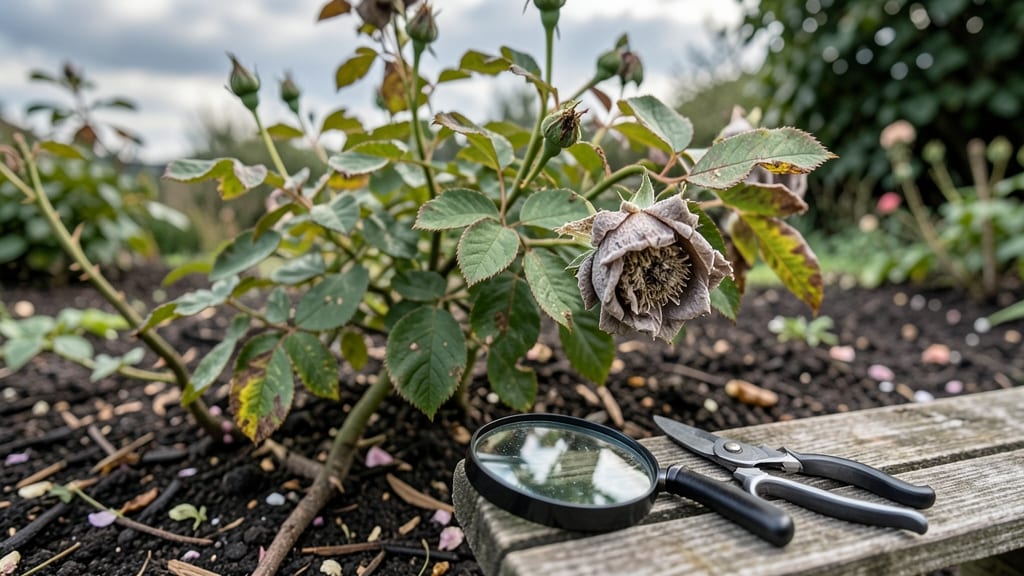
Your roses might look stunning until the gray fuzz appears—botrytis in roses is the silent killer that turns healthy blooms into mushy messes. 🌹 I’ve lost entire canes to this fungal blight, but I’ve also saved roses by catching it early and using organic fixes that actually work.
The key is spotting the symptoms before it spreads: those fuzzy gray spots on petals, stems, or buds? That’s botrytis, and it thrives in damp, crowded conditions.
The bad news is that botrytis loves humidity and poor airflow—think overwatered roses with thick foliage blocking sunlight. The good news? You can outsmart it with pruning, spacing, and organic sprays like neem oil or baking soda mixtures.
I’ve seen roses recover completely when I remove infected parts immediately and improve airflow around the plants. Even better, these methods keep your garden chemical-free while preventing future outbreaks.
By next summer, your roses could be bushier, healthier, and blight-free—with fewer gray spots and more vibrant blooms. The secret is acting fast: prune aggressively, water at the base (not overhead), and space plants so air circulates.
It’s not just about fixing the problem; it’s about creating an environment where roses can’t get sick in the first place.
Works for hybrid teas, floribundas, and even climbing roses—just adjust your pruning style based on the variety. Whether you’re dealing with a single infected bloom or a full-blown outbreak, these steps will get your roses back on track. Let’s turn that gray fuzz into a thing of the past.
The Hidden Triggers Behind Rose Fungus
Botrytis—commonly known as gray mold—is a stealthy fungal foe that thrives in specific conditions, turning vibrant roses into wilted, browned messes. Understanding why this fungus attacks is the first step to stopping it.
Below, we break down the key culprits behind its spread, from environmental factors to gardening habits that invite trouble.
The fungus Botrytis cinerea loves damp, stagnant air—think of it as a fungal version of a soggy sponge. When roses are crowded together or grown in shaded, low-light areas, moisture lingers on petals, stems, and buds, creating the perfect breeding ground. Here’s why it’s a problem:
- Stagnant air prevents evaporation, keeping surfaces wet for long periods.
- Overlapping leaves trap moisture, while dense foliage blocks airflow.
- Morning dew or evening mist (especially in greenhouses) extends dampness, giving spores 24/7 access.
Actionable fix: Space roses 18–24 inches apart, prune for airflow, and avoid overhead watering. If growing in containers, elevate them on saucers to prevent soil splash.
Botrytis is an opportunist—it doesn’t invade healthy roses. Instead, it targets weak spots where the plant’s defenses are down. Common entry points include:
| Cause | How It Invites Fungus |
|---|---|
| 🌬️ Wind or hail damage | Torn petals and broken stems create open wounds, letting spores penetrate. |
| 🔪 Improper pruning | Cutting too close to buds or leaving jagged edges stresses the plant, making it vulnerable. |
| 💧 Overwatering or drought stress | Both extremes weaken roses, reducing their ability to resist fungal attacks. |
| 🌱 Nutrient deficiencies | Low potassium or phosphorus levels weaken cell walls, making them easier targets. |
Actionable fix: Prune with sterilized tools, leaving ¼-inch above buds. Water at the base (not leaves) and mulch to retain moisture without oversaturating soil. Fertilize with a balanced rose-specific feed (e.g., 10-10-10) to bolster defenses.
Botrytis spores overwinter in dead leaves, spent blooms, and fallen petals—acting like fungal time bombs. When new growth emerges in spring, these spores get reactivated by warmth and moisture. Even mummified buds (dried, shrunken flower heads) can harbor thousands of spores.
Why it’s dangerous:
- Spores spread via wind, water splashes, or garden tools.
- Infected debris can re-infect the same plant or nearby roses.
- Greenhouses and conservatories amplify the problem due to controlled, humid environments.
Actionable fix: Clean up thoroughly in fall and spring—remove all plant debris (even from under mulch) and dispose of it in the trash (not compost). Sterilize tools with 10% bleach solution or rubbing alcohol between uses.
Botrytis thrives in temperatures between 60–80°F (15–27°C), especially when nights are warm but humid. Unlike cold-weather fungi, this one hates freezing temps—but it loves the "sweaty" conditions of a greenhouse or a rose bed with poor ventilation.
Key triggers:
- 🌿 Greenhouse humidity (often >80%) without ventilation.
- 🌙 Nighttime temps that don’t drop below 60°F.
- 🌧️ Rain followed by warm days (ideal for spore germination).
Actionable fix: Improve airflow with fans or open vents. In greenhouses, use dehumidifiers or ventilation systems. Avoid watering in the evening to let foliage dry before nightfall.
Pro Tip: 💡 Botrytis often strikes after stress events—like transplanting, extreme heat, or sudden frost. Monitor roses closely during these transitions and apply preventative sprays (like neem oil or baking soda mix) as a safeguard.
Quick Fixes for Gray Mold Woes
Botrytis blight—also known as gray mold—can turn your roses from vibrant blooms to sad, mushy messes faster than you can say "pruning shears." But don’t toss those roses just yet!
With the right approach, you can reverse the damage, save your plants, and prevent future outbreaks—all while keeping your garden organic and thriving. Below, we’ve mapped out practical, step-by-step solutions tailored to the root causes of botrytis in roses, plus prevention tips to keep your garden blight-free.
Cause: Fungal spores spread like wildfire on dead or dying tissue. Fix:
- Snip and toss any infected blooms, buds, or leaves at the first sign of gray fuzz or brown spots. Use sterilized pruners (wipe with rubbing alcohol between cuts) to avoid cross-contamination.
- Don’t compost infected material—bag it in a sealed plastic bag and throw it in the trash. Fungal spores can survive in compost and reinfect your garden.
- Prune for airflow: Thin out crowded stems and remove any overlapping leaves (a fungal buffet!). Aim for open, airy canes—botrytis hates circulation.
💡 Pro Tip: If the infection is severe, cut back to healthy green tissue (about ¼ inch above the last unaffected leaf). This stops the spread and helps the plant redirect energy to recovery.
Cause: Botrytis thrives in damp, shaded conditions where chemical defenses are weak. Fix: Use one of these DIY or store-bought organic sprays to smother the fungus and boost plant immunity:
| Solution | How to Use | Frequency |
|---|---|---|
| Baking Soda Spray | Mix 1 tbsp baking soda + 1 tsp mild soap + 1 gallon water. Spray under leaves and stems. | Every 7–10 days (or after rain). |
| Neem Oil | Combine 1 tbsp neem oil + 1 tsp soap + 1 quart water. Shake well and spray evenly. | 2–3 times weekly until symptoms fade. |
| Hydrogen Peroxide | Use 1 tbsp 3% H₂O₂ per quart of water. Spray directly on infected areas (safe for roses!). | Every 5 days until cured. |
| Copper Fungicide | Follow label instructions for organic copper-based sprays (e.g., CuPro). | Every 10–14 days or after rain. |
⚠️ Important: Always spray early in the morning or late afternoon to avoid burning leaves in direct sunlight. Reapply after rain—fungicides wash off!
Cause: Botrytis loves moisture-loving conditions—think petals trapped in dew, overhead watering, or shaded, humid spots. Fix:
- Water at the base only: Use a soaker hose or drip irrigation to keep leaves dry. Avoid overhead sprinklers (they mimic rain and spread spores).
- Water in the morning: This gives foliage time to dry before evening humidity sets in.
- Improve airflow: Stake tall roses to prevent petals from touching the ground (a prime spot for spores). Space plants 18–24 inches apart for better circulation.
- Mulch correctly: Use straw or pine needles (not thick layers of wood chips), keeping mulch 2–3 inches away from stems to prevent rot.
🎯 Prevention Power Move: Install a small fan on a low setting near roses in high-humidity areas (like greenhouses or shaded patios). The gentle breeze reduces spore landing and speeds up drying.
Cause: Weak, stressed roses are easy targets for botrytis. Fix:
- Feed with compost tea or fish emulsion: Boost nutrient uptake to help roses fight off infections. Avoid high-nitrogen fertilizers—they promote soft, susceptible growth.
- Prune for sunlight: Remove shady branches blocking light. Roses need 6+ hours of sun daily to stay resilient.
- Reduce stress: Avoid over-pruning or sudden water changes—stress invites fungal attacks.
✨ Bonus Boost: Spritz roses with a weak solution of seaweed extract (1 tbsp per gallon of water) once a month. It enhances natural defenses and improves drought tolerance.
If your roses are heavily infected (e.g., entire stems are mushy or covered in mold):
- Isolate the plant immediately to prevent spread.
- Prune back to healthy growth (use sterilized tools!).
- Apply a thick layer of wood ash around the base (contains fungicidal properties).
- Monitor for 2 weeks: If new growth appears clean, reintroduce the plant to the garden. If not, remove it entirely.
| Season | Task |
|---|---|
| Spring | Prune early to improve airflow; apply neem oil spray as buds form. |
| Summer | Mulch lightly; water deeply but infrequently; spray baking soda after rain. |
| Fall | Clean up all debris (leaves, petals); apply copper fungicide before winter. |
| Winter | Remove deadheading (botrytis spores hide in fallen blooms); protect with row covers if frost is expected. |
Final Thought: Botrytis may be a sneaky foe, but with vigilant pruning, smart watering, and organic defenses, you can outsmart it every time.
Start with one fix today—maybe a deep prune or a neem oil spray—and watch your roses bounce back to their glorious, blight-free best! 🌹💪
Frequently asked questions
What does botrytis look like on rose petals?
Botrytis starts as small, water-soaked brown or gray spots on petals or buds. As it spreads, you’ll see fuzzy gray mold (like dust) and petals that turn brown, shrivel, or develop a mushy texture. In advanced cases, entire blooms collapse into mummified, dried masses. Check the undersides of leaves too—gray fuzz there means the fungus is spreading.
Can I save roses already infected with botrytis?
Yes! Prune infected areas immediately—cut back to healthy green tissue (¼ inch above the last clean leaf). Remove all infected blooms and debris (don’t compost them!). Apply a neem oil or baking soda spray every 5–7 days for 2–3 weeks to stop the spread. Improve airflow by spacing plants and watering at the base only. Most roses recover fully with aggressive early action!
Why does botrytis keep coming back even after treatment?
Botrytis spores overwinter in dead plant debris, so if you leave infected leaves or mummified buds in the garden, they’ll reinfect next season. Always remove ALL debris (even from under mulch) and sterilize tools with rubbing alcohol or bleach. Also, check for poor airflow—crowded roses or shaded areas trap moisture, giving spores a perfect breeding ground.
Is botrytis harmful to humans or pets?
No, botrytis isn’t toxic to humans or pets. However, infected plant debris can spread spores, so wear gloves when pruning and avoid composting diseased material. If your pet ingests moldy plant matter, it may cause mild stomach upset, but it’s not dangerous. Focus on removing infected parts to protect your garden, not your family.
How can I prevent botrytis in greenhouses?
Greenhouses are botrytis hotspots due to high humidity. Improve airflow with fans or open vents, and use a dehumidifier to keep humidity below 60%. Water early in the morning and avoid overhead sprinklers. Space roses 18–24 inches apart and prune for open canes. Apply a preventative copper fungicide spray every 2 weeks during humid seasons.