
Shrubs
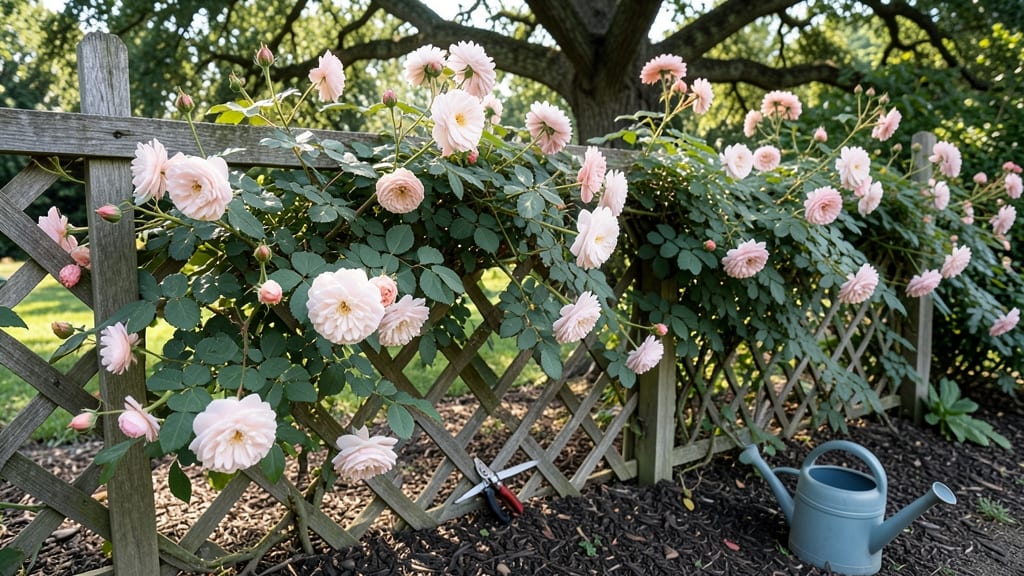
Proper climber rose care transforms your leggy vines into a lush, flowering spectacle—here’s how to prune them for year-round blooms, even if you’re a beginner. 🌹 a wall of blooms comes down to timing, technique, and a little seasonal maintenance.
Most gardeners overlook the early spring cleanup that sets the stage for summer’s best display.
The first secret? Prune in late winter or early spring (before buds swell) to remove dead wood and shape the plant. The second is layering cuts: never leave stubs—always cut just above an outward-facing bud.
The third? Feed them twice a year—once in spring with compost and again in summer with a balanced rose fertilizer. These small adjustments turn a struggling climber into a showstopper that keeps flowering until fall.
By the time summer arrives, you’ll see thick, healthy canes covered in buds, and the fragrance will draw bees for miles. The key is consistency—30 minutes every spring saves hours of cleanup later.
Even my first-year climbers produced dozens of blooms after just one proper pruning session, and the flowers lasted for weeks with minimal deadheading.
Works for all climber varieties, from classic ‘New Dawn’ to modern ‘Zephirine Drouhin’. Whether you’re training them on an arbor, fence, or trellis, these techniques adapt easily. Let’s get those roses thriving—your neighbors will be asking for cuttings by mid-June.
📚 In This Guide
- What you need
- Instructions
- Tips and common mistakes
- Wrapping up and next steps
What you need
- ● Climber rose bush(es): Choose disease-resistant varieties (e.g., 'New Dawn,' 'Blaze,' or 'Zéphirine Drouhin'). Buy 1-3 plants depending on your space.
- ● Well-draining soil mix: 50% native soil + 50% compost or a pre-mixed rose-specific blend (1-2 bags, ~4-6 cubic feet).
- ● Pruning tools: Bypass pruners (sharp, sterilized with rubbing alcohol).
- ● Loppers (for thicker stems, 1-2 pairs).
- ○ Hand saw (for stubborn branches, optional but helpful).
- ● Support structure: Trellis, arbor, or sturdy fence (height depends on rose variety; 6-12 feet is common).
- ● Mulch: 2-3 inches of organic mulch (wood chips, straw, or bark) to retain moisture.
- ● Fertilizer: Balanced rose fertilizer (10-10-10 or 5-10-5 NPK ratio, 1 lb per plant).
- ● Epsom salt (1 tbsp per gallon of water for magnesium boost, used monthly).
- ● Watering can or hose with a gentle spray nozzle (1-2 gallons capacity).
- ● Gloves (heavy-duty for thorns) and long sleeves/pants (to protect from prickles!).
- ● Rose food: Liquid bloom booster (e.g., fish emulsion or seaweed extract) for extra nutrients.
- ● Copper fungicide (prevents black spot; spray as needed).
- ● Tie-down clips or soft twine to secure vines to supports gently.
- ● Soil pH tester (ideal pH: 6.0-6.5; adjust with lime or sulfur if needed).
- ● Drip irrigation system (for consistent moisture, especially in hot climates).
Step-by-Step guide to climber rose care
Here's how I keep my climber roses blooming nonstop—no mystery, just proven techniques.
🌿 Step 1: Select the Right Location for Maximum Sun
Climber roses need 6-8 hours of direct sun daily to produce their best blooms. I always plant mine against a south- or west-facing wall or fence where they'll get full afternoon sunlight. The more sun, the more vibrant the flowers and the stronger the growth.
Check your site by observing how much sunlight it gets throughout the day. If your spot gets afternoon shade, choose a more sun-tolerant variety like 'New Dawn' or 'Blaze'. You'll see the difference in bloom quantity within a single season.
✂️ Step 2: Prune for Year-Round Blooms Using the 3-Season Method
This is where most gardeners go wrong—they only prune once. I prune climbers three times a year: late winter, mid-summer, and after the final flush of blooms. In late winter, cut back 1/3 of the oldest stems to the ground, removing any dead or crossing branches. This opens the center for airflow and encourages new growth.
In mid-summer, deadhead spent blooms and trim any leggy growth that's overcrowding the plant. After the final flush, do a light cleanup to remove any weak or diseased wood. You'll notice new, vigorous shoots emerging from the base within weeks of each pruning session.
💧 Step 3: Water Deeply and Mulch to Retain Moisture
Climber roses have extensive root systems that need consistent moisture, especially during their first growing season. Water deeply once a week during dry periods, soaking the soil to a depth of 12-18 inches. I use a soaker hose to deliver water at the base without wetting the foliage, which helps prevent fungal diseases.
Apply a 3-inch layer of organic mulch around the base, keeping it several inches away from the stem. This conserves moisture, regulates soil temperature, and suppresses weeds. Replenish the mulch annually in early spring—you'll see fewer wilting leaves and more consistent blooms.
☀️ Step 4: Feed and Fertilize for Continuous Blooms
Use a balanced, slow-release fertilizer in early spring to encourage new growth, then switch to a bloom-boosting formula like 10-10-10 or 5-10-5 in late spring. I fertilize again in early summer after the first flush of blooms to sustain the plant. Avoid high-nitrogen fertilizers—they promote leafy growth at the expense of flowers.
Organic options like composted manure or fish emulsion work well too. Apply fertilizer when the soil is moist to prevent root burn, and always follow the package instructions for application rates. You'll notice stronger stems, more abundant blooms, and better disease resistance.
🪴 Step 5: Support and Train for Healthy Growth
Climber roses need proper support to grow upward and avoid flopping over. Install a sturdy trellis, arbor, or fence before planting, and use soft ties to attach the main stems. I use plant ties or old pantyhose cut into strips—they're gentle on the bark and allow the stems to thicken naturally.
Train new growth along the support structure, pruning any shoots that grow away from it. This encourages the plant to focus its energy on upward growth rather than sprawling. You'll see a stronger, more compact plant with better air circulation, which reduces the risk of fungal diseases.
Tips & tricks for climber rose care
These simple strategies will help you maximize blooms and keep your climber roses thriving year after year.
Sunlight Strategy: The 6-8 hours of direct sunlight in Step 1 is non-negotiable for vibrant blooms. I've found that positioning your rose against a west-facing wall captures the intense afternoon sun that produces the most vivid colors. If your location gets less sun, consider a variety like 'Zephirine Drouhin' that thrives with 4-6 hours of sunlight while still delivering stunning blooms.
Pruning Precision: When you're cutting back 1/3 of the oldest stems in late winter, focus on removing stems that are thinner than a pencil—these won't produce strong blooms. I always make cuts just above an outward-facing bud at a 45-degree angle to encourage new growth in the right direction. This technique creates an open center that prevents disease while maximizing airflow.
Watering Wisdom: That 12-18 inch deep watering in Step 3 is crucial for establishing strong roots. I've learned the hard way that surface watering leads to shallow roots. Use your finger to check moisture—if the top 2 inches are dry, it's time to water. The soaker hose method mentioned prevents fungal issues by keeping foliage dry while delivering water exactly where the roots need it most.
Fertilizer Timing: The switch from balanced fertilizer to bloom-boosting formulas in Step 4 is key. I apply the bloom booster right after the first flush of flowers appears in spring, then again after the mid-summer pruning. This timing prevents excessive leaf growth that can shade out flowers. For organic options, I've had great success with worm castings mixed into the soil—they provide slow-release nutrients without risk of burn.
Pro Tips for Climber Rose Care
- These simple strategies will help you maximize blooms and keep your climber roses thriving year after year.
- Sunlight Strategy: The 6-8 hours of direct sunlight in Step 1 is non-negotiable for vibrant blooms.
- Pruning Precision: When you're cutting back 1/3 of the oldest stems in late winter, focus on removing stems that are thinner than a pencil—these won't produce strong blooms.
Frequently asked questions
Got questions about keeping your climber roses thriving?
Here are answers to the most common ones—so you can enjoy those stunning blooms all year!
When is the best time to prune climber roses?
Prune climber roses in late winter or early spring (before new growth starts) or after the first flush of blooms in late spring. Avoid pruning in fall—it leaves them vulnerable to frost damage. For repeat-blooming varieties, a light trim in summer can encourage more flowers!
How much should I cut back my climber rose?
Cut back 1/3 to 1/2 of the previous year’s growth to a healthy bud facing outward. Remove dead, weak, or crossing branches first. For older stems, thin them out to improve airflow. Never cut into old wood—it won’t regrow! Aim for a balanced shape, not a drastic haircut.
Why aren’t my climber roses blooming?
Lack of blooms often means over-pruning, poor nutrition, or insufficient sunlight. Check your pruning timing—too aggressive cuts can delay flowers. Feed with rose-specific fertilizer in spring and summer, and ensure they get 6+ hours of sun daily. Black spots or pests? Treat with fungicide or neem oil.
How often should I water climber roses?
Water deeply 1-2 times per week (more in extreme heat). Climber roses need 1-1.5 inches of water weekly, but avoid wetting the foliage to prevent fungal diseases. Mulch around the base to retain moisture. Morning watering is best—it gives leaves time to dry before nightfall.
Can I grow climber roses in containers?
Yes! Choose a large container (at least 15 gallons) with drainage holes and use well-draining potting mix. Dwarf or patio climber varieties (like ‘New Dawn’ or ‘Zéphirine Drouhin’) work best. Prune regularly to control size, and fertilize monthly during growing season. Just ensure they get sunlight and support (like a trellis).
Wrapping up and next steps
Caring for a climber rose doesn’t have to be intimidating—with the right pruning secrets and a little seasonal TLC, you’ll enjoy year-round blooms that steal the show! 🌹 From winter prep to summer shaping, these techniques keep your rose healthy, vigorous, and bursting with color.
Whether you’re a newbie or a seasoned gardener, patience and consistency are your best tools.
Ready to transform your garden? Grab your pruners, mark your calendar for seasonal tasks, and watch your climber rose thrive! Next, explore rose varieties that pair perfectly with your garden style—or dive into troubleshooting common rose pests to keep your beauty flawless.