
Shrubs
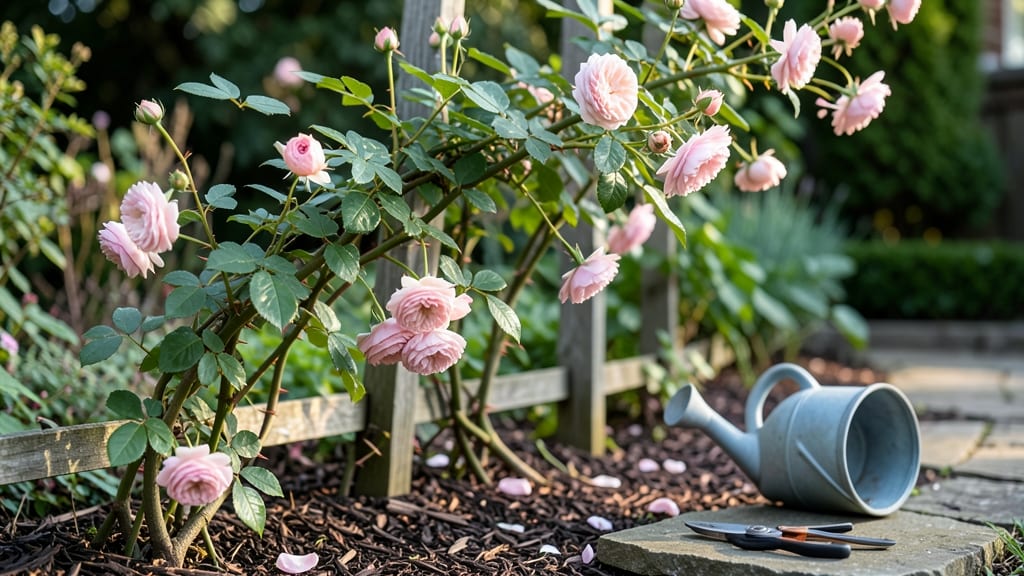
My climbing rambling rose nearly took over the fence last summer—25 feet of fragrant, arching blooms that turned my backyard into a fairy-tale scene. 🌹 These roses aren’t your typical shrubs; they’re dramatic, late-blooming powerhouses that reward patience with clouds of flowers from midsummer through fall.
The secret? Pruning at the right time (yes, after they bloom) and giving them space to stretch their legs.
You’ll need a sturdy trellis, well-draining soil, and full sun (at least 6 hours daily). Ramblers thrive in zones 4-9 but hate soggy roots—amend heavy soil with compost and mulch to keep moisture consistent.
Water deeply once a week (more in extreme heat), and fertilize lightly in spring to avoid leggy growth. The real magic happens when you prune: cut back old canes in late winter and shape new growth in early spring.
By mid-July, you’ll be surrounded by pink, white, or deep red blooms that perfume the air for weeks. The flowers may look delicate, but these roses are tough—drought-tolerant once established and resistant to many pests.
Just watch for black spot (remove infected leaves immediately) and avoid over-pruning, which kills next year’s flowers.
Perfect for fences, arbors, or even old trees—ramblers transform any space into a romantic escape. Start small with a single variety, like ‘New Dawn’ or ‘Rambling Rector,’ and let it teach you the joy of waiting for the grand finale.
Your neighbors will ask how you did it; the answer? Patience and a sharp pair of pruners.
📚 In This Guide
- What you need
- Instructions
- Tips and common mistakes
- Wrapping up and next steps
What you need
- ● Climbing Rambling Rose: Choose a fragrant variety like 'New Dawn', 'Rambling Rector', or 'Zéphirine Drouhin' (1-2 plants for optimal coverage).
- ● Support Structure: Arbor, trellis, or pergola (at least 8–12 feet tall for full growth).
- ● Strong wooden stakes or wires (if DIY-ing a support).
- ● Pruning Tools: Bypass pruners (sharp, clean—sterilize with rubbing alcohol).
- ● Loppers (for thicker stems, 10–12 inches cutting capacity).
- ● Hand saw (for over 1.5-inch diameter branches).
- ● Garden Essentials: Gloves (cut-resistant for thorns).
- ● Hose or watering can (deep watering 1–2 times/week).
- ● Compost or organic mulch (2–3 inches to retain moisture).
- ● Rose fertilizer (balanced 10-10-10 or rose-specific in spring/fall).
- ● Epsom salt (1 tbsp per gallon of water for magnesium boost).
- ● Pruning sealant (for large cuts to prevent disease).
- ● Garden twine or soft ties (to secure vines gently to supports).
- ● Fragrance journal (to track bloom times and scent notes!).
Instructions for cultivating a climbing rambling rose
Here’s how to coax those lush, fragrant canopies into thriving reality—season after season.
🌱 Step 1: Select the Perfect Planting Site
Rambling roses demand full sun—at least 6 hours daily—to bloom their best. I always choose a spot with south or southwest exposure, where the morning sun warms the roots while afternoon light fuels growth. Avoid low-lying areas where cold air settles, as these roses are tender to frost damage.
Check the soil’s drainage by digging a 12-inch hole—if water pools after 30 minutes, amend with 2-3 inches of coarse sand or gravel mixed into the native soil. Ramblers need well-aerated roots to prevent rot, and soggy conditions will stunt their vigorous growth. Test the pH too; aim for 6.0-6.5—slightly acidic soil unlocks their fragrance potential.
☀️ Step 2: Plant with Structural Support in Mind
Install a strong trellis, arbor, or fence at least 6-8 feet tall before planting—ramblers grow 20-30 feet over time, and retrofitting support later risks damaging roots. I use galvanized metal or wooden lattice for durability, securing it 6 feet deep into the ground for stability against wind.
Dig a hole twice as wide as the root ball but no deeper—planting too low suffocates roots. Loosen the roots gently if pot-bound, then position the graft union (2-3 inches above soil level) to prevent sucker growth. Backfill with native soil mixed with compost for nutrients, tamping lightly to eliminate air pockets.
✂️ Step 3: Prune for Airflow and Bloom Structure
Wait until late winter or early spring (when buds swell but haven’t broken) to prune. Remove dead, crossing, or inward-growing canes first—these compete for energy and block airflow, inviting disease. Cut back one-third of the oldest canes to the ground annually to rejuvenate growth; ramblers bloom on new wood, so aggressive pruning encourages lush, fragrant clusters.
Shape the remaining canes to spiral upward along the trellis, tying them loosely with soft plant ties. Avoid over-pruning—leave strong, healthy stems to support the plant’s sprawling habit. You’ll see pink or white blossoms by mid-summer, their intoxicating scent signaling successful care.
💧 Step 4: Water Deeply and Mulch for Retention
Water deeply once a week (or more in drought) to encourage deep root growth. I use a soaker hose at the base, running it for 30-45 minutes to saturate 12-18 inches down. Ramblers are drought-tolerant once established, but wilting leaves mean roots aren’t reaching moisture—adjust your schedule accordingly.
Spread 3-4 inches of organic mulch (like shredded bark) around the base, keeping it 6 inches away from the trunk to prevent rot. Mulch locks in moisture, regulates soil temperature, and suppresses weeds—critical for roses, which hate competition. Refresh the mulch annually in early spring to maintain its insulating properties.
⏰ Step 5: Feed and Protect for Long-Term Health
Apply a balanced rose fertilizer (10-10-10) in early spring and again after blooming to replenish nutrients. I avoid high-nitrogen blends—those promote leafy growth at the expense of flowers. Instead, switch to a phosphorus-rich formula (like 5-10-5) in late summer to boost next year’s blooms.
Watch for Japanese beetles or aphids—these pests target tender new growth. Spray with neem oil at the first sign of damage, or introduce ladybugs for natural control. Deadhead spent blooms regularly to redirect energy into new flowers, and prune again in late summer to remove any weak growth before winter.
Tips & tricks for perfect climbing rambling rose cultivation
Here's what I've learned after years of growing these stunning climbers—small details make all the difference for year-round fragrance.
Sunlight Strategy: While the instructions call for at least 6 hours of sun, I've found that morning sun (east-facing) plus 3 hours of afternoon sun (west-facing) works surprisingly well in northern climates. The key is avoiding hot afternoon sun that can stress the plant—partial shade during peak heat hours actually preserves more blooms. Test your spot by observing how much direct sunlight it gets throughout the day before committing.
Pruning Precision: When cutting back one-third of the oldest canes in Step 3, look for canes that are thicker than a pencil—these are the ones that have outlived their productivity. I make my cuts just above an outward-facing bud at a 45-degree angle to prevent water from pooling. This technique creates better healing and stronger new growth. Also, save those pruned canes—they make excellent cut flowers that last for days in a vase.
Soil Science: The 30-minute drainage test in Step 1 is your best friend. If your soil drains perfectly, you're golden. But if it holds water, don't just add sand—mix in equal parts sand and compost. This combo improves drainage while adding nutrients. I've seen ramblers thrive in containers with a 60/30/10 mix of soil, perlite, and compost, proving you can grow these beauties even without perfect native soil.
Watering Wisdom: The 30-45 minute soaker hose time in Step 4 might seem like overkill, but trust me—it's worth it. Water until you see moisture emerge from the drain holes at the bottom of the planting hole. This ensures you're hydrating the roots properly, not just the surface soil. In summer, I water every 3 days rather than weekly, adjusting based on rainfall rather than sticking rigidly to the schedule.
Pro Tips for Climbing Rambling Rose
- Here's what I've learned after years of growing these stunning climbers—small details make all the difference for year-round fragrance.
- Sunlight Strategy: While the instructions call for at least 6 hours of sun, I've found that morning sun (east-facing) plus 3 hours of afternoon sun (west-facing) works surprisingly well in northern climates.
- Pruning Precision: When cutting back one-third of the oldest canes in Step 3, look for canes that are thicker than a pencil—these are the ones that have outlived their productivity.
Frequently asked questions
Got questions about keeping your climbing rambling rose thriving with year-round fragrance? We’ve got answers!
Here are some of the most common queries from gardeners—plus practical tips to help you master pruning and care.
When is the best time to prune a climbing rambling rose?
Prune your climbing rambling rose in late winter or early spring (before new growth starts). This ensures you remove dead wood while leaving healthy buds intact. Avoid pruning in fall—it can stimulate tender growth that won’t survive winter. For heavy pruning, focus on February or March in most climates.
How much should I cut back my rambling rose each year?
Rambling roses thrive with moderate pruning. Cut back about 1/3 of the oldest canes to the ground each year to encourage new growth. Thin out crowded stems and remove any dead, diseased, or crossing branches. Never prune more than 1/3 in a single year—this can stress the plant.
Can I prune a rambling rose in summer? What about flowers?
Light pruning in summer is okay to shape the plant or remove spent blooms, but avoid heavy cuts. Deadhead faded flowers to encourage more blooms, but leave some spent blooms on old wood (last year’s growth) to support next year’s flowers. Never prune hard in summer—it can reduce winter hardiness.
Why are my rose leaves yellowing or dropping after pruning?
Yellowing leaves post-pruning often signal stress or disease. Check for:
- Over-pruning: Too many cuts can shock the plant.
- Fungal issues (like black spot): Prune in dry weather and sterilize tools with rubbing alcohol.
- Nutrient deficiency: Amend soil with compost or use a balanced rose fertilizer.
Are there fragrant alternatives to climbing rambling roses?
If rambling roses aren’t your style, try these fragrant climbers:
- Clematis (e.g., ‘Jackmanii’ or ‘Henryi’): Fragrant and low-maintenance.
- Jasmine (e.g., ‘Jasminum officinale’): Night-blooming and intensely sweet.
- Star Jasmine (‘Trachelospermum jasminoides’): Evergreen with star-shaped white flowers.
- Honeysuckle (e.g., ‘Lonicera periclymenum’): Tubular blooms loved by pollinators.
Wrapping up and next steps
Transforming your garden into a fragrant sanctuary with a climbing rambling rose is simpler than you think! With the right pruning techniques, you’ll enjoy year-round blooms and intoxicating scents—no green thumb required. Start by gathering your tools, mastering seasonal cuts, and embracing the joy of nurturing this classic beauty.
Ready to elevate your outdoor space? Pick a sunny spot, grab your pruners, and begin your pruning journey today! 🌸✂️ Your garden—and your senses—will thank you.