
Pruning
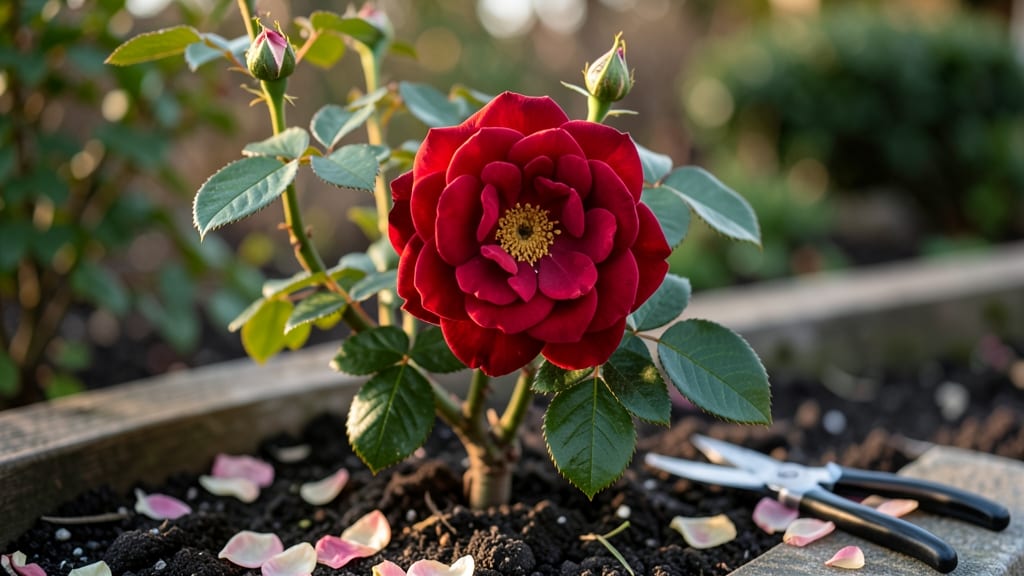
Deadheaded roses aren’t just a chore—they’re the secret to roses that bloom like they’re in a catalog all summer long. ✨ I’ve spent years watching my bushes go from a single flush of flowers to months of nonstop color, just by spending 10 minutes every few days with a sharp pair of pruners.
The key is timing and technique: you want to cut just above a leaf with five leaflets (that’s where new growth starts) and never leave stubs. Hybrid teas and floribundas need frequent deadheading, while climbers and shrub roses can handle a more relaxed approach.
Most people over-prune or under-prune—both mistakes starve the plant of energy.
What you’ll end up with is roses that keep producing those lush, velvety blooms from June until frost, with fewer pests and stronger stems. The plant focuses its energy on making flowers instead of seeds, and you’ll notice new buds forming within days of a good deadheading session.
Works for every type of rose in your garden, from formal hybrid teas to wild, rambling climbers. The only tools you need are clean pruners and a little patience—here’s exactly how to do it right.
📚 In This Guide
- What you need
- Instructions
- Tips and common mistakes
- Wrapping up and next steps
What you need
- ● Pruning shears or bypass pruners: Sharp, clean, and sterilized (1 pair). Look for ergonomic handles for comfort during long sessions.
- ● Garden gloves: Heavy-duty, cut-resistant (1 pair) to protect your hands from thorns and dirt.
- ● Disinfectant (rubbing alcohol or bleach solution): Small bottle (4 oz) to sterilize tools between cuts.
- ● Trash bag or bucket: For collecting spent blooms and debris (1 medium-sized bag or 5-gallon bucket).
- ○ Watering can or hose: To refresh plants post-pruning (optional but helpful for recovery).
- ● Long-handled pruners: For reaching high or thorny roses without straining.
- ● Pruning saw: For thick stems (if your roses have woody growth).
- ● Garden kneeler or stool: For comfort during prolonged pruning sessions.
- ● Compost bin or pail: To repurpose spent blooms as nutrient-rich compost.
- ● Plant food or fertilizer: Light application (e.g., balanced 10-10-10) to boost regrowth after pruning.
Instructions: how to deadhead roses for continuous blooms
Here's the simple method I use to keep my roses flowering like crazy—no fancy tools or guesswork.
✂️ Step 1: Time Your Pruning Perfectly
Deadhead roses immediately after they fade, but only when you see the bloom fully open and petals starting to drop. This is your cue—the plant is already redirecting energy to seed production, and cutting now forces it to produce new buds. I check my roses every morning after watering; that's when I spot the spent blooms most easily.
Never cut into the woody stem below the bloom—you want to leave at least ½ inch above a leaf node or a set of five-leaf clusters. This ensures the plant has energy reserves to fuel new growth. If you cut too far down, you're removing potential bud sites and weakening the stem.
✂️ Step 2: Use the Right Cutting Technique
Make your cuts at a 45-degree angle, about ¼ inch above an outward-facing leaf node. This angled cut prevents water from pooling on the stem, which could rot it. I use clean, sharp pruners—dull blades crush stems and invite disease. A quick wipe with rubbing alcohol between cuts keeps your tools sterile.
Look for the strongest, healthiest stems when making your selection. If you have multiple blooms on one stem, remove the faded ones first, leaving the freshest ones to mature. This keeps your rosebush looking full and encourages balanced growth.
☀️ Step 3: Maintain Season-Long Care After Pruning
After deadheading, give your roses a light watering to help them recover. The plant will redirect energy to new buds within 7-10 days, but it needs moisture to support that growth. I water deeply in the morning so the foliage dries quickly—wet leaves at night attract fungal diseases.
Fertilize lightly with a balanced rose food 2 weeks after deadheading to support new bloom production. Too much fertilizer too soon can burn roots and cause more stress than the pruning itself. Watch for new buds forming at the leaf nodes—this is your sign that the plant is responding well.
✂ Step 4: Handle Problem Blooms Strategically
Some roses produce "thorns" or small, weak blooms that never open properly. These are energy drains—remove them completely by cutting back to the nearest strong stem or bud. I also prune any blooms that appear on old wood (stems from last year) if they're producing fewer than 3-4 petals.
Don't over-prune in fall. Once temperatures drop below 50°F at night, the plant needs to rest. At this point, focus on removing only the most diseased or damaged stems. The goal is to keep the plant healthy through winter so it can burst into bloom again in spring.
Tips & tricks for perfect rose pruning
These simple strategies will help you extend your roses' blooming season without the guesswork.
The Timing Secret: I can't stress enough how important it is to deadhead in the morning after watering. The petals will be fully open, making it easy to spot the exact moment to cut. Here's what I learned the hard way—waiting until afternoon means you might miss the perfect window, and the plant will already be redirecting energy to seed production. That's when you start seeing fewer blooms.
Tool Prep That Changed Everything: Before you even start pruning, wipe down your pruners with rubbing alcohol. I used to skip this step and ended up with more diseases than blooms. The alcohol kills bacteria between cuts, keeping your tools sterile. Also, make sure your blades are sharp—dull blades crush stems instead of making clean cuts, which stresses the plant. A quick test: if it takes more than a gentle push to cut through a stem, your blades need sharpening.
Visual Cue for Perfect Cuts: When you're making that 45-degree angle cut about ¼ inch above a leaf node, look for the outward-facing bud. This is where new growth will emerge. I like to visualize a triangle—base at the leaf node, point at the cut. This angle prevents water from pooling on the stem, which could lead to rot. If you're unsure, take a photo of your first cut to compare with the instructions later.
Fertilizer Timing Wisdom: The 2-week window after deadheading is critical for fertilizer application. Too soon, and you risk burning the roots; too late, and you miss the growth boost. I use a balanced rose food with equal parts nitrogen, phosphorus, and potassium. After applying, give the soil a light watering to help distribute the nutrients. Watch for new buds forming at the leaf nodes—this is your plant's way of saying "thank you!"
Pro Tips for Dead Headed Roses
- These simple strategies will help you extend your roses' blooming season without the guesswork.
- The Timing Secret: I can't stress enough how important it is to deadhead in the morning after watering.
- Tool Prep That Changed Everything: Before you even start pruning, wipe down your pruners with rubbing alcohol.
Frequently asked questions
Got questions about deadheading roses? You’re not alone! Here are some of the most common queries—plus quick, expert answers to keep your roses thriving.
What does "deadheading" mean, and why is it important?
Deadheading is simply removing spent blooms (and sometimes leaves) to encourage new growth. It redirects the plant’s energy from seed production to producing more flowers. Without it, your roses may focus on seed pods instead of vibrant blooms all season!
When is the best time to deadhead roses?
Deadhead roses right after they fade—ideally in the morning when blooms are fresh. For repeat-blooming varieties (like hybrid teas or floribundas), trim just above a five-leaflet leaf or outward-facing bud. Avoid cutting into old wood, or you’ll stunt future growth.
Can I deadhead roses too much? What are the signs?
Over-deadheading stresses plants, especially in late summer. Signs include yellowing leaves, stunted growth, or fewer blooms. Limit pruning to one-third of the plant per season and stop by early fall to let roses harden off for winter.
What if my roses keep blooming but look leggy or sparse?
Leggy or sparse roses often need a light structural prune in early spring. Trim back one-third of the oldest canes to encourage bushier growth. Pair this with balanced fertilization (high phosphorus for blooms) to revive vigor.
Are there alternatives if I hate deadheading?
Yes! Try once-blooming roses (like David Austin varieties), which bloom spectacularly in one flush and require minimal upkeep. Alternatively, use mulch or ground covers to hide spent blooms while still supporting a lush garden aesthetic.
Should I deadhead roses in fall or winter?
No—stop deadheading by late summer (6–8 weeks before first frost). Fall/winter pruning can expose tender canes to cold damage. Instead, focus on cleaning up debris and applying mulch to protect roots.
Still stumped? Drop your rose woes below! We’re happy to help your garden bloom brighter.
Wrapping up and next steps
Deadheading roses isn’t just about tidying up your garden—it’s the secret weapon for lush, continuous blooms that’ll make your neighbors green with envy! 🌹 By mastering the art of trimming spent flowers, you’ll encourage healthier growth, stronger stems, and a showstopping display that lasts all season.
Whether you’re a pruning pro or a beginner, these techniques are your ticket to a thriving rose garden.
Ready to transform your garden? Grab those shears and start deadheading today—your roses (and your future blooms) will thank you! For extra inspiration, sketch a simple pruning plan or snap photos of your progress to track your garden’s stunning growth over time.