
Shrubs
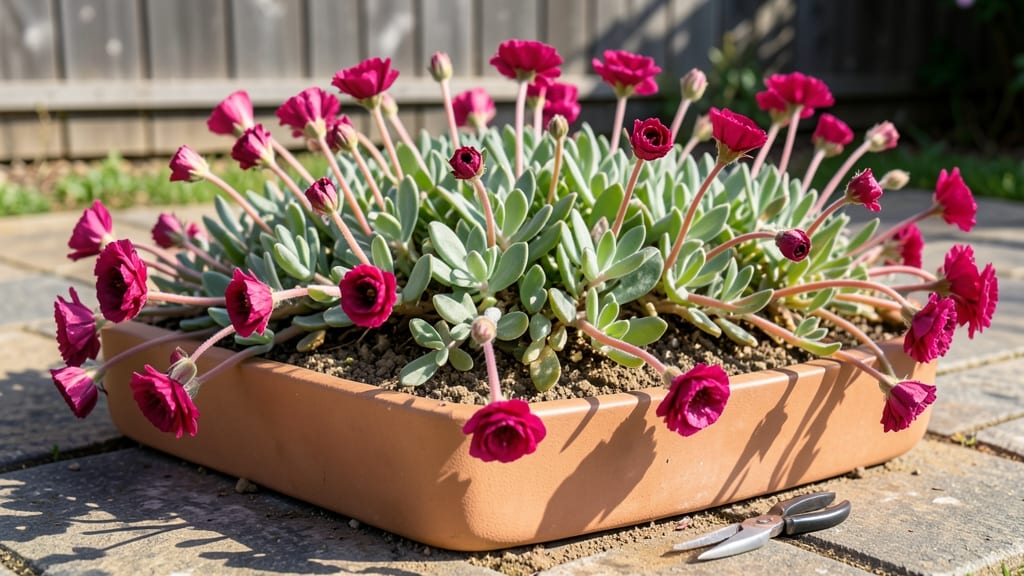
Moss rose refers to the fragrant, fast-growing perennial vine known scientifically as Portulaca grandiflora, celebrated for its vivid blooms, thick succulent leaves, and remarkable ability to thrive in dry conditions. This versatile plant brightens gardens and containers with its cheerful hues of pink, red, yellow, and orange.
This charming plant isn't just a pretty face—it's a powerhouse of adaptability. 🌸 Known for its drought-resistant nature, moss rose actually stores water in its plump leaves, making it perfect for hot, dry climates.
What's fascinating is how it grows: while it appears delicate, it spreads quickly along the ground or climbs supports with its trailing stems. Many gardeners love it for its low-maintenance care and ability to bloom nonstop from spring through fall with proper conditions.
Beyond its visual appeal, moss rose also has practical benefits. Its succulent leaves help suppress weeds naturally, while its vibrant flowers attract pollinators to your garden.
The plant's scientific name, Portulaca grandiflora, gives us clues about its origins in South America and Mexico, where it thrives in rocky, arid environments. This hardy nature makes it an excellent choice for both experienced gardeners and beginners looking to add color without much effort.
💡 In This Article
- Botanical Profile of Portulaca Grandiflora
- Growing Moss Rose: Care Tips for Vibrant Blooms
Botanical profile of Portulaca grandiflora
The scientific name Portulaca grandiflora gives us key insights into this plant's unique biology. The genus Portulaca comes from the Latin word for "purslane," reflecting its succulent leaf structure that stores water like its edible cousin.
The species name grandiflora literally means "large-flowered," which describes its showy blooms that can reach 1-2 inches in diameter—significantly larger than its close relative, the common purslane (Portulaca oleracea).
What makes moss rose's leaves so distinctive is their thick, fleshy texture that's 80-90% water content during peak growth. This succulent adaptation allows it to survive in arid conditions where most plants would wilt.
The leaves grow in pairs along trailing stems that can reach 12-18 inches long, creating a dense mat of green that suppresses weeds naturally. 🌵 Interestingly, the plant's stems have a unique feature: they contain a milky sap that hardens when exposed to air, creating a natural protective barrier against pests.
Native to South America and Mexico, moss rose thrives in rocky, well-drained soils where other plants struggle. Its natural habitat includes coastal areas and high-altitude regions where temperatures fluctuate dramatically between day and night—a resilience that explains why it performs so well in containers.
The plant's classification as both a ground cover and trailing vine comes from its growth habit: while it spreads horizontally, its stems can also climb vertical supports with gentle encouragement, making it versatile for garden designs.
One fascinating botanical detail is how moss rose's flowers open in the morning and close by afternoon, a behavior called nyctinasty. This daily rhythm helps conserve moisture while maximizing pollinator visits during cooler hours.
The blooms' vibrant colors—from deep magenta to sunny yellow—are produced through specialized cells called chromoplasts that contain pigments like anthocyanins and carotenoids. These same pigments give the plant its antioxidant properties, which is why some cultures use moss rose extracts in traditional remedies.
The plant's delicate appearance belies its tough constitution. While its flowers look ephemeral, lasting just 1-2 days each, they're produced in such abundance that the plant maintains continuous color. This "bloom-and-thrive" strategy makes moss rose particularly valuable for gardeners seeking low-maintenance color solutions.
Its ability to self-seed aggressively also means it often returns year after year with minimal intervention.
What most gardeners don't realize is how moss rose's root system contributes to its success. Unlike many vines, it develops a shallow but extensive network of roots that spread outward rather than downward.
This adaptation allows it to access moisture from light rain showers while avoiding waterlogged soils—a perfect match for container gardening where drainage is often limited. 🌿 The combination of these botanical features explains why moss rose has become a favorite among both professional landscapers and home gardeners alike.