
Diseases
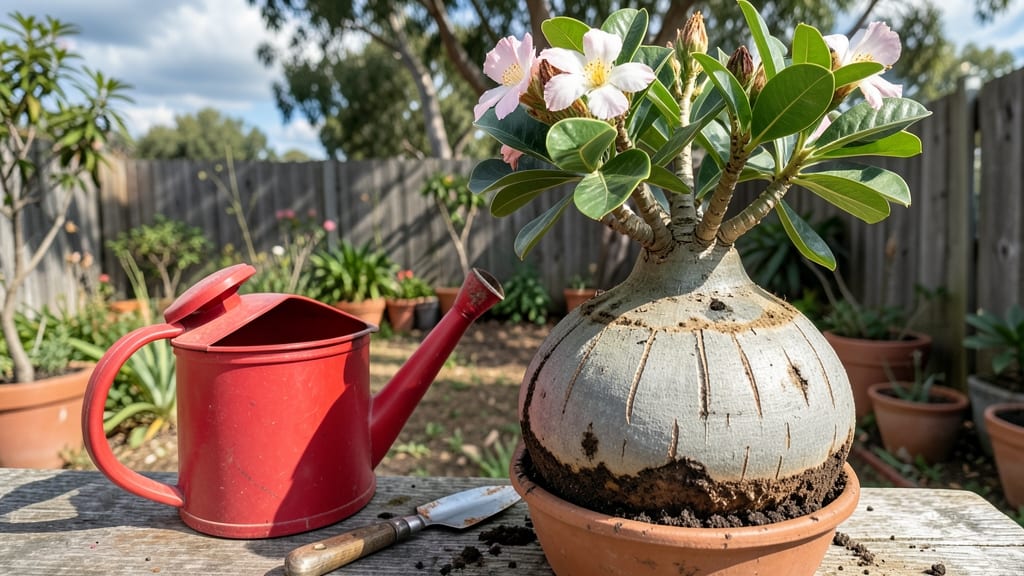
My desert rose nearly died from root rot last summer—until I discovered hydrogen peroxide soaks could save it. 🌵 The blackened roots and sudden wilting made me think the plant was beyond help, but this simple treatment brought it back stronger than ever.
Root rot thrives in soggy soil and poor drainage, turning your desert rose’s roots mushy and brown. Overwatering is the usual culprit, but even well-drained soil can fail if humidity stays high. The key is catching it early—before the fungus spreads beyond control.
A 10-minute hydrogen peroxide soak (3% solution) kills the fungus while saving the roots. Repot in fresh, gritty cactus mix, and adjust watering to once every 2-3 weeks—let the soil dry completely between drinks. Most plants bounce back within weeks if you act fast.
Some cases are terminal, but if your desert rose still has green stems and a few healthy roots, this method gives it a second chance. Prevention is easier: use pots with drainage holes and water only when the soil is bone-dry.
Root Rot’s Hidden Triggers
Desert roses (Adenium obesum) are stunning succulents that thrive in arid conditions—but their roots are surprisingly delicate. When fungal pathogens like Phytophthora or Fusarium take hold, they cause root rot, a silent killer that turns vibrant plants into wilted husks.
Understanding the why behind this disease is the first step to preventing it. Below, we break down the primary causes with science-backed explanations and actionable insights.
Desert roses are succulents, meaning they store water in their thick stems and roots. When they’re overwatered, their roots suffocate in soggy soil, creating the perfect breeding ground for fungal pathogens.
- Why it happens: Waterlogged soil cuts off oxygen, weakening root cells and making them highly susceptible to fungal invasion. Fungi like Phytophthora thrive in anaerobic (oxygen-deprived) conditions, rapidly colonizing damaged roots.
- Science in action: Studies show that Phytophthora spores germinate within 24–48 hours in saturated soil, while Fusarium spreads via waterborne spores, infecting roots through microscopic wounds.
- Actionable fix:
- Use well-draining soil mixes (e.g., cactus/succulent blend + perlite/pumice).
- Water only when the top 2–3 inches of soil are bone-dry (stick your finger in—if it’s damp, wait!).
- Ensure pots have drainage holes and elevate them on saucers to prevent water pooling.
Fungal pathogens don’t just appear out of nowhere—they hitchhike in soil, tools, or even infected plants. Desert roses are especially vulnerable if their roots come into contact with already contaminated growing medium.
- Why it happens: Fungi like Fusarium oxysporum and Pythium persist in soil for years as dormant spores. When you repot or disturb the roots (e.g., during propagation), you activate these spores, leading to infection.
- Science in action: Research shows that Fusarium can survive in soil for up to 15 years without a host. Once roots are compromised (even by minor damage), the fungus invades within 3–7 days.
- Actionable fix:
- Sterilize soil with hydrogen peroxide (3%) (1 part peroxide to 10 parts water) before repotting.
- Disinfect tools with 70% isopropyl alcohol or a bleach solution (1:10 bleach:water) between uses.
- Avoid reusing old soil—opt for fresh, sterile mixes or pasteurized garden soil.
Desert roses love heat and dryness, but when temperatures dip or humidity spikes, their defenses weaken—and fungi strike.
- Why it happens:
- Cool temperatures (below 60°F/15°C): Slows root metabolism, making cells less resistant to fungal penetration.
- High humidity (>60%): Creates a moisture film on roots, allowing fungal spores to land and germinate more easily.
- Science in action: Fungi like Phytophthora require free water on surfaces to infect plants. In humid conditions, even well-draining soil can retain enough moisture to trigger outbreaks.
- Actionable fix:
- Keep desert roses in bright, indirect light with temperatures above 65°F (18°C).
- Use a dehumidifier or improve airflow with fans in humid climates.
- Avoid placing plants on damp surfaces (like trays of standing water).
Even a small nick on a desert rose root can be a gateway for fungi. Poor propagation techniques or rough repotting turn minor injuries into infection sites.
- Why it happens: Damaged root cells leak sugars and nutrients, which fungi feed on. Fusarium and Pythium can enter through even microscopic wounds.
- Science in action: A study in Plant Pathology found that 90% of root infections occurred at sites of physical trauma, with fungi detectable within 48 hours of injury.
- Actionable fix:
- Use sterile, sharp tools (pruners, knives) when trimming roots.
- Let cut roots callus over (air-dry for 1–2 hours) before replanting.
- Avoid over-handling roots during repotting—gently tease apart soil, don’t force them.
By addressing these root causes (pun intended), you can dramatically reduce the risk of fungal root rot. The key? Prevention through proper watering, hygiene, and environmental control.
But if your desert rose is already showing signs of rot, the next section covers how hydrogen peroxide soaks can save the day—stay tuned! 🚀
Revive Your Desert Rose Roots
If your desert rose (Adenium obesum) is battling root rot, don’t panic—there’s hope! 🌱 The key is acting fast with the right mix of diagnosis, treatment, and prevention.
Below, we break down solutions by cause, so you can target the problem directly and give your plant a fighting chance.
Root rot thrives in soggy soil, so the first step is cutting back on water and improving drainage. Here’s how:
- 🍳 Stop Watering Immediately Let the soil dry out completely before watering again. Stick your finger 2 inches into the soil—if it’s damp, wait.
- 👨🍳 Repot in Well-Draining Mix Use a cactus/succulent mix with perlite, pumice, or coarse sand (30-50% of the blend). Avoid garden soil—it compacts and holds too much moisture.
- 🥘 Elevate the Pot Place the pot on a saucer with pebbles or a raised stand to prevent water pooling at the bottom.
- ⏰ Monitor for 2-4 Weeks Only resume watering when the top 3-4 inches of soil are bone-dry. Reduce frequency to every 10-14 days in summer, monthly in winter.
💡 Pro Tip: If your pot has drainage holes, great! If not, drill them—root rot won’t stand a chance with proper airflow.
Hydrogen peroxide (3%) is a natural antifungal that kills pathogens while oxygenating roots. Here’s the exact method:
- 🔪 Trim the Damage Gently remove the plant from its pot and prune black, mushy roots with sterilized scissors. Healthy roots are firm and white.
- 🧴 Soak in Hydrogen Peroxide Fill a clean container with 1 part 3% hydrogen peroxide to 4 parts water. Submerge roots for 10-15 minutes (no longer—it can bleach).
- 🌱 Repot in Sterile Soil Use fresh, sterilized potting mix (bake soil at 200°F for 30 mins to kill fungi). Add a fungicide like Mycorrhiza or copper fungicide to the soil for extra protection.
- 🌿 Resume Care Lightly Place the plant in bright, indirect light and avoid watering for 5-7 days to let roots recover.
✨ Pro Tip: For severe cases, repeat the peroxide soak every 3 days for a week until new growth appears.
Root rot can sneak in when pests (like mealybugs or scale) weaken the plant or when soil compacts, blocking oxygen. Fix it with:
- 🐜 Treat Pests First Wipe leaves with rubbing alcohol (70%) or spray with neem oil (1 tsp per quart of water). Repeat weekly for 2 weeks.
- 🔄 Loosen Compacted Soil If the soil feels like clay when dry, add orchid bark or coconut coir (20%) to improve aeration.
- 🌡️ Adjust Humidity & Light Desert roses hate humidity. Use a dehumidifier nearby or place a fan on low to improve airflow.
Once your desert rose recovers, lock in those gains with these habits:
- 📊 Watering Schedule
- Summer: Every 10-14 days (deep soak, then dry).
- Winter: Every 4-6 weeks (let soil dry completely).
- Test: Use a moisture meter to avoid guesswork.
- 🌡️ Soil Temperature Check Keep pots away from cold drafts (roots rot faster in <60°F soil). Use a heat mat in winter if needed.
- 🔄 Rotate Pots Move pots quarter-turn weekly to prevent uneven root growth and waterlogging in one spot.
- 🧴 Annual Soil Refresh Replace the top 2 inches of soil yearly with fresh, sterile mix to prevent fungus buildup.
💡 Pro Tip: If your desert rose is in a terracotta pot, it dries faster than plastic—ideal for root rot prevention!
With these steps, your desert rose can bounce back from root rot and thrive for years. Patience is key—don’t rush watering or repotting. Stick to the plan, and you’ll see new growth in 4-6 weeks! 🌵💚
Frequently asked questions
How do I know if my desert rose has root rot and not just drought stress?
Check the roots—healthy ones are firm and white, while rotten roots are black, mushy, and smell foul. If the plant wilts despite moist soil and the roots look slimy, it’s root rot. Drought stress causes crispy, dry roots and dry soil, while root rot means soggy soil and a foul odor.
Can I save a desert rose with 80% of its roots rotted?
It’s possible but challenging. Trim all black/mushy roots and soak the remaining healthy roots in hydrogen peroxide (3%) for 10 minutes. Repot in sterilized, gritty soil and avoid watering for 5-7 days. Success depends on having some firm roots left—if only 20% remain, recovery is unlikely.
Why does my desert rose keep getting root rot even after I fixed the drainage?
Fungal spores may still lurk in old soil or tools. Always use sterile soil (bake at 200°F for 30 mins) and disinfect pots with bleach (1:10 ratio). Check humidity too—high moisture in the air can re-trigger rot even with good drainage.
Is it safe to reuse the same pot after treating root rot?
Only if you sterilize it first. Scrub with bleach (1:10 ratio), rinse well, and let dry completely. Fungi can survive in old pots, so repotting in a clean container is safer. Terracotta pots are best—they dry faster and reduce moisture buildup.
How long should I wait before watering a desert rose after treating root rot?
Wait 5-7 days to let roots recover, then check soil moisture. Water only when the top 3-4 inches are bone-dry. Overwatering too soon can restart the rot cycle—patience is key!