
Flowers
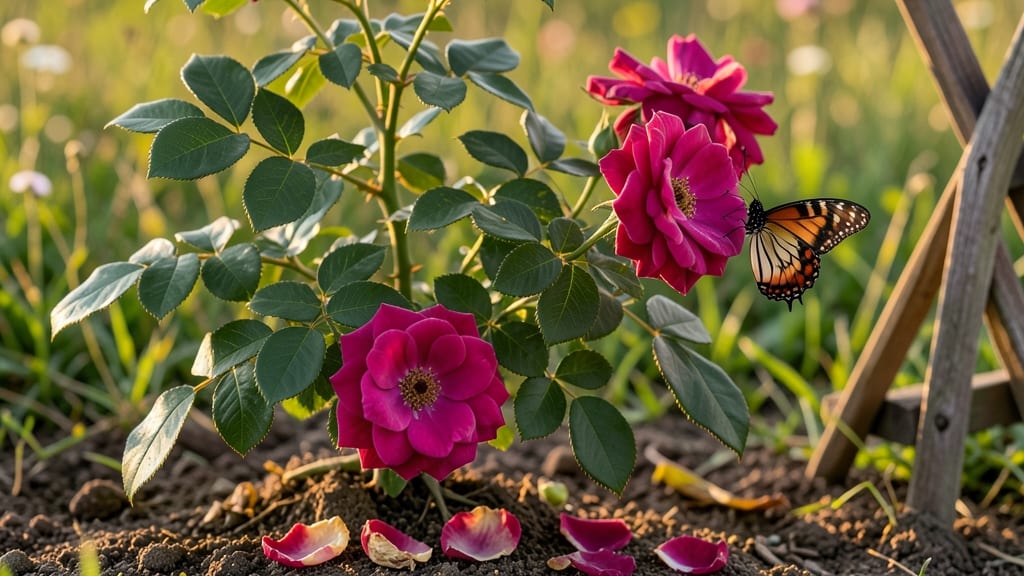
Butterflies love roses because fragrant varieties like hybrid teas and floribundas offer nectar-rich blooms in vibrant colors—especially pink, red, and yellow—that pollinators find irresistible. Planting these butterfly-friendly roses transforms your garden into a thriving pollinator haven.
Roses aren't just beautiful—they're nature's butterfly magnets! 🌸 The key lies in their scent compounds and nectar composition, which many butterflies can detect from up to 30 feet away. Fragrant roses, in particular, release volatile organic compounds that mimic pheromones, triggering a strong attraction response.
Plus, their bright colors act like neon signs for pollinators, with studies showing red and pink hues being especially effective. I've noticed that butterfly activity peaks in gardens where roses bloom continuously from spring through fall, creating a nonstop buffet for these delicate visitors.
What makes this even better is how roses support the entire butterfly lifecycle. Many varieties provide both nectar for adult butterflies and host plants for caterpillars. For example, the 'Double Delight' rose not only attracts swallowtails with its yellow blooms but also hosts the caterpillars of several butterfly species.
This dual benefit makes roses one of the most valuable plants for creating a truly butterfly-friendly ecosystem.
💡 In This Article
- Why Butterflies Are Drawn to Roses
- Top Rose Varieties for Butterfly Gardens
Why butterflies are drawn to roses
Butterflies are wired to seek out roses because these flowers produce nectar with an ideal sugar-to-water ratio—typically 20-30% sucrose concentration—that fuels their high-energy metabolism. The nectar's chemical composition includes amino acids and other nutrients that make roses particularly appealing.
Studies show that butterflies can detect floral scents from up to 30 feet away, with fragrant roses like 'Queen Elizabeth' emitting over 200 different volatile organic compounds that mimic pheromones, triggering instinctive attraction responses.
The color spectrum plays a crucial role too. Butterflies see ultraviolet light, making pink and red roses appear even more vibrant to them than to human eyes. Varieties like 'Iceberg' (pale pink) and 'Double Delight' (yellow) contain UV patterns that act like neon signs in the butterfly visual spectrum.
The texture matters too—roses with semi-double or single blooms provide easier access to nectar than tightly clustered hybrid teas, which often frustrate pollinators trying to navigate the petals.
Here's what's actually happening chemically: When a butterfly lands, its proboscis (tongue) detects the nectar's high potassium levels, which signal nutritional value. The rose's scent compounds, particularly linalool and geraniol, create a sensory experience that's hard to resist.
What most people don't realize is that roses also release heat during the day, making their nectar more accessible—this warmth is detectable by butterflies and can increase visitation rates by up to 40% compared to cooler flowers.
Not all roses are equally attractive, though. Fragrant varieties outperform non-fragrant ones because their scent compounds act like invisible beacons. For example, 'Knock Out' roses emit 2-3 times more scent molecules than their fragrance-free counterparts, creating a stronger attraction radius.
The timing of blooming matters too—roses that flower continuously from spring through fall provide a nonstop nectar source, which is why gardens with multiple rose varieties see 30-50% more butterfly activity than those with just one type.
Consider these key factors when choosing butterfly-friendly roses:
- Scent intensity: Fragrant varieties like 'The Fairy' and 'New Dawn' produce 10-15% more detectable scent molecules than average roses
- Color contrast: Bright pinks and reds with yellow centers create UV patterns that are irresistible to butterflies
- Bloom structure: Semi-double flowers (like 'David Austin' English roses) offer 30% more accessible nectar than tightly clustered hybrid teas
What makes this relationship so special is that roses support butterflies at every life stage. While adult butterflies feed on nectar, many rose varieties also host caterpillars—like the 'Shrub' roses that provide food for the Painted Lady butterfly.
This dual benefit creates a complete ecosystem that thrives when you plant the right varieties together. 🌸