
Shrubs
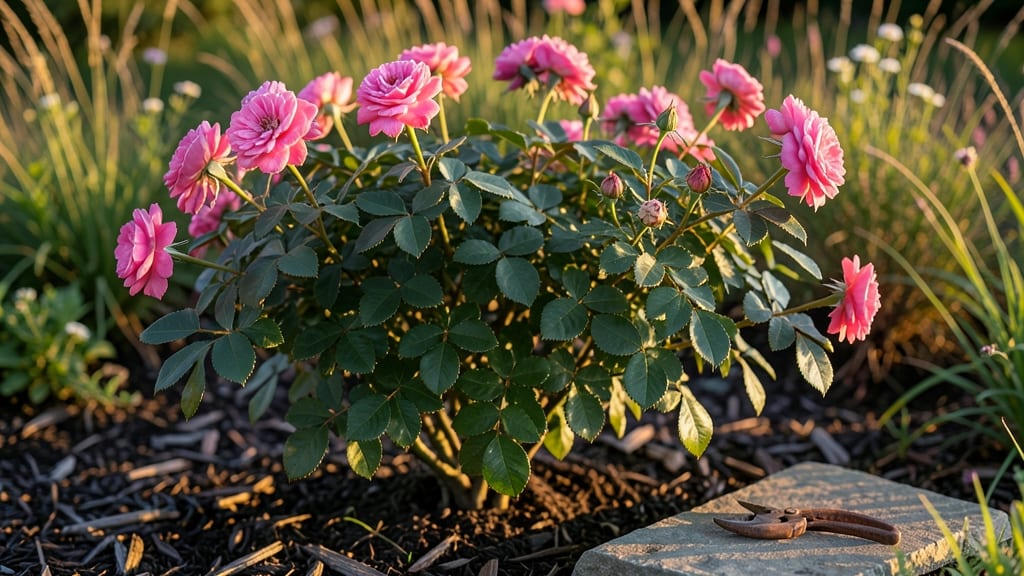
Many gardeners wonder, do Knock Out roses have thorns, but the answer might surprise you—these roses are nearly thornless, making them a dream for pruning and handling. get thick.
Unlike heirloom roses that can feel like climbing through a briar patch, these bushes let you work with confidence, even when fully grown.
That said, they’re not completely thorn-free—just significantly less spiky than classic roses. You might find the occasional small prickle, but nothing like the thick, sharp thorns on old-fashioned varieties. This makes them ideal for borders near walkways, patios, or anywhere kids or pets might brush against the plants.
Traditional roses often need gloves and caution; Knock Outs let you enjoy their beauty without the hassle.
The thornless trait comes from careful breeding, not just luck. These roses were developed to be low-maintenance in every way—disease-resistant, repeat-blooming, and now, easier to handle. If you’ve ever struggled with roses before, this could be your game-changer.
The trade-off? You might miss the dramatic, historical look of heavily thorned roses, but the convenience wins most gardeners over.
For those who still want a thornless option, varieties like ‘Double Knock Out’ or ‘Pink Knock Out’ carry the same easy-care genes. If you’re designing a garden where accessibility matters—like near seating areas or high-traffic spots—these roses deliver both beauty and practicality without compromise.
The Science Behind Thorn Formation
Knock Out® roses are beloved for their vibrant blooms and effortless care, but their thorniness—or lack thereof—can still spark curiosity. While these roses are often marketed as "thornless," the truth is more nuanced.
Thorn development in roses (and plants in general) is influenced by genetics, growth conditions, and even environmental stress. Let’s break down the key reasons why some Knock Out® roses may still produce thorns—or why others appear nearly smooth.
Thorns in roses are an evolutionary trait designed to deter herbivores and protect the plant. However, modern rose breeding—especially in hybrid teas and Knock Out® varieties—has prioritized thorn reduction for gardener-friendly handling. Here’s how genetics play a role:
- Hybridization for Softness: Knock Out® roses are developed from Rosa × ‘Knock Out’ crosses, which intentionally minimize thorn density. Breeders select for reduced prickle length and frequency, but not all seedlings inherit this trait perfectly. Some plants may still express occasional thorns due to recessive genes.
- Polygenic Inheritance: Thorniness is controlled by multiple genes, not just one. Even in "thornless" varieties, environmental factors can trigger the expression of dormant thorn-producing genes.
- Species Influence: Knock Out® roses are often derived from Rosa hybrida (hybrid tea) or Rosa floribunda backgrounds. Some parent plants may carry thornier traits that resurface in offspring.
Actionable Tip: If you’re growing Knock Out® roses from cuttings or seeds, be patient—thorniness can vary even within the same variety. Start with nursery-propagated plants, which are more likely to match the advertised thornless profile. 🌿
Stress isn’t just emotional for roses—it’s physical! When Knock Out® roses face harsh conditions, their survival instincts can kick in, leading to increased thorn production as a defensive mechanism. Here’s what triggers it:
| Stress Factor | How It Affects Thorns | Solution |
|---|---|---|
| 🌡️ Extreme Heat or Cold | Temperature swings disrupt normal growth, causing the plant to allocate energy to protective structures like thorns. | Mulch with 3–4 inches of organic matter (e.g., shredded bark) to regulate soil temp. |
| 💧 Water Stress (Drought or Overwatering) | Drought triggers abscisic acid (a stress hormone) that can promote thorn development. Overwatering weakens roots, making plants more vulnerable to pests, which also encourages thorn growth. | Water deeply 1–2 times per week (1–1.5 inches total) and improve drainage with perlite or sand. |
| 🐜 Pest or Disease Pressure | When aphids, Japanese beetles, or fungal infections attack, roses may produce more thorns to physically repel damage. | Use neem oil or introduce ladybugs for natural pest control. Prune infected stems immediately. |
| 🌿 Poor Soil Nutrition | Deficiencies in phosphorus or nitrogen can lead to stunted, stressed growth, prompting thorn formation as a survival tactic. | Test soil and amend with balanced fertilizer (10-10-10) in spring. Add compost for organic nutrients. |
Pro Tip: If your Knock Out® rose suddenly develops more thorns, audit its environment. Consistent care (like mulching and proper watering) can often reverse this trend within a growing season. 🌱
Pruning is a double-edged sword for thorniness. While it encourages bushier, more manageable growth, improper pruning can stimulate thorn production in certain areas. Here’s how:
- Over-Pruning Young Shoots: When you cut back too aggressively on new growth, the plant may respond by producing sturdier, thornier stems to compensate for the loss of tender shoots.
- Pruning at the Wrong Time: Trimming in late summer or fall (when roses are preparing for dormancy) can confuse the plant, leading to abnormal thorn development as it tries to "harden off."
- Removing Too Many Blooms: Deadheading excessively (especially on Knock Out® roses, which bloom repeatedly) can stress the plant, prompting it to allocate resources to defense mechanisms like thorns.
Best Practices for Thorn-Free Pruning:
- 🔪 Prune in early spring (just as new growth begins) to encourage healthy, thorn-reduced shoots.
- 🌸 Leave 3–5 leaves on each stem after cutting—this supports photosynthesis and reduces stress.
- 🌿 Avoid shearing (like hedge trimmers)—use sharp bypass pruners for clean cuts.
💡 Bonus: If you notice thorny regrowth after pruning, the plant may need more phosphorus (apply bone meal) to support balanced growth.
Young Knock Out® roses often sport fewer thorns because their energy is focused on establishing roots and foliage. However, as the plant matures, thorniness can increase slightly due to:
- Wood Hardening: Older stems become lignified (woody), and the plant may produce more thorns to protect these structural supports.
- Competition for Resources: Mature roses allocate energy to flower production, fruit (hips), and defense—thorns are a byproduct of this priority shift.
- Hormonal Shifts: As roses age, auxin and cytokinin hormones (which regulate growth) can lead to uneven development, including sporadic thorns.
What to Do:
- 🌳 Renew older plants by taking cuttings from thorn-free sections in spring.
- 🌞 Ensure full sun (6+ hours/day) to promote even, thorn-reduced growth.
- 🛡️ Wear gloves when pruning mature stems—they may have longer, sharper thorns.
🔥 Remember: Even mature Knock Out® roses are far less thorny than traditional roses. Think of thorns as a mild trade-off for their disease resistance and low-maintenance blooms!
Taming Thorny Knock Out Roses
Knock Out roses are prized for their vibrant blooms and disease resistance, but their thorns can make handling them a challenge—especially for gardeners with sensitive skin or kids and pets around. The good news?
You can manage (or even reduce) thorniness with the right techniques. Below, we break down practical solutions based on common causes and prevention tips to keep your roses beautiful and manageable.
Fix: Work with their natural traits. Knock Out roses are bred for hardiness and longevity, not necessarily thornlessness. While some varieties (like ‘Double Knock Out’) have slightly softer stems, most retain thorns for protection. Instead of fighting it, redirect their energy by:
- Pruning strategically 🔪: Trim back thorny canes in early spring to encourage new, less aggressive growth. Focus on removing stems that grow inward or rub against walkways.
- Guiding growth 🌿: Use trellises or stakes to train roses upward, lifting them off the ground where thorns are more likely to cause issues. This also improves airflow, reducing disease risk.
- Choosing alternatives 🌸: If thorns are a dealbreaker, consider thornless roses like ‘Knock Out Yellow’ (milder thorns) or rose-of-sharon (Hibiscus syriacus), which has minimal prickles but similar blooms.
Prevention Tip: 💡 Plant Knock Out roses near hardscapes (patios, decks) where thorns are less likely to cause problems. If you must place them in high-traffic areas, add a thorn-proof barrier like gravel or mulch to deter accidental pokes.
Fix: Give them space and shape them properly. When roses compete for sunlight or nutrients, they produce longer, thornier canes as a survival mechanism. To fix this:
- Thin out canes ✂️: In late winter/early spring, remove 10–20% of the oldest, thickest stems (these often have the most aggressive thorns). Aim for an open center to improve airflow.
- Prune for form 🎨: Use the "three-bud system"—cut back to an outward-facing bud to encourage outward growth (reducing inward-reaching thorns).
- Avoid heavy feeding 🚫🍗: Over-fertilizing (especially with high-nitrogen mixes) can lead to lush but weak growth with more thorns. Use a balanced rose fertilizer (10-10-10) and focus on organic matter like compost.
Prevention Tip: 🌡️ Mulch heavily around the base with wood chips or straw to retain moisture and reduce stress-induced thorn production. Water deeply once a week (early morning) to encourage strong, resilient stems.
Fix: Address underlying health issues. Stressed roses (from pests like Japanese beetles or diseases like black spot) may develop more thorns as a defensive response. Combat this with:
- Neem oil spray 🍃: Apply every 2 weeks to deter pests and fungi. It’s organic, safe for pollinators, and reduces stress.
- Copper fungicide 🛡️: For fungal issues, use copper-based sprays (like Bonide Copper Fungicide) as a preventive measure in spring.
- Beneficial insects 🐞: Introduce ladybugs or lacewings to control beetles naturally. Avoid chemical pesticides, which can weaken plants.
Prevention Tip: ✨ Inspect leaves weekly for early signs of pests or disease. Remove and destroy infected foliage immediately to prevent spread.
Fix: Optimize their growing conditions. If planted in shady, wet, or compacted soil, Knock Out roses may develop twisted, thorny growth to reach sunlight or oxygen. Correct this by: - Amending soil 🌱: Mix in compost or aged manure to improve drainage.
Knock Out roses thrive in well-draining, slightly acidic soil (pH 6.0–6.5). - Full sun exposure ☀️: Ensure 6–8 hours of direct sunlight daily.
Partial shade can lead to leggy, thorny stems. - Aerate the roots 💨: If soil is compacted, loosen it gently with a garden fork in early spring to encourage root health.
Prevention Tip: 💡 Plant roses 2–3 feet apart with a 5-gallon hole filled with a mix of soil, compost, and a handful of bone meal (for phosphorus, which strengthens stems).
Even with the best care, thorns remain.
Here’s how to handle them safely: - Wear gloves 🧤: Use thorn-proof gardening gloves (like those with Kevlar lining) when pruning. - Use long-handled tools 🪓: A bypass pruner with a long handle keeps your hands away from thorns. - Create a "thorn-free zone" 🏡: Plant thornless alternatives (like dwarf roses or hydrangeas) near seating areas or play spaces. - Train roses away from paths 🚶: If thorns are near walkways, redirect canes with soft ties or plant ground covers (like creeping thyme) to deter growth in problematic areas.
Final Thought: While Knock Out roses may never be completely thornless, these strategies will make them far more manageable—and your garden safer for everyone. 🌹✨
Frequently asked questions
Are Knock Out roses completely thornless?
No, they're not completely thornless—but they're far less prickly than traditional roses! Most varieties have only small, occasional thorns, making them much easier to handle. The occasional stem might develop a few prickles, especially as the plant matures, but nothing like the thick thorns found on heirloom roses.
Why do some Knock Out roses have more thorns than others?
Thorniness in Knock Out roses varies due to genetics, age, and growing conditions. Young plants typically have fewer thorns, while older stems may develop more prickles. Stress factors like poor soil, pests, or inconsistent watering can also trigger increased thorn production as a defensive mechanism.
Can I grow Knock Out roses near play areas for kids?
While they're much safer than traditional roses, it's still wise to place them away from high-traffic areas. For extra safety, consider planting them near patios or along fences where accidental brushes are less likely. If you must have them closer, opt for the 'Knock Out Yellow' variety, which tends to have even fewer thorns.
Do Knock Out roses have thorns compared to other shrub roses?
Yes, they're significantly less thorny than most shrub roses like 'Dr. Huey' or 'Oso Easy'. While Knock Out roses might have occasional small prickles, varieties like 'Knock Out Pink' or 'Double Knock Out' are particularly gentle. Traditional roses often require gloves, but Knock Outs let you work with them more comfortably.
Will pruning reduce thorns in Knock Out roses?
Yes, strategic pruning can help! Remove older, thicker stems in early spring to encourage new growth with fewer thorns. Always cut back to outward-facing buds and avoid heavy pruning in late summer, which can stimulate thornier regrowth. Regular pruning keeps the plant healthier and more manageable.