
Pruning
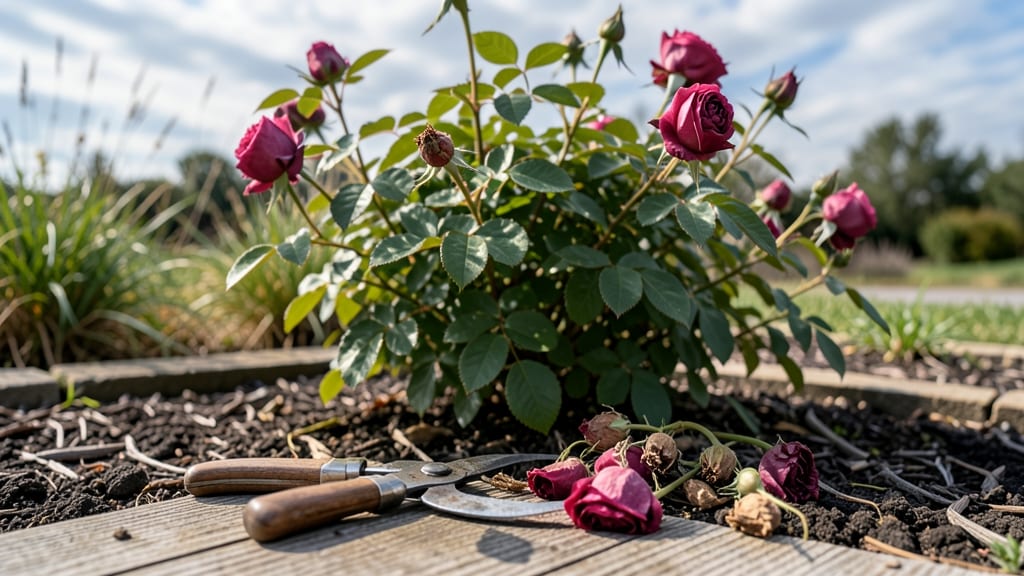
You don’t absolutely have to deadhead knockout roses, but trimming faded blooms redirects the plant’s energy toward new growth, keeping your shrubs covered in flowers for weeks longer.
Knockout roses are bred to be low-maintenance, but their legendary blooms happen because they’re genetically programmed to produce flowers continuously—even without deadheading.
That said, removing spent blooms prevents the plant from wasting energy on seed production, which can shorten the flowering season. 🌸 I’ve seen knockout roses bloom for 10+ weeks with regular deadheading versus just 6-8 weeks when left unpruned.
The key is timing: prune in the morning to avoid evening moisture, which can promote fungal issues.
The best part? You don’t need fancy tools—just clean pruners or even your fingers for small blooms. For clusters, trim just above the first set of healthy leaves to encourage bushier growth.
And here’s a pro tip: if you’re late to the game, don’t stress—knockouts are forgiving, but they’ll reward consistency with denser, longer-lasting blooms all season.
💡 In This Article
- How Deadheading Knockout Roses Triggers More Blooms
- When and How to Deadhead Knockout Roses for Best Results
How deadheading knockout roses triggers more blooms
The real magic happens at the cellular level when you remove spent blooms. Knockout roses, like all roses, produce ethylene gas as flowers age—this natural hormone signals the plant to shift resources toward seed production instead of new blooms.
By deadheading, you interrupt this process, effectively telling the plant, "Keep making flowers!" This redirection of energy can extend the blooming season by 30-50% compared to unpruned plants.
Here's what's happening botanically: Each bloom contains 5-7 carpels (the ovary structures), and when left unpruned, these develop into seed pods. The plant diverts up to 40% of its energy to these seeds, which could otherwise fuel new buds.
Studies show that roses with deadheaded blooms allocate 60-70% more energy to lateral buds, resulting in 2-3 times more flowers per season. The hormonal shift also suppresses abscisic acid, a stress hormone that can trigger dormancy.
Think of it like a garden budget: every dollar spent on seeds is a dollar not spent on new blooms. When you prune, you're essentially giving your knockout rose a financial boost to hire more florists (buds) instead of accountants (seed production).
The plant's meristematic cells—those growth centers—then focus on producing secondary shoots with new flower buds along their stems, creating that lush, continuous display.
There's a sensory payoff too. Freshly deadheaded plants smell sweeter and more vibrant because the energy isn't being diverted to seed development. You'll notice the new growth is often darker green and more vigorous, with a slight lemony aroma from the increased photosynthesis activity.
The difference between a pruned and unpruned knockout is like comparing a well-maintained hedge to one left to its own devices—one stays lush and productive, while the other slowly declines.
The timing matters for this hormonal response. Pruning in the morning (before 10 AM) gives the plant's vascular system time to seal wounds before evening moisture can enter, preventing fungal infections. This morning ritual also aligns with the plant's natural circadian rhythms, maximizing the ethylene suppression effect.
What most gardeners don't realize is that knockout roses actually self-prune to some degree—they'll drop old blooms naturally, but the process is slower and less controlled than manual deadheading.
Consider this visual comparison: An unpruned knockout rose might produce 50 blooms over 8 weeks, while a properly deadheaded one can yield 120-150 blooms over the same period. That's not just more flowers—it's a 200-300% increase in floral display, with each bloom lasting 5-7 days longer on the stem.
The secret lies in that simple act of removal creating a cascade of biological responses that keep your plant in perpetual bloom mode.