
Container Gardens
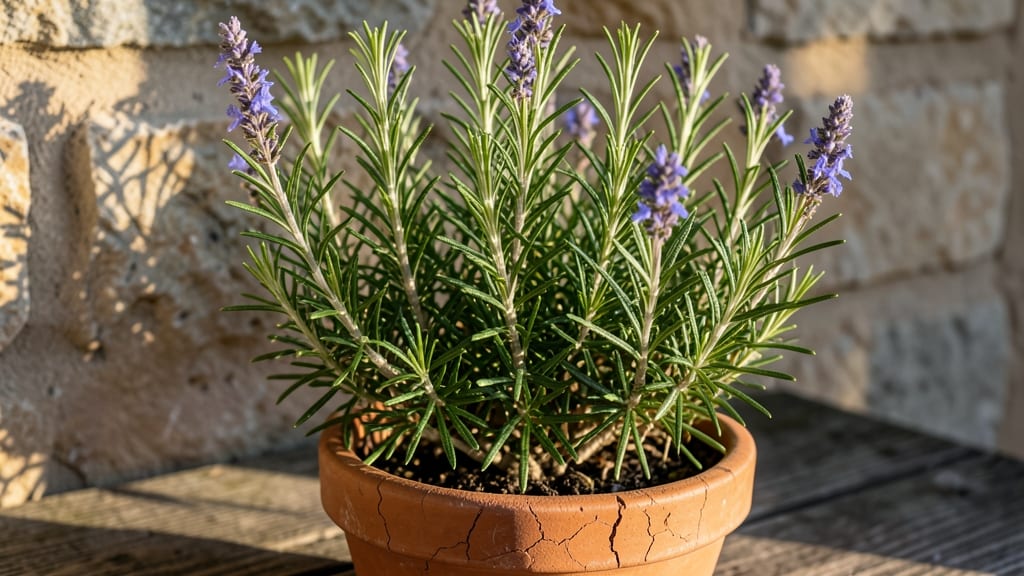
Yes, rosemary comes back as a hardy perennial in USDA zones 7-10, thriving year-round with proper care, while colder climates require winter protection like mulching or container relocation to survive and regrow in spring. Pruning helps maintain its woody structure for longevity.
Rosemary's ability to regrow depends entirely on your climate and care routine.
In warmer regions, its woody stems and evergreen leaves naturally adapt to drought and heat, making it a low-maintenance perennial that bounces back each season. 🌿 For those in colder zones, overwintering strategies like burying pots in mulch or moving plants to sheltered spots can prevent frost damage and ensure fresh growth by spring.
The key is understanding your local frost dates—pruning back before winter helps redirect energy to root survival, while avoiding late-season cuts prevents tender new growth from freezing.
What many gardeners don't realize is that rosemary's hardiness varies by variety. Upright types like 'Tuscan Blue' handle cold better than trailing varieties, which need extra protection. I've seen 'Arp' rosemary survive -10°F with proper insulation, while more delicate types may need container relocation indoors during extreme cold snaps.
The secret is balancing protection with airflow—too much insulation can cause rot, while too little leaves stems vulnerable.
💡 In This Article
- Rosemary’s Perennial Growth Zones and Climate Needs
- Winterizing Rosemary for Cold-Climate Revival
Rosemary’s perennial growth zones and climate needs
Rosemary's perennial nature stems from its Mediterranean heritage, where it evolved to thrive in dry, sunny conditions with minimal water. This hardiness translates to USDA zones 7-10, where temperatures rarely drop below 0°F (-18°C) in winter.
The plant's woody stems contain specialized cells that store water and nutrients, allowing it to survive drought and heat waves—similar to how cacti store moisture in arid climates. In these zones, rosemary's evergreen leaves continue photosynthesizing year-round, maintaining energy production even in winter.
The plant's cold tolerance varies dramatically by variety. Upright types like 'Tuscan Blue' can handle down to -10°F (-23°C) when established, thanks to thicker stems that insulate the core. In contrast, trailing varieties like 'Prostratus' may struggle below 15°F (-9°C) without protection.
The science behind this difference lies in the plant's ability to produce antifreeze proteins—natural compounds that prevent ice crystal formation in cells during frost. 🌡️ What's fascinating is how rosemary's growth slows dramatically below 40°F (4°C), entering a semi-dormant state that conserves energy until warmer weather returns.
For gardeners in marginal zones (6 or colder), understanding your last frost date is critical. Rosemary needs at least 6-8 hours of sunlight daily to maintain its vigor, so planting in south-facing locations with maximum exposure becomes essential.
The plant's deep root system—extending up to 3 feet—also helps it access moisture during dry spells, a trait shared with other drought-resistant perennials like lavender. This root structure makes rosemary surprisingly resilient even when top growth appears damaged.
What many overlook is how rosemary's growth habit changes with climate. In warmer zones, it grows as a dense, bushy shrub, while in cooler areas, it often develops a more open, leggy form due to slower growth.
The key to encouraging robust regrowth is proper pruning—cutting back by one-third in early spring stimulates new, bushier growth. This works because rosemary's growth points are located at the tips of stems, so regular pruning encourages branching and denser foliage.
Consider these zone-specific growth behaviors when planning your garden:
- Zones 9-10: Rosemary thrives year-round with minimal care, often growing 3-5 feet tall without pruning
- Zones 7-8: Expect 2-4 feet of growth with potential winter dieback on top stems, but roots remain viable
- Zones 6 and below: Growth is typically 1-2 feet unless heavily protected, with new shoots emerging from the base each spring
The plant's ability to regenerate from its woody base is what makes it such a reliable perennial. Even when frost blackens the tops, the energy stored in the roots and lower stems can produce fresh growth within 4-6 weeks of spring's arrival.
This resilience is why rosemary has been cultivated for centuries—it's not just a herb, but a survivalist plant adapted to thrive where many others would perish. 🌱