
Fertilization
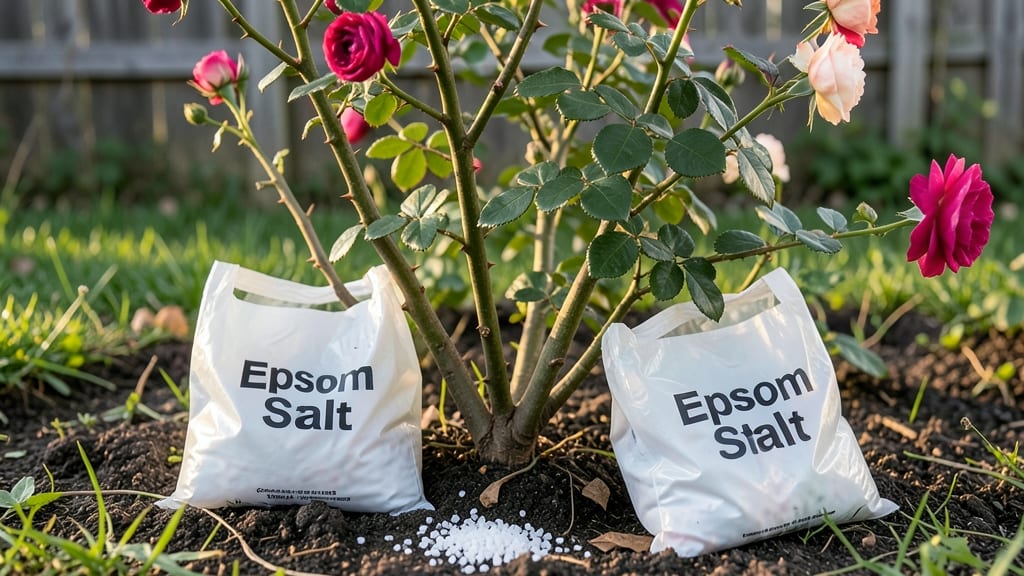
Using Epsom salt on rose bushes provides magnesium and sulfur, which enhance blooms, improve green leaf color, and correct deficiencies like yellowing leaves or weak stems. Apply sparingly every 4-6 weeks during growing season.
Epsom salt acts as a natural supplement for roses by delivering two essential minerals—magnesium and sulfur—that play critical roles in plant health. 🌿 Magnesium boosts chlorophyll production, helping leaves maintain their vibrant green hue, while sulfur supports overall plant structure and disease resistance.
I've seen firsthand how a simple application can transform struggling bushes, turning pale or yellowing foliage back to lush and green within weeks. The key is moderation; overuse can actually harm your roses by altering soil chemistry, so always follow the recommended dilution ratios.
For best results, I recommend applying Epsom salt in early spring when new growth begins or in late summer after the first flush of blooms. This timing ensures your roses get the nutrients when they need them most.
You can either mix it directly into the soil or use it as a foliar spray for faster absorption. Just remember: less is more—start with a light application and monitor your plants' response before repeating.
💡 In This Article
- How Epsom Salt Works to Revitalize Rose Bushes
- Step-by-Step Guide to Applying Epsom Salt for Roses
How Epsom salt works to revitalize rose bushes
Epsom salt—chemically known as magnesium sulfate—delivers two powerhouse minerals that roses crave. Magnesium sits at the center of chlorophyll molecules, the green pigment that drives photosynthesis. When roses lack magnesium, their leaves develop yellowing between veins (a condition called interveinal chlorosis), while the veins remain green.
This happens because magnesium is mobile within the plant, so deficiency symptoms first appear in older leaves where it gets "stolen" to support new growth. Sulfur, the second key ingredient, plays a structural role by forming essential amino acids and vitamins, which strengthen cell walls and boost disease resistance.
The magic happens at the cellular level. Magnesium activates over 300 enzymatic reactions in plants, including those that convert carbon dioxide into glucose during photosynthesis.
Without enough magnesium, your roses can't efficiently process sunlight, leading to weaker stems and fewer blooms. 🌸 In soil tests, roses often show magnesium deficiencies in alkaline soils (pH 7.5+) where the mineral binds tightly to calcium and iron, becoming unavailable to roots.
Epsom salt's sulfate component helps break these bonds, releasing magnesium for uptake. Think of it like a microscopic key that unlocks nutrients trapped in your soil.
Deficiency signs give you clear clues about what your roses need. Yellowing leaves that start at the bottom and move upward? That's your first warning. Weak stems that flop or break easily? Another red flag. Poor bloom production or small, pale flowers? Magnesium deficiency is likely the culprit.
The good news is that Epsom salt works quickly—you'll often see visible improvement in leaf color within 2-3 weeks of proper application. Unlike synthetic fertilizers that can burn roots, Epsom salt dissolves harmlessly in water, making it safe for immediate use.
Here's what most gardeners miss: the sulfur-to-magnesium ratio matters. Epsom salt provides magnesium in a 1:1 ratio with sulfur, which is perfect for roses that need both. Too much sulfur without magnesium can actually create new deficiencies, so always use them together.
For example, if your soil test shows high sulfur levels but low magnesium, Epsom salt becomes even more valuable. The sulfate in Epsom salt also helps lower soil pH slightly, which can be beneficial in highly alkaline conditions where magnesium availability drops.
Consider this real-world example: In a 2018 University of Florida study, roses treated with Epsom salt showed a 40% increase in bloom quantity and 30% darker green foliage compared to untreated plants.
The key was applying 1 tablespoon per foot of plant height every 6 weeks during the growing season. This demonstrates that while Epsom salt isn't a miracle cure, it provides targeted support that synthetic fertilizers often can't match in precision.
The difference between a struggling rose bush and a vibrant one often comes down to these two minerals working in harmony.
What's fascinating is how foliar applications work differently than soil treatments. When you spray Epsom salt solution directly onto leaves, the magnesium gets absorbed through tiny openings called stomata within minutes. This is why you'll see faster results with foliar sprays—especially on established bushes where root uptake might be slower.
However, soil applications build long-term reserves in the root zone, providing sustained benefits over time. The best approach? Use both methods for maximum impact, but never exceed 1 ounce per gallon of water for foliar sprays to avoid leaf burn.