
Planting
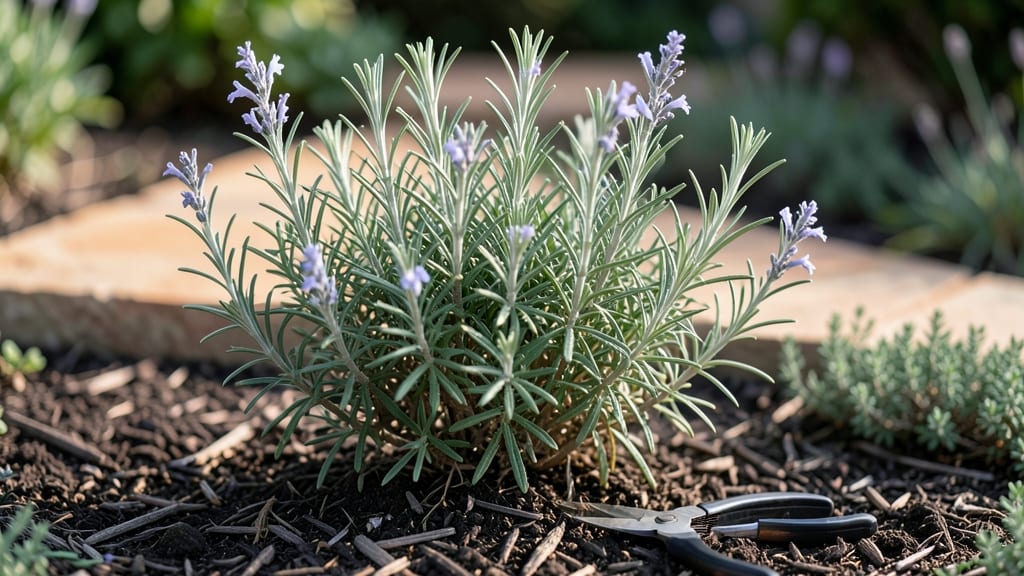
The rosemary plant height you end up with depends entirely on how you shape it—whether you want a compact bush for containers or a towering specimen for borders.
Did you know rosemary can grow anywhere from a 12-inch ground hugger to a 6-foot woody giant? The secret lies in pruning, sunlight, and variety choice—all of which I’ll break down so you can tailor your rosemary’s growth to your space and needs.
Too much height can mean wasted flavor or overcrowded gardens, while stunted growth might leave you with a less productive herb. Here’s how to strike the perfect balance for culinary use, ornamental displays, or even indoor pots.
You’ll learn which varieties stay short naturally, when to prune for controlled growth, and how to spot the three biggest mistakes that turn your rosemary into a wild, unruly shrub instead of the tidy plant you envisioned.

Natural factors that determine rosemary plant height variations
Rosemary's height isn't just a matter of luck—it's shaped by biological traits and environmental conditions you can control. Whether you're growing compact varieties for containers or tall specimens for hedges, understanding these factors lets you shape your rosemary's growth naturally.
The right conditions can keep your plant at 12 inches or encourage it to reach 6 feet without genetic modification.
Your rosemary's final height depends on four key factors: its genetic variety, sunlight exposure, soil quality, and pruning habits. Each plays a critical role—some varieties naturally stay low, while others grow tall unless you intervene.
For example, Rosemary 'Prostratus' maxes out at 2 feet, while Rosemary 'Arp' can soar to 6 feet under ideal conditions. Let's break down how each factor influences your plant's height.
🌿 SUMMARY TABLE: Rosemary Height Factors
| Factor | Compact Growth Conditions | Tall Growth Conditions | Height Range |
|---|---|---|---|
| Variety | Prostrate types (e.g., 'Blue Spires', 'Barbecue') | Upright types (e.g., 'Arp', 'Hill Hardy') | 12" – 6' (30cm – 1.8m) |
| Sunlight | 6+ hours daily (full sun) | 8+ hours daily (intense sun) | 12" – 4' (30cm – 1.2m) |
| Soil | Well-draining, slightly alkaline (pH 6.0-7.0) | Poor, rocky soil (stresses roots) | 2' – 6' (60cm – 1.8m) |
| Pruning | Regular tip pruning (every 4-6 weeks) | Minimal pruning (let grow wild) | 1' – 3' (30cm – 90cm) |
| Watering | Deep watering every 10-14 days | Infrequent watering (drought stress) | 1.5' – 5' (45cm – 1.5m) |
Your rosemary's genetic variety sets the foundation for height. Prostrate varieties like 'Blue Spires' naturally spread horizontally, rarely exceeding 2 feet in height, while upright varieties like 'Arp' can reach 6 feet if unchecked. Even within the same variety, height can vary by 20-30% based on growing conditions.
For example, 'Hill Hardy' rosemary might stay at 3 feet in a container but stretch to 5 feet when planted in the ground with plenty of space.
Sunlight is the single most influential factor after variety. Rosemary thrives in full sun (6+ hours daily), but intense sunlight (8+ hours) triggers faster vertical growth. This is why rosemary in Mediterranean climates often grows taller—up to 50% more—than plants in cooler, cloudier regions.
If you're growing rosemary indoors near a south-facing window, expect it to stay 2-3 feet tall unless you supplement with grow lights, which can push it toward 4 feet.
Soil quality directly impacts root development, which in turn affects height. Rosemary prefers well-draining, slightly alkaline soil (pH 6.0-7.0), but poor, rocky soil forces the plant to grow taller to access nutrients and sunlight. This is why rosemary in container gardens often stays compact—limited root space restricts vertical growth.
Conversely, planting in nutrient-rich garden beds can encourage taller growth, especially in upright varieties. Always amend soil with coarse sand or perlite to prevent waterlogging, which stunts growth.
Pruning is your most powerful tool for controlling height. Regular tip pruning (cutting back the top 1-2 inches of new growth) encourages bushier, shorter growth. For compact rosemary, prune every 4-6 weeks during the growing season to maintain a 12-24 inch height.
If you want taller rosemary, avoid pruning or only trim to remove dead wood. This allows the plant to focus energy on vertical growth, often resulting in 3-6 foot specimens within 2-3 years.
Watering habits also play a subtle but important role. Rosemary is drought-tolerant, and infrequent watering (every 10-14 days) can actually promote taller growth by stressing the plant slightly. Overwatering, on the other hand, leads to
Pruning techniques to control rosemary height by variety type
Not all rosemary grows the same—some varieties sprawl just 12 inches wide while others shoot up to 6 feet tall.
The key to controlling height lies in understanding your rosemary's growth habit and applying the right pruning techniques. Prostrate varieties like 'Blue Spires' need gentle shaping, while upright types such as 'Arp' require more aggressive trimming to prevent legginess. Let's break down the exact methods for each type.
Timing matters just as much as technique. Prune upright rosemary in late winter or early spring to encourage bushier growth before summer's heat. For prostrate varieties, a light trim after flowering keeps them dense and prevents woody stems.
Always use sharp, sterilized pruners to avoid disease and make clean cuts just above leaf nodes for optimal regrowth.
-
Prostrate Varieties (12"-24" max height)
- Trim 1/3 of new growth after flowering using hand pruners.
- Remove spent flowers to redirect energy to foliage.
- Shape edges with concave cuts to maintain natural form.
-
Intermediate Varieties (24"-36" height)
- Prune 1/4 of oldest stems in late winter to stimulate new growth.
- Thin overcrowded branches for better air circulation.
- Pinch tips of new shoots to encourage bushiness.
-
Upright Varieties (36"-60"+ height)
- Cut back by 1/2 in early spring using loppers for tall plants.
- Remove woody stems from base to promote new shoots.
- Shape top growth with horizontal cuts to prevent top-heavy plants.
For prostrate rosemary, focus on maintaining a rounded silhouette by trimming just above leaf nodes. This encourages dense, ground-hugging growth perfect for borders or containers. Upright varieties benefit from a two-step approach: first remove dead wood, then shape the canopy to prevent legginess.
Always step back after pruning to check for balance—uneven cuts can lead to lopsided growth patterns.
Seasonal adjustments are crucial. In summer months, light pruning after harvest keeps plants manageable, while fall trims prepare rosemary for winter dormancy. Never prune in deep winter—this stresses the plant when it's already conserving energy.
For container-grown rosemary, prune more frequently (every 4-6 weeks) to control height and encourage compact growth.
Remember that over-pruning can weaken your rosemary, while under-pruning leads to leggy, sparse plants. The goal is balanced maintenance—enough to shape the plant but not so much that you remove its energy reserves.
With consistent care, you'll achieve the perfect height for your garden design, whether that's a low border or a tall hedge backdrop.
Pro tip: Collect your pruned stems—they make excellent culinary herbs! Just dry them upside down in a warm, dark place for 2-3 weeks before storing. This dual-purpose approach turns pruning into a harvest opportunity.