
Planting
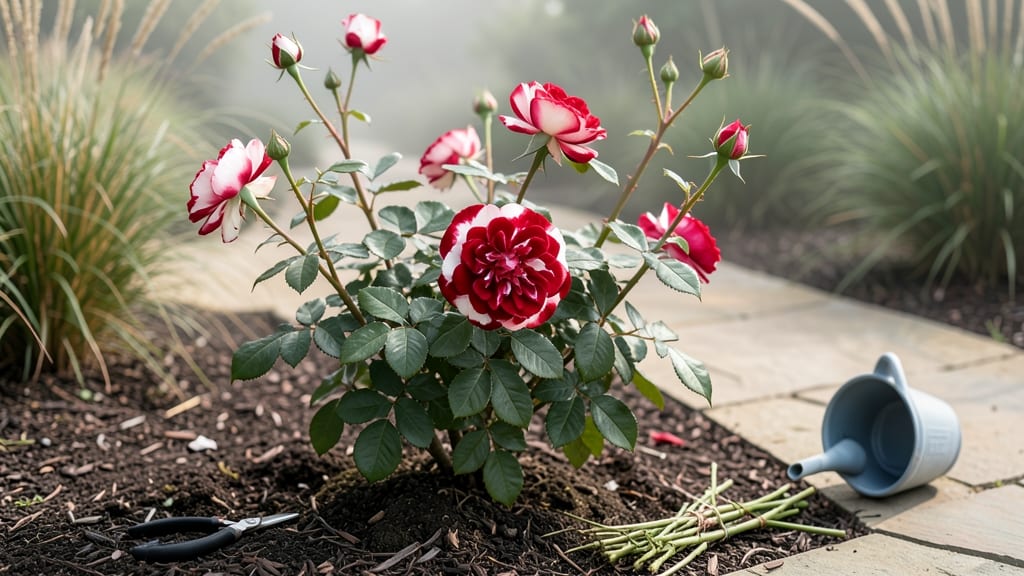
The Fire and Ice rose plant delivers frost-kissed bicolor blooms right to your doorstep—this cold-hardy variety thrives where most roses falter, especially in containers. The secret lies in its resilience and those stunning white-pink edges that catch every morning light.
You’ll need a 15-gallon container with drainage, a mix of garden soil and compost, and a spot where it gets 6-8 hours of sun daily. Water when the top inch of soil feels dry, and watch as roots develop deep enough to handle winter freezes.
Prune in late winter to shape the plant and encourage strong new growth. By mid-summer, you’ll be rewarded with dozens of blooms that last weeks, their fragrance filling the air. The plant’s disease resistance means fewer sprays and more time admiring its velvety petals.
Even in colder zones, it rebounds beautifully with minimal care. Perfect for patios, balconies, or small gardens—this rose proves you don’t need a big yard for dramatic results. Let’s get your container ready for a season of effortless beauty.
📚 In This Guide
- What you need
- Instructions
- Tips and common mistakes
- Wrapping up and next steps
What you need
- ● Fire and Ice rose plant: 1 bare-root or container-grown rose (ensure it’s labeled as Rosa 'Fire and Ice' or a cold-hardy hybrid).
- ● Well-draining potting mix: 5–10 gallons (depending on container size). Look for a blend labeled for roses or shrubs (e.g., Miracle-Gro Potting Mix or FoxFarm Ocean Forest).
- ● Container or garden bed: For containers: A 5-gallon or larger pot (minimum 12–18 inches deep) with drainage holes. Terracotta, fabric, or plastic works—just avoid cheap plastic that cracks easily!
- ● For in-ground planting: A sunny spot with at least 6 hours of sunlight daily and loose, well-draining soil (amend with compost if needed).
- ● Organic mulch: 2–3 inches of pine bark fines, cedar chips, or straw to retain moisture and protect roots.
- ● Rose fertilizer: A balanced, slow-release formula (e.g., Espoma Rose-Tone) or organic options like fish emulsion or compost tea.
- ● Pruning shears: Sharp, bypass pruners (sterilized with rubbing alcohol).
- ● Garden gloves: Heavy-duty nitrile-coated gloves to protect from thorns.
- ● Trowel or spade: For digging and amending soil.
- ● Drip irrigation or watering can: 1–2 gallons capacity for deep watering (avoid overhead sprinklers to prevent fungal diseases).
- ○ Rose support: A 5–6 foot bamboo stake or cage (optional but helpful for training vines).
- ● Soil pH test kit: To check acidity (6.0–6.5 ideal)—adjust with lime (to raise pH) or sulfur (to lower).
- ● Fungal preventative: Neem oil or copper fungicide (apply at planting and after heavy rain).
Step-by-step guide to growing Fire and Ice roses in containers
This cold-hardy rose variety loves containers—here’s how to keep it thriving year after year.
Choose the Right Container and Soil Mix
Select a container at least 18 inches deep with drainage holes—Fire and Ice roses need room for strong roots. I like using glazed ceramic or high-quality plastic pots because they retain moisture while allowing airflow. The soil mix is critical: blend 60% high-quality potting mix with 30% compost and 10% perlite for drainage. This combination prevents root rot while holding enough moisture for these thirsty plants.
Fill the pot halfway with your mix, then place the rose bush in the center, ensuring the graft union (the bump near the base) sits 1 inch above soil level. This protects the plant from disease and encourages vigorous growth. Gently firm the soil around the roots to eliminate air pockets, but don’t compact it too tightly—roots need room to expand.
Position for Optimal Sunlight and Airflow
Fire and Ice roses crave 6-8 hours of direct sunlight daily, so place your container in a spot that gets morning sun and afternoon shade if temperatures exceed 85°F. A south-facing patio or balcony works well, but watch for afternoon sun in hot climates—it can scorch the leaves. If you’re growing in partial shade, expect fewer blooms but healthier foliage.
Good airflow is just as important as sunlight. I always position my containers where there’s a gentle breeze—this prevents fungal diseases like black spot, which can ruin the striking foliage. If your space is sheltered, use a small fan on low setting near the plant for 10 minutes daily to mimic natural airflow.
Water Deeply and Maintain Consistent Moisture
Water your Fire and Ice rose deeply once a week, allowing the top 2-3 inches of soil to dry out between waterings. These roses are drought-tolerant once established, but they hate soggy roots. Stick your finger in the soil—if it feels dry past your first knuckle, it’s time to water. During hot spells, you may need to water every 4-5 days, but always check the soil first.
Mulch the surface with 1-2 inches of organic mulch (like shredded bark) to retain moisture and regulate soil temperature. Keep the mulch 2 inches away from the stem to prevent rot. I water in the early morning so the foliage has time to dry before evening—this simple habit cuts down on fungal issues dramatically.
Fertilize and Prune for Healthy Growth
Feed your Fire and Ice rose with a balanced, slow-release fertilizer (10-10-10) at planting time, then again in early spring. After the first flush of blooms, switch to a low-nitrogen, high-phosphorus fertilizer (like 5-10-5) to encourage more flowers. I avoid high-nitrogen feeds—too much green growth means fewer blooms, and that’s the star of this variety.
Prune in late winter or early spring before new growth starts. Cut back one-third of the plant’s height, removing any dead, crossing, or weak branches. Make cuts just above an outward-facing bud to encourage bushy growth. After the first bloom cycle, do a light pruning to shape the plant and remove spent flowers—this keeps the plant focused on producing more blooms rather than seeding.
Overwintering for Cold-Hardy Success
Fire and Ice roses are cold-hardy down to Zone 4, but container-grown plants need extra protection. In fall, reduce watering and stop fertilizing once temperatures drop below 50°F. Wrap the container in bubble wrap or frost cloth, leaving the top open to prevent moisture buildup. Move the pot to a sheltered spot, like against a south-facing wall or under an overhang.
If your winter dips below 10°F, add a thick layer of straw or leaves around the base for insulation. In early spring, remove the wrap and mulch, then water lightly to wake up the roots. You’ll see new growth within 2-3 weeks—that’s your signal the plant is ready for another season of stunning blooms.
Tips & tricks for thriving Fire and Ice roses in containers
These simple strategies will help you coax the most vibrant blooms from your container-grown Fire and Ice roses—without the common pitfalls.
Container Depth Matters: That 18-inch minimum depth isn't just a suggestion—it's crucial for root development. Shallow containers restrict growth and can lead to root-bound plants that struggle during heatwaves. If you're working with limited space, choose a slightly larger pot (20 inches deep) to give those roots room to spread. The extra depth also helps stabilize the plant during windy conditions, preventing the pot from tipping over.
Soil Mix Secrets: The 60-30-10 ratio of potting mix, compost, and perlite creates the perfect balance, but here's the pro move: add a handful of worm castings to that mix. Worm castings boost microbial activity in the soil, which helps your roses absorb nutrients more efficiently. They're especially helpful during the first few weeks after planting when roots are establishing themselves. Think of them as a natural growth booster that won't burn your plant.
Sunlight Strategy: Those critical 6-8 hours of sunlight can be tricky to judge—especially in partial shade situations. I've found that using a simple light meter app on my phone helps track actual sunlight exposure. If you notice leaves turning yellow or stems getting leggy, your plant needs more light. For container growers, rotating the pot every few days ensures even sunlight exposure all around, preventing lopsided growth patterns that can develop when one side gets more sun.
Winter Protection Upgrade: When temperatures drop below 10°F, don't just add straw—create a complete insulation system. Place the pot on a bed of insulating material like foam board or even thick cardboard before adding your straw layer. This extra barrier prevents the soil from freezing completely, which can damage roots. I've also seen dramatic improvements in spring recovery when I add a layer of bubble wrap around the pot's sides before applying the straw—it's like giving your plant a cozy winter jacket.
Pro Tips for Fire And Ice Rose Plant
- These simple strategies will help you coax the most vibrant blooms from your container-grown Fire and Ice roses—without the common pitfalls.
- Container Depth Matters: That 18-inch minimum depth isn't just a suggestion—it's crucial for root development.
- Soil Mix Secrets: The 60-30-10 ratio of potting mix, compost, and perlite creates the perfect balance, but here's the pro move: add a handful of worm castings to that mix.
Frequently asked questions
Got questions about growing Fire and Ice roses? You’re not alone! Here are answers to the most common queries to help you cultivate this stunning cold-hardy variety with confidence.
How cold can Fire and Ice roses tolerate?
This hardy hybrid thrives in USDA Zones 3-9, meaning it can handle temperatures as low as -20°F (-29°C) with proper winter care. Just mulch heavily in late fall and protect young plants with burlap wraps for extra insulation.
When should I prune Fire and Ice roses?
Prune in early spring (before buds swell) or right after flowering to encourage bushier growth. Remove dead, crossing, or weak canes first, then cut back remaining stems by ⅓ to ½ their height. Avoid heavy pruning in fall—it reduces winter hardiness!
How often do Fire and Ice roses need watering?
Water deeply 1-2 times per week during the growing season, ensuring soil stays consistently moist but not soggy. Container-grown roses dry out faster—check soil moisture daily in hot weather. Reduce watering in winter unless temperatures dip below freezing.
Can I grow Fire and Ice roses in containers?
Use a 5-gallon minimum pot with drainage holes and a well-draining potting mix. Repot every 2-3 years and fertilize monthly during spring/summer. Just move containers to a sheltered spot in winter to protect roots from extreme cold.
Why are my Fire and Ice rose leaves turning yellow?
Yellow leaves often signal overwatering, nutrient deficiency, or fungal issues. Check soil moisture first—soggy roots cause stress. If yellowing spreads, test for iron deficiency (chlorosis) or treat with fungicide if black spots appear. Adjust care and monitor for improvement!
Pro Tip:
For extra cold protection, wrap containers in bubble wrap or use straw mulch around the base. This trick adds 5-10°F of insulation—perfect for harsh winters!
Wrapping up and next steps
The Fire and Ice rose is a stunning, cold-hardy variety that brings vibrant color and resilience to your garden—even in containers! With its striking bicolor blooms and low-maintenance care, it’s perfect for gardeners who love beauty without the fuss.
Whether you’re a beginner or a seasoned plant parent, this rose proves that growing thriving plants is doable and rewarding.
Ready to add a pop of drama to your space? Start by gathering your supplies, choose the right container, and give this rose the love it deserves. Your garden (and future admirers) will thank you!