
Pruning
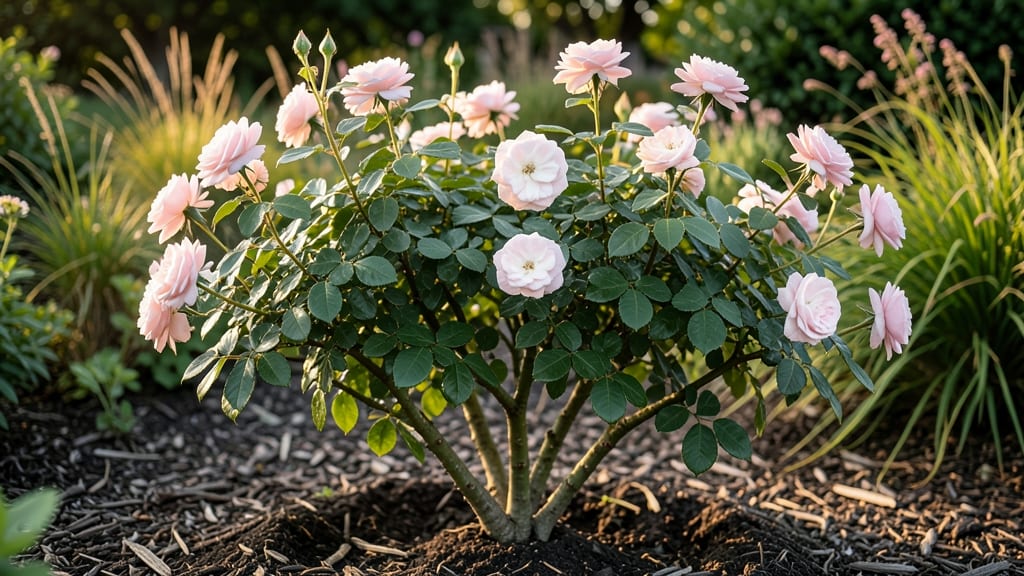
The moment a heaven-scent rose bush bursts into bloom in late spring, its intoxicating fragrance makes every pruning session worthwhile—if you do it right. 🌹 The secret lies in timing, cuts, and knowing exactly where to aim your shears for maximum fragrance.
This rose thrives in full sun (6+ hours daily) and well-draining soil, but its real magic happens when you prune like a pro. Start with clean, sharp tools in early spring, then repeat after each flush of blooms.
You’ll see stronger canes, denser foliage, and that signature heavenly scent filling your garden by summer.
By mid-season, your bush will reward you with hundreds of blooms that perfume the air for yards around. The key is cutting back just enough to encourage new growth without sacrificing next year’s framework. Think of it like sculpting—each snip shapes the plant’s future.
Works for both container gardens and in-ground plantings, though larger bushes need more elbow room. Here’s how to keep your Heaven Scent looking its best all season long—no more sad, sparse stems or weak fragrance.
📚 In This Guide
- What you need
- Instructions
- Tips and common mistakes
- Wrapping up and next steps
What you need
- ● Pruning shears – Sharp, bypass-style (not anvil-type) to make clean cuts. 1 pair (sterilize with rubbing alcohol between cuts).
- ● Hand pruners – For smaller stems and tight spaces. 1 pair (smaller blades, 4–6 inches).
- ● Loppers – For thicker branches (½–1½ inches). 1 pair (with bypass blades).
- ● Garden gloves – Heavy-duty, cut-resistant to protect from thorns. 1 pair (waterproof preferred).
- ● Disinfectant – 70% isopropyl alcohol or bleach solution (1 part bleach to 9 parts water) to sterilize tools. Small spray bottle or wipe.
- ○ Pruning sealant – Optional but helpful for large cuts (e.g., Tree Seal or pruning wax). Small tub.
- ● Trash bags or bucket – For removing pruned debris. 1–2 bags (20–30 gallon capacity).
- ● Notebook & pen – To sketch your rose’s shape or track progress. 1.
- ● A clear day with mild weather (avoid pruning in frost, extreme heat, or rain).
- ● Freshly sharpened tools – Dull blades crush stems, inviting disease. 💡 Test sharpness by slicing a paper cleanly.
- ● Safety first! – Wear long sleeves and closed-toe shoes to avoid thorn pricks.
- ● Patience & a plan – Sketch your rose’s structure beforehand or research Heaven Scent rose pruning guides.
- ● Hose or spray bottle – To rinse tools and rose after pruning.
- ● Compost bin – For repurposing small pruned pieces.
- ● Rose fertilizer – Balanced, low-nitrogen (e.g., 10-10-10) to apply post-pruning. Small bag.
- ● Mulch – Organic mulch (e.g., shredded bark) to retain moisture. 5–10 gallons.
Step-by-step pruning guide for Heaven Scent roses
Transform your Heaven Scent rose bush into a fragrant, healthy powerhouse with these precision pruning steps.
✂️ Step 1: Time Your Pruning for Peak Performance
Prune your Heaven Scent rose bush during its dormant season, ideally in late winter or early spring before new growth begins. This timing ensures you're not removing buds that will develop into flowers. Look for bare branches and no visible leaf buds—these are your cues that the plant is truly dormant and ready for pruning.
If you missed the dormant season window, late summer after the first flush of blooms is your second-best option. Avoid pruning in fall or early spring when new growth is just starting—you'll risk damaging tender shoots. I always mark my calendar for February 15th as my target date, as this gives the plant plenty of time to recover before summer's heat.
✂️ Step 2: Remove Dead, Diseased, or Weak Wood
Start by inspecting each stem for dead wood (gray, brittle branches that snap easily) and diseased canes (blackened, oozing, or mushrooming growth). Use sharp, clean pruning shears to make 45-degree cuts just above an outward-facing bud. This angle helps water run off the cut and prevents rot.
Next, identify weak or crossing branches—these compete for energy and reduce air circulation. Remove any stems that grow inward toward the center of the bush, as they'll create a dense, shaded interior where diseases thrive. I like to step back every few cuts to visualize the plant's shape—this helps me see which branches are truly necessary for structure.
✂️ Step 3: Shape the Bush for Optimal Airflow and Blooms
Heaven Scent roses thrive when they receive good air circulation, so aim to create an open, vase-like shape. Start by removing any suckers (shoots growing from the base or graft union) unless you're intentionally propagating. Then, cut back last year's blooming stems to half their length, making cuts just above a strong, outward-facing bud.
For newer canes, leave 3-5 strong buds near the base—these will develop into next year's main stems. Avoid cutting back healthy canes too severely, as this reduces the plant's ability to produce flowers. I always count buds from the base upward to ensure I'm leaving enough growth potential. The goal is to maintain a balance between structure and flowering capacity.
✂️ Step 4: Clean Up and Maintain Post-Pruning
After pruning, sterilize your tools with rubbing alcohol to prevent spreading disease. Remove all pruned material from the area—never leave cuttings on the ground, as they can harbor fungal spores. I collect the clippings in a sealed bag and add them to my compost pile only after they've fully decomposed.
Apply a balanced rose fertilizer (10-10-10 ratio) around the base of the plant, water deeply, and mulch with 2-3 inches of organic mulch to retain moisture and regulate soil temperature. This post-pruning care jumpstarts new growth and ensures your Heaven Scent rose bush recovers quickly. Watch for new leaf buds within 2-3 weeks—this confirms your pruning was successful.
⏰ Step 5: Monitor and Adjust Through the Growing Season
Throughout the growing season, keep an eye out for shoots growing toward the center of the bush—these should be pruned immediately to maintain airflow. Deadhead spent blooms by cutting just above the first set of five-leaflets to encourage continuous flowering. Heaven Scent roses are repeat bloomers, so consistent deadheading is key to maximizing fragrance and color.
If you notice yellowing leaves or stunted growth, your plant may need additional nutrients or better drainage. I often side-dress with compost tea mid-season to give the plant a nutrient boost without overwhelming it. Regularly inspect the bush for pests like aphids or spider mites—early intervention prevents infestations from spreading.
Tips & tricks for perfect Heaven Scent rose pruning
Here's what nobody tells you about transforming your Heaven Scent rose into a fragrant masterpiece—these details make all the difference.
Timing is Everything: The February 15th target date I mentioned isn't arbitrary—it gives your rose bush exactly the recovery window it needs before summer's heat stress begins. If you're in a warmer climate, adjust by 2-3 weeks later. The key visual cue is those bare branches with no leaf buds—this is your plant's way of saying "I'm ready!" Don't be fooled by a few stubborn leaves clinging to branches; true dormancy means complete nakedness.
The 45-Degree Cut Secret: That angled cut in Step 2 isn't just about aesthetics—it's a water management system. The slope directs rainwater away from the cut surface, preventing rot that could turn your pruning day into a disease disaster. I've seen gardeners make straight cuts for years without realizing they were creating perfect moisture traps. Pro tip: Use a sharp pair of shears and make the cut just above an outward-facing bud—this ensures new growth will angle away from the center, maintaining that crucial airflow.
Visualizing the Vase Shape: When shaping your bush in Step 3, step back every 5-10 cuts to check your progress. The ideal shape should resemble an open vase—wide at the base, narrowing slightly toward the top. This creates a funnel effect that channels air throughout the entire plant. I like to imagine I'm looking at an hourglass from above; if I see any part that looks like a solid wall, I know I need to remove more branches to open it up.
Post-Pruning Recovery Check: Those new leaf buds appearing within 2-3 weeks are your pruning report card. If you see vigorous green growth within 10 days, you've done it right. No new leaves? Re-evaluate your cuts—you may have been too aggressive with healthy canes. The first flush of leaves after pruning should be bright green and plentiful; dull or sparse growth means your plant needs more nutrients or better care during recovery.
Pro Tips for Heaven Scent Rose Bush
- Here's what nobody tells you about transforming your Heaven Scent rose into a fragrant masterpiece—these details make all the difference.
- Timing is Everything: The February 15th target date I mentioned isn't arbitrary—it gives your rose bush exactly the recovery window it needs before summer's heat stress begins.
- The 45-Degree Cut Secret: That angled cut in Step 2 isn't just about aesthetics—it's a water management system.
Frequently asked questions
When is the best time to prune my Heaven Scent Rose Bush for maximum fragrance?
The ideal time to prune is late winter or early spring (before new growth starts) and again after the first flush of blooms in early summer. This timing ensures you remove dead wood while encouraging robust, fragrant growth. Avoid heavy pruning in fall—it can stress the plant before winter.
How much should I trim back my Heaven Scent Rose? Should I fear over-pruning?
For Heaven Scent Roses, aim to cut back 1/3 of the plant’s height in late winter. Look for outward-facing buds when trimming—these will grow into stronger, fragrant canes. Never remove more than 1/3 at once, or you risk stunting blooms. Think of it like a haircut: confidence, not a buzz cut!
Why aren’t my Heaven Scent Roses smelling as heavenly as they should?
Fragrance fades if the plant is overcrowded, underfed, or stressed. Check for:
- Deadheading spent blooms to encourage new growth.
- Fertilizing with rose-specific food (high in phosphorus) in spring/summer.
- Pruning to improve airflow—compact growth traps moisture, reducing scent.
Can I grow a Heaven Scent Rose in a container? What’s the pruning difference?
Containers work well, but prune 10–15% more aggressively to prevent root-bound stress. Use a well-draining mix and repot every 2–3 years. Container roses also benefit from regular deadheading to keep blooms (and scent!) coming. Just ensure the pot is at least 18–24 inches wide for mature roots.
My Heaven Scent Rose leaves are yellowing or dropping. Is it pruning-related?
Yellowing leaves often signal over-pruning, disease, or nutrient issues—not just pruning itself. Rule out:
- Overwatering (check soil moisture; roses hate soggy roots).
- Fungal issues (like black spot)—prune infected leaves immediately and treat with fungicide.
- Nutrient deficiency (feed with Epsom salt or balanced fertilizer).
Wrapping up and next steps
Transforming your Heaven Scent Rose Bush into a fragrant, thriving masterpiece is well within reach—with the right tools, timing, and technique! 🌹✨ Whether you're a pruning pro or a curious beginner, the key takeaway is patience and precision paired with seasonal care.
Start by mastering the basics, then let your green thumb guide you through each step—your garden (and nose!) will thank you.
Ready to elevate your rose game? Roll up your sleeves, grab your pruners, and schedule your next pruning session—your Heaven Scent Rose is waiting for its next breath of life! 🌿💚