
Pruning
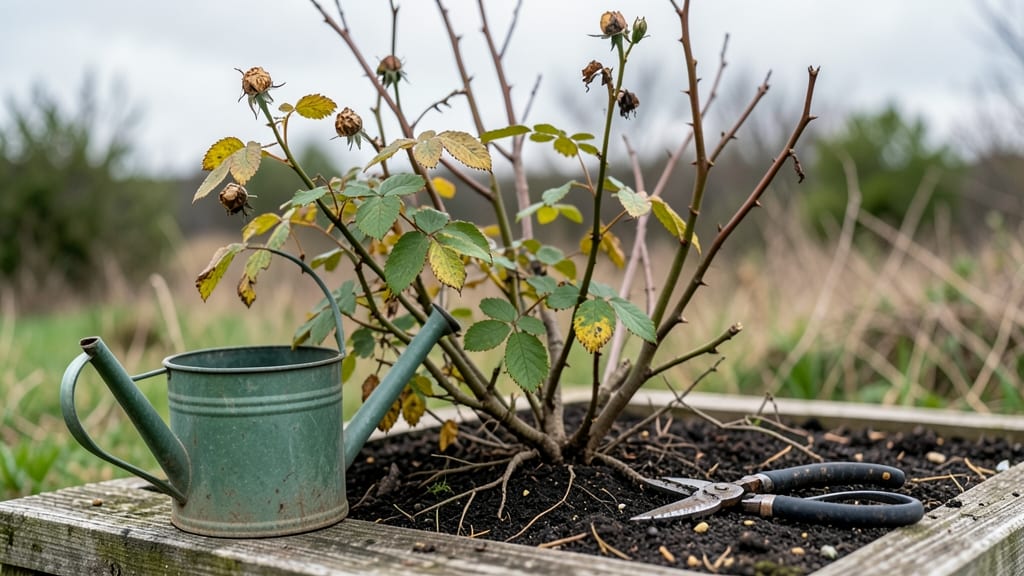
Your rose bush might look dead now, but reviving a rose bush starts with understanding why it’s struggling—whether it’s thirst, pests, or winter damage. 🌹 I’ve nursed back more than my fair share of sad-looking roses, and the secret isn’t magic—it’s knowing what to look for and how to fix it.
First, check the roots: soggy soil means overwatering, while dry, cracked earth signals underwatering. Yellow leaves? That’s often a nutrient issue. Blackened canes could mean fungal trouble. Once you diagnose the problem, you’ll know exactly how to prune, feed, or protect your bush to bring it back to life.
By summer, you’ll see fresh green shoots pushing through, and by fall, those fragrant blooms will make your neighbors jealous. The key is acting fast—roses are resilient, but they won’t wait forever for a comeback. This works for hybrid teas, floribundas, and even old garden roses.
Let’s get your bush back on track!
Root Causes Behind Dying Roses
Your once-vibrant rose bush may look wilted or lifeless, but understanding why it’s struggling is the first step to bringing it back to life. Roses are resilient, but they’re also sensitive to environmental stress, poor care habits, and hidden threats.
Below, we break down the most common reasons your rose bush might be fading—and how to spot them before they become irreversible.
Roses thrive in moderate climates, but sudden temperature swings—whether from scorching heat or freezing cold—can shock their systems. Heat stress causes wilting, yellowing leaves, and even leaf scorch (brown, crispy edges), while cold damage leads to blackened stems, stunted growth, or dead canes.
Why it happens:
- Heat stress: Temperatures above 90°F (32°C) disrupt photosynthesis, forcing roses into a survival mode. Their leaves may curl or drop to conserve water, and roots can suffocate if the soil overheats.
- Cold damage: Frosts below 20°F (-7°C) can kill rose canes outright, while late spring freezes after buds swell (a process called "frost cracking") turn blossoms to mush. Evergreen roses (like Rosa rugosa) are more vulnerable than hybrid teas.
- Windburn: Strong winds dry out leaves faster than roots can replace moisture, leading to desiccation (brown, papery leaves). This is common in exposed garden beds.
Actionable clue: Check for uneven browning on leaves (heat) or blackened stems at the base (cold). If the soil feels like a hot pan in summer or stays frozen in winter, your rose is fighting an uphill battle.
Roses hate inconsistent moisture. Their deep root systems need steady hydration, but overwatering or drought stress can suffocate roots or force them to seek water desperately—often in vain.
Why it happens:
| Issue | Scientific Cause | Visual Signs |
|---|---|---|
| Underwatering | Roots dry out, osmotic stress occurs (cells lose water faster than they can absorb it), and wilting becomes permanent if not reversed within 24–48 hours. | Dry, crispy soil; leaves curl lengthwise (like a taco); stems feel hollow when snapped. |
| Overwatering | Poor drainage causes root rot (fungi like Phytophthora thrive in soggy soil), cutting off oxygen and suffocating roots. | Yellowing leaves starting at the bottom of the bush; mushy, black roots; moldy soil smell. |
| Irregular Watering | Fluctuating moisture levels lead to physiological drought, where roots struggle to adapt, causing leaf drop and stunted growth. | Wilting that doesn’t recover after watering; new growth is weak or distorted. |
Actionable clue: Stick your finger 2–3 inches into the soil. If it’s dry, water deeply; if it’s soggy, hold off until the top 1–2 inches are dry. Mulch (2–3 inches of organic material) helps regulate moisture.
Roses are magnets for pathogens, especially in humid or crowded conditions. Fungal diseases like black spot and powdery mildew don’t just look ugly—they block sunlight and drain nutrients, weakening the plant.
Why it happens:
- Black Spot (Diplocarpon rosae): Thrives in wet, shady conditions. Spores land on leaves, creating dark spots with yellow halos. Severe cases cause defoliation, starving the bush of energy for blooms.
- Powdery Mildew (Podosphaera pannosa): Spreads in dry, warm weather (60–80°F / 15–27°C). It coats leaves in a white, talcum-like powder, reducing photosynthesis by up to 50%.
- Root Rot (Phytophthora or Fusarium): Caused by overwatering + poor drainage. Fungi invade roots, blocking water and nutrient uptake, leading to sudden wilting even when soil is moist.
- Canker (Neonectria or Botryosphaeria): Bacterial or fungal infections create sunken, oozing sores on stems. The plant "compartments off" the infected area, but repeated cankers weaken the bush over time.
Actionable clue: Look for unusual leaf spots, white powder, or stems with dark, sunken lesions. If you see blackened veins or leaves falling prematurely, fungi or bacteria are likely the culprits.
Pests don’t just nibble—they inject toxins, suck sap, or lay eggs that hatch into even bigger problems. Some, like aphids, also transmit viruses that can kill roses slowly.
Why it happens:
- Aphids: These sap-sucking insects cluster on new growth, causing curled, sticky leaves (from honeydew). They weaken the plant and spread rose rosette virus, which has no cure.
- Japanese Beetles: Adults skeletonize leaves (eating only the soft tissue), while grubs devour roots, leading to sudden wilting and poor blooming.
- Spider Mites: In dry, hot conditions, these tiny arachnids pierce cells, causing stippled, yellow leaves and fine webbing. Severe infestations can kill a bush in weeks.
- Rose Slugs (Sawfly Larvae): Their green, translucent bodies hide among leaves, skeletonizing foliage and leaving behind black frass (poop).
Actionable clue: Inspect undersides of leaves for tiny bugs, webbing, or chewed edges. Shake a branch over a white sheet—if you see tiny crawling dots
A drooping, sparse, or struggling rose bush can feel like a heartbreak—but don’t despair! With the right care, you can nurse it back to health and watch it bloom again. Below, we’ve mapped out practical, actionable fixes for common issues, plus prevention tips to keep your roses thriving long-term. Grab your gloves and let’s get to work! Cause: Overwatering, underwatering, root rot, or compacted soil.
Solution:
Start by assessing the soil moisture—stick your finger 2 inches deep. If it’s soggy, drainage is the priority. If it’s bone-dry, hydration is key. 💡 Pro Tip: If your bush is in a container, check for drainage holes. No holes? Repot immediately into a larger container with fresh potting mix. Cause: Over-pruning, wrong timing, or cutting into old wood.
Solution:
Pruning mistakes can shock a rose bush, but it’s never too lateReviving Your Rose Bush: Step-by-Step Fixes
- 🍳 Step 1: Assess the Damage
- Look for healthy canes (green, flexible stems) vs. dead wood (brown, brittle). Keep the former, remove the latter.
- If you’ve pruned too late in the season, focus on fertilizing (see below) and protecting from frost.
- 👨🍳 Step 2: Encourage New Canes
- Trim back any remaining overgrown canes to just above a outward-facing bud (use clean, sharp shears).
- Apply a balanced rose fertilizer (10-10-10 or 5-10-5) to promote foliage growth. Follow package instructions for dosage.
- 🌿 Step 3: Boost with Epsom Salt (Optional)
- Mix 1 tablespoon of Epsom salt into a gallon of water and spray the foliage every 2 weeks. Magnesium sulfate helps with chlorophyll production and recovery.
🎯 Prevention Tip: Prune roses in early spring (just as new growth begins) or late winter. Avoid summer pruning—it stresses the plant.
Cause: Aphids, spider mites, black spot, or powdery mildew. Solution:
Pests and diseases sap energy, but early action can save your bush.
- 🔪 Step 1: Identify the Problem
- Aphids/mites? Look for sticky residue (honeydew) or tiny webs on undersides of leaves.
- Fungal issues (black spot/mildew)? Check for dark spots or white powdery coatings.
- 🚿 Step 2: Treat Naturally - For pests: Spray with neem oil (1 tsp per quart of water + a drop of dish soap) or introduce ladybugs (natural predators). - For fungi: Remove infected leaves immediately.
Apply baking soda spray (1 tsp baking soda + 1 quart water + a drop of soap) weekly.
- 🛡️ Step 3: Prevent Recurrence
- Water at the base (avoid wetting leaves to prevent fungal spread).
- Space bushes for airflow (3–4 feet apart).
- Rotate pruners between cuts to avoid spreading disease.
✨ Pro Tip: Strengthen your rose’s immunity with compost tea (steep compost in water for 24 hours, strain, and use as a foliar spray).
Cause: Too much shade, harsh sun, or poor airflow. Solution:
Roses need 6+ hours of sunlight daily, but they also hate scorching or stagnant air.
- 🌞 Step 1: Optimize Sun Exposure
- Too shady? Gradually move the bush to a sunnier spot over 1–2 weeks to avoid shock.
- Too hot? Provide afternoon shade with a lightweight cloth or plant near a wall for indirect sun.
- 💨 Step 2: Improve Air Circulation
- Trim back nearby plants or structures blocking airflow.
- If in a container, ensure it’s not crowded—repot if roots are circling.
📊 Prevention Tip: Plant roses where they’ll get morning sun and afternoon shade in hot climates. This balances energy without stress.
Use this quick reference to tackle multiple issues at once:
Issue
Fix
Prevent Next Time
Yellow leaves
Check for overwatering or nutrient deficiency. Add iron supplement if needed.
Test soil pH (roses prefer 6.0–6.5).
No blooms
Fertilize with phosphorus-rich food (e.g., bone meal) and deadhead spent blooms.
Prune in early spring to encourage new growth.
Stunted growth
Test soil for nitrogen. Apply a slow-release granular fertilizer.
Mulch annually to retain nutrients.
With patience and these targeted fixes, your rose bush will bounce back stronger than ever. Remember: Roses are resilient—give them time, and they’ll reward you with lush foliage and fragrant blooms all season long! 🌹💖
Frequently asked questions
My rose bush has completely lost all its leaves—is it too late to save it?
Not necessarily! If the canes (stems) are still green and firm, your bush is alive and can regrow. Start by checking for pests or disease at the base of the stems. Prune back any dead wood, then fertilize with a balanced rose food and water deeply. New leaves should appear within 2-4 weeks if the roots are healthy.
How often should I fertilize a struggling rose bush?
For revival, use a balanced fertilizer (10-10-10) every 4-6 weeks during growing season (spring to fall). If your bush is severely deficient, start with a phosphorus-heavy formula (5-10-5) to encourage root growth. Avoid over-fertilizing—this can burn roots and worsen problems. Always water thoroughly after applying.
Can I use coffee grounds to revive my rose bush?
Coffee grounds are excellent for roses because they're slightly acidic (pH 6.2-6.5, perfect for roses) and rich in nitrogen. Mix them into the soil around the base or use as mulch. For an instant boost, steep used coffee grounds in water for 24 hours, strain, and use as a foliar spray. Just don't use more than 1 cup per bush monthly to avoid over-acidifying the soil.
What's the fastest way to tell if my rose bush is dead?
The scratch test is foolproof: Scrape a small section of bark from a cane. If you see green underneath, the bush is alive! If it's brown all the way through, the cane is dead. For complete confirmation, dig up a small section of root—healthy roots should be white or light tan, not black or mushy. If you find any living roots, your bush can still be revived.
Should I prune my rose bush while trying to revive it?
Yes, but strategically! Remove only dead, diseased, or crossing branches—never more than 1/3 of the bush at once. Prune in early spring just as new growth begins, cutting just above an outward-facing bud. Avoid summer pruning as it stresses the plant. After pruning, apply a root stimulator to encourage regrowth from the remaining healthy canes.