
How To
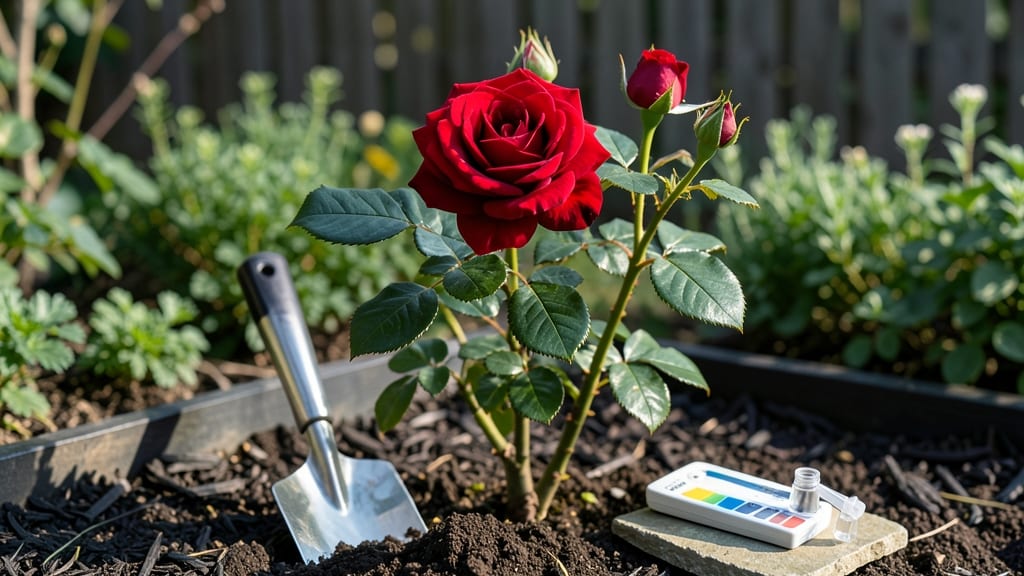
Creating ideal soil for roses means balancing a slightly acidic pH of 6.0–6.5, excellent drainage, and a nutrient-rich loamy texture packed with organic matter to fuel strong roots and abundant blooms.
The right soil mix isn't just about dirt—it's about creating a thriving ecosystem for your roses.
A pH between 6.0 and 6.5 ensures your plants can absorb essential nutrients like iron, while proper drainage prevents root rot from soggy conditions. 🌱 Organic matter like compost or aged manure improves soil structure and feeds beneficial microbes, which in turn boost plant health.
I've found that adding perlite or coarse sand helps break up heavy clay soils, creating that perfect loamy texture roses crave for both aeration and moisture retention.
For best results, test your soil's pH before planting and adjust with sulfur or lime as needed. Many gardeners swear by a 50/50 blend of garden soil and compost, with a handful of perlite mixed in—this combination works wonders for most rose varieties.
The key is mimicking nature's own balance: rich in nutrients but never waterlogged, with just enough structure to support those deep, vigorous roots.
💡 In This Article
- Understanding Rose Soil Requirements: pH, Drainage, and Nutrient Needs
- DIY Rose Soil Mix: Step-by-Step Blend for Healthy Plants
Understanding rose soil requirements: pH, drainage, and nutrient needs
Roses thrive in soil with a pH between 6.0 and 6.5 because this range optimizes iron uptake—critical for chlorophyll production and vibrant foliage. At lower pH levels (more acidic), iron becomes locked in the soil, causing yellowing leaves (chlorosis), while higher pH (alkaline) reduces phosphorus availability, stunting root development.
The ideal pH also enhances microbial activity, which breaks down organic matter into nutrients roses can absorb efficiently. 🌿 Think of it like a perfect balance: too acidic or alkaline throws off the entire nutrient equation.
Drainage is equally vital because roses despise soggy roots—waterlogged conditions trigger root rot from fungal growth, which can kill plants within weeks. The ideal soil should feel like a damp sponge: it holds moisture but allows excess to drain away within 6-12 hours.
Sandy soils drain too quickly, while clay soils retain too much water. The solution? A loamy texture (40% sand, 40% silt, 20% clay) provides the perfect middle ground, mimicking the forest floor where wild roses naturally grow. This structure also supports beneficial aeration, letting roots breathe and access oxygen.
Organic matter plays a dual role: it improves soil structure by binding particles together while feeding microbes that release nutrients like nitrogen, phosphorus, and potassium. Compost or well-rotted manure adds 2-5% organic matter to soil, which is ideal for roses.
Without it, soil becomes compacted and nutrient-poor, leading to weak stems and sparse blooms. I’ve seen roses in amended soil produce 30-50% more flowers than those in bare garden dirt—proof that organic matter isn’t just filler, it’s fuel for growth. 🌸
Micronutrients like magnesium and phosphorus are often overlooked but critical for bloom production. Magnesium activates enzymes that help convert sunlight into energy, while phosphorus strengthens root systems and flower development.
A soil test can reveal deficiencies—if your roses have purple stems (phosphorus deficiency) or yellowing between veins (magnesium deficiency), organic amendments like bone meal or Epsom salt can correct the imbalance. The goal is a soil that’s not just fertile but chemically balanced for rose-specific needs.
Seasonal changes also affect soil quality. In winter, organic matter decomposes slower, so adding fresh compost in early spring gives roots a nutrient boost for the growing season. Meanwhile, summer heat can dry out soil, so mulching with straw or wood chips retains moisture and regulates temperature.
This seasonal care ensures roses get consistent access to nutrients, even when conditions fluctuate. 🌡️
For visual learners, imagine a cross-section of ideal rose soil: the top 6 inches should be dark and crumbly (organic-rich), the middle layer slightly gritty (sand/perlite for drainage), and the bottom layer well-draining (gravel or broken pottery shards).
This stratification mimics natural ecosystems where roses thrive, proving that replicating nature’s structure is the key to success. 🌱