
Pruning
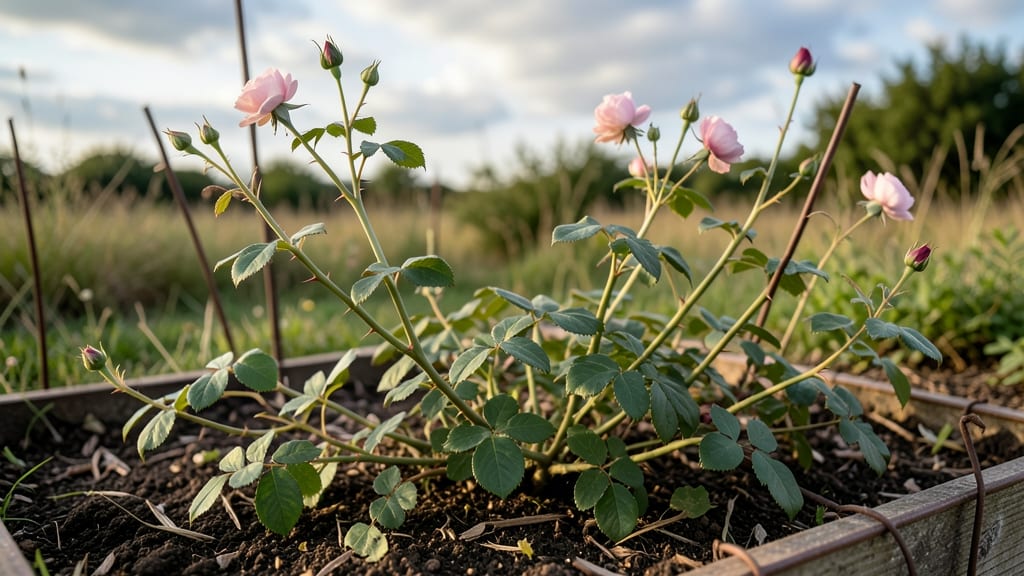
Your leggy rose bush isn’t doomed—it just needs three strategic cuts to bounce back stronger than ever. 🌹 I’ve nursed back more than my share of these woody, stretched-out bushes, and the secret lies in pruning at the right spots, not just hacking away.
The key is cutting above outward-facing buds to encourage bushy growth, while also addressing the root causes like light deprivation or overfeeding.
Most leggy roses suffer from two things: too much shade and too much nitrogen. The first cut removes those long, weak stems back to healthy buds, while the second and third cuts focus on opening up the center for airflow and sunlight.
Within 4-6 weeks, you’ll see fresh green shoots pushing out where those bare stems once were—proof the plant is ready to thrive again.
What you’ll end up with is a compact, productive bush that flowers more heavily and resists pests better. The best part? These cuts work for hybrid teas, floribundas, and shrub roses alike, and you can do them anytime between late winter and early spring before new growth starts.
For next season, move the bush to a sunnier spot (at least 6 hours of direct sun daily) and switch to a balanced fertilizer. That’s how you keep roses from getting leggy in the first place—strong structure, good light, and smart feeding. Let’s get those pruners sharp!
Why it happens
H2: Why Your Rose Bush Gets Leggy
If your rose bush is stretching tall with sparse leaves and weak stems, it’s likely suffering from etiolation—a term for when plants grow long, spindly, and weak due to poor light or other stressors.
Understanding the root causes helps you fix the problem before it’s too late. Here’s why your rose bush might be reaching for the sky instead of blooming beautifully.
---
Roses are sun-worshippers—they thrive in 6 to 8 hours of direct sunlight daily. When deprived of adequate light, they stretch their stems toward any available rays, a survival tactic called phototropism. This results in:
- Weak stems: Less sunlight means less chlorophyll production, weakening cell walls.
- Fewer leaves: The plant prioritizes stem growth over foliage to reach light faster.
- Pale, yellowing leaves: A classic sign of etiolation, where chlorophyll breaks down.
Actionable fix: Move your rose bush to a sunnier spot gradually (sudden exposure can cause sunburn). If space is limited, opt for dwarf or climbing varieties that tolerate partial shade better.
---
While roses love water, overwatering or uneven soil moisture can stunt growth and encourage leggy habits. Here’s how:
- Root stress: Soggy soil cuts off oxygen, forcing roots to spread shallowly and stems to elongate for stability.
- Nutrient dilution: Excess water washes away essential nutrients (like nitrogen and phosphorus), leaving the plant starved and stretchy.
- Fungal risks: Damp conditions breed pathogens like black spot, which weakens the plant further.
Actionable fix:
- Water deeply but infrequently—aim for 1–1.5 inches per week, letting soil dry slightly between waterings.
- Improve drainage with organic matter (compost or perlite) or raised beds.
- Mulch around the base (2–3 inches of wood chips) to retain even moisture without waterlogging.
---
A leggy rose bush often signals a nutrient deficiency, particularly:
| Deficiency | Symptoms | Fix |
|---|---|---|
| Nitrogen (N) | Pale green or yellow leaves, weak stems | Apply a balanced fertilizer (10-10-10) or compost in spring. |
| Phosphorus (P) | Slow growth, purple-tinged leaves, leggy stems | Use bone meal or rock phosphate at planting or early spring. |
| Potassium (K) | Weak stems, yellow edges on leaves, poor disease resistance | Add wood ash or a potassium-rich fertilizer (like 5-10-10). |
Pro tip: 💡 Test your soil every 2–3 years to avoid guesswork. A simple DIY test kit (or lab analysis) reveals exactly what your roses need.
---
Pruning too late, too little, or incorrectly can trigger leggy growth. Common mistakes:
- Waiting until spring: Roses need pruning in late winter/early spring (before new growth starts) to shape them properly.
- Cutting too high: Leaving stubs or pruning above a bud encourages long, weak shoots with no leaves.
- Removing too many healthy canes: Over-pruning reduces the plant’s energy reserves, leading to sparse foliage.
Actionable fix:
- Prune in late winter (when the plant is dormant) to open the center and remove dead/weak stems.
- Cut at a 45-degree angle, ½ inch above an outward-facing bud.
- Avoid topping (cutting the main stem flat)—this promotes bushy but leggy regrowth.
---
Roses are perennial plants, meaning they follow seasonal rhythms. Sudden changes—like unseasonably warm winters or early spring heat—can disrupt their growth cycle, leading to:
- Early, weak flushes of growth: Warm spells trick roses into sprouting too soon, but cold snaps can damage tender new shoots.
- Stunted root development: If roots don’t establish properly in cool soil, the plant diverts energy to above-ground growth.
Actionable fix:
- Mulch heavily in fall (4–6 inches of straw or leaves) to insulate roots.
- Use row covers in early spring if frost is expected after buds swell.
- Plant hardy varieties (like Knock Out® or David Austin English Roses) if your climate has extreme swings.
Revitalize Your Tall Roses Naturally
Now that you understand why your rose bush has become leggy—whether from overcrowding, poor light, or improper pruning—it’s time to turn things around! The good news? With the right techniques, you can restore your rose bush to its full, bushy glory.
Below are practical, step-by-step solutions tailored to the most common causes, plus prevention tips to keep your roses thriving long-term.
---
Problem: Too many stems competing for nutrients or light, leading to sparse, leggy branches.
#### 🔪 Prune for Balance 1. Identify the culprits: Look for thin, weak stems growing inward or crossing over others. These are the first to go. 2. Cut at a 45° angle: Use clean, sharp pruners (or shears) and trim just above an outward-facing bud (about ¼ inch above).
This encourages new growth in the right direction. 3. Open up the center: Remove 20–30% of the oldest, thickest canes to improve airflow and sunlight penetration. Aim for an "open vase" shape.
#### 🌱 Feed and Fertilize - Balanced fertilizer: Apply a slow-release rose fertilizer (high in phosphorus for roots, moderate nitrogen for foliage) in early spring. Follow package instructions—over-fertilizing can burn roots! - Organic boost: Mix compost or worm castings into the soil around the base to replenish nutrients naturally.
#### 💡 Pro Tip: If your rose bush is severely overgrown, don’t prune more than ⅓ of the plant at once—this can shock it. Space pruning over 2–3 sessions if needed.
---
Problem: Leggy growth from insufficient sunlight, causing stems to stretch toward light sources.
#### 🌞 Relocate or Prune Strategically 1. Move the plant (if possible): Roses need 6–8 hours of direct sunlight daily. If relocating isn’t an option, prune to shape the bush so all branches get equal light.
2. Prune the top: If the bush is shaded by taller plants or structures, trim the tallest stems to encourage bushier growth lower down. 3. Thin out dense foliage: Remove leaves or branches blocking sunlight from inner stems.
#### 🌱 Adjust Care for Shade - Use a light fertilizer: In low-light areas, switch to a lower-nitrogen fertilizer (like 5-10-10) to prevent further leggy growth. - Pinch back new growth: If you notice long, weak shoots, snip them back by half to promote branching.
#### 💡 Pro Tip: Leggy roses in shade? Try a dwarf or climbing variety bred for lower-light conditions—some roses (like ‘New Dawn’ or ‘Blaze’) tolerate partial shade better than others.
---
Problem: Past pruning errors (e.g., cutting too low, leaving stubs, or pruning at the wrong time) led to weak, leggy stems.
#### 🔄 Prune the Right Way 1. Find the "5-leaflet" rule: Healthy rose canes have 5 leaflets per leaf. If a stem has fewer, it’s likely weak and should be removed. 2. Cut to a strong bud: Always prune above a bud that faces outward (never inward or downward).
This ensures new growth angles away from the center. 3. Avoid "heading back": If you’ve been cutting stems to random lengths, reset the plant by pruning all stems to 12–18 inches tall, leaving 3–5 strong buds on each.
#### 🌿 Encourage New Growth - Apply rose tonic: After pruning, use a seaweed-based fertilizer or rose tonic to jumpstart recovery. - Water deeply: Keep soil moist (but not soggy) for 2–3 weeks post-prune to help the plant establish new roots.
#### ⏰ Timing Matters - Best time to prune: Late winter or early spring (just before new growth starts). Avoid pruning in fall—it can stimulate tender growth that won’t survive winter.
#### 💡 Pro Tip: If your rose bush has bare stems with no buds, it may be dead. Gently scrape the bark—if it’s green underneath, the stem is alive. If brown, remove it entirely and wait for new shoots to emerge from the base.
---
Once you’ve revived your rose bush, keep it lush with these long-term strategies:
| Issue | Solution | When to Do It | |-------------------------|---------------------------------------|---------------------------------| | Poor sunlight | Relocate or prune to open the canopy | Early spring or fall | | Overcrowding | Thin out canes every 1–2 years | Late winter/early spring | | Weak fertilization | Use slow-release fertilizer | Spring and mid-summer | | Disease risk | Prune for airflow; sterilize tools | After each pruning session | | Over-pruning | Limit cuts to ⅓ of the plant at once | Once per year |
#### 🎯 Bonus: Train for Bushiness - Disbud new blooms: When you see a rosebud forming, remove all but the strongest central bud. This forces energy into fewer, larger blooms and encourages branching. - Use a trellis: For climbing roses, train stems along a trellis to distribute growth evenly.
--- Final Thought: A leggy rose bush is rarely a death sentence—it’s just a sign your plant is asking for a little TLC. With strategic pruning, proper care, and patience, your roses will reward you with vibrant blooms and a full, healthy shape in no time! 🌹✨
Frequently asked questions about leggy rose bushes
Why do my rose stems keep growing tall and thin instead of bushy?
This is called etiolation—your roses are stretching toward light due to insufficient sunlight (less than 6 hours daily) or overcrowding. The plant prioritizes stem growth over leaves to reach light faster, creating weak, leggy stems. Move to sunnier spot or prune to open the center for better light penetration.
Can I fix a leggy rose bush by just cutting the top off?
No, topping (cutting stems flat) creates more leggy regrowth. Instead, cut at a 45-degree angle, ½ inch above an outward-facing bud. This directs energy to bushy new growth. For severe cases, prune stems to 12–18 inches tall with 3–5 strong buds remaining.
What’s the best time of year to prune leggy roses?
Prune in late winter or early spring (just before new growth starts) for best results. Avoid fall pruning—it can stimulate tender growth that won’t survive winter. If you must prune in summer, do it after flowering to avoid removing next year’s buds.
Will fertilizer make my leggy rose bush worse?
Only if it’s too high in nitrogen! High-nitrogen fertilizers promote leafy (not bushy) growth. Use a balanced fertilizer (10-10-10) or switch to phosphorus/potassium-rich options (like 5-10-10) to strengthen stems and roots. Always follow package instructions.
How do I know if a leggy stem is dead or just weak?
Scrape the bark—if it’s green underneath, the stem is alive. If brown, it’s dead and should be removed. Weak stems will have fewer than 5 leaflets per leaf and may bend easily. Prune these back to healthy buds to encourage new growth.