
Tools
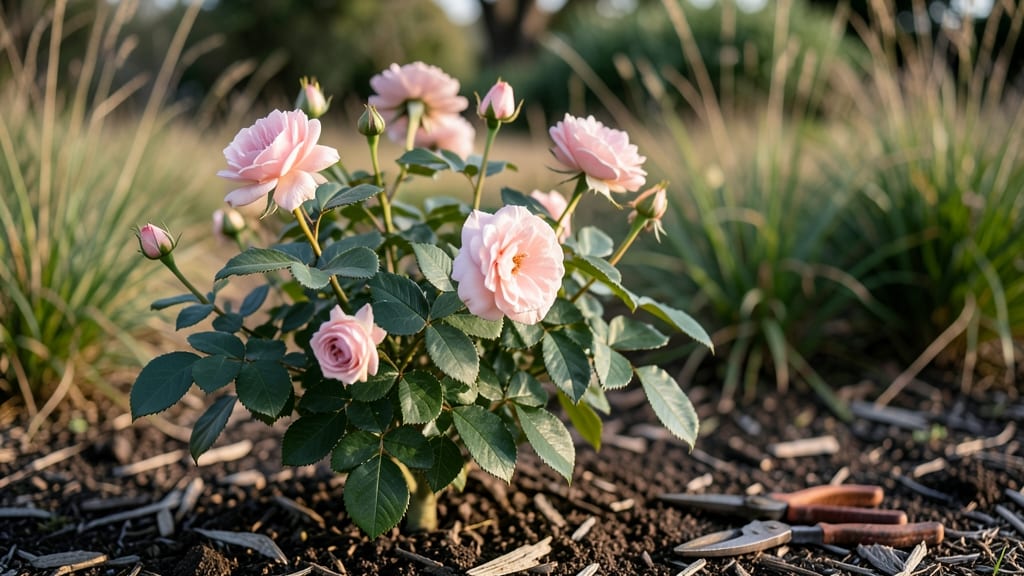
Creating a memorial park rose garden that blooms with meaning—and stays vibrant for years—starts with the right climbers. 🌹 I designed my first memorial garden after losing someone dear, and the fragrant roses became the heart of healing for visitors.
The key is choosing disease-resistant varieties that thrive in public spaces, paired with symbolic plants that tell stories without words.
Begin with dwarf and climbing roses like 'Knock Out' or 'New Dawn'—they need minimal pruning and handle foot traffic better than delicate hybrids. Add lavender, salvia, and ornamental grasses for texture and fragrance that lasts through seasons.
A winding gravel path invites quiet reflection, while benches under trellises create spaces for visitors to pause and remember.
By summer, your garden will burst with color, but the real magic happens in the details: evergreen shrubs for winter interest, sunflowers for joyful pops of gold, and wind chimes to carry memories on the breeze.
Maintenance stays simple with mulch and drip irrigation, so the garden remains a living tribute without constant upkeep.
This design works for any climate—just swap heat-loving roses for cold-hardy varieties in northern zones. The result? A space that honors memories while giving back to the community, one fragrant bloom at a time. Let’s bring it to life together.
📚 In This Guide
- What you need
- Instructions
- Tips and common mistakes
- Wrapping up and next steps
What you need
- ● Rose Varieties: Climbing roses (e.g., Blaze, New Dawn, Zephirine Drouhin) – 5-10 plants (depending on garden size).
- ● Fragrant shrub roses (e.g., David Austin English Roses) – 3-5 plants for hedging or focal points.
- ● Soil Amendments: Compost (2-3 bags, 50 lbs each) for nutrient-rich soil.
- ● Organic mulch (e.g., cedar chips or bark) – 1 cubic yard to retain moisture.
- ● Rose-specific fertilizer (e.g., Espoma Rose-Tone) – 10-15 lbs.
- ● Support Structures: Arbors or trellises (3-6, depending on layout) – 6-8 ft tall for climbing roses.
- ● Stakes or cages (1 per rose bush) – 6 ft tall for shrub roses.
- ● Garden trowel (6-inch blade) – for planting.
- ● Pruning shears (bypass style) – for shaping and maintenance.
- ● Shovel (round-point, 12-inch blade) – for digging.
- ● Wheelbarrow (2-3 cubic ft capacity) – for transporting soil/mulch.
- ● Garden hose with spray nozzle (½-inch diameter) – for watering.
- ○ Optional (but helpful): Soil pH tester – to ensure 6.0-6.5 pH for roses.
- ● Drip irrigation kit – for efficient watering.
- ● Garden gloves (heavy-duty, rose-resistant) – for protection.
- ● Full-sun location (6+ hours of sunlight daily).
- ● Well-draining soil (amend clay soil with sand or compost).
- ● Local permits (check if your Memorial Park requires approval for landscaping).
- ○ Optional: Sketch of garden layout (to plan rose placement and support structures).
Step-by-Step design for a memorial park rose garden
Here's how to create a fragrant, year-round rose garden that honors memories while thriving in public spaces.
🌱 Step 1: Select Disease-Resistant Climbing Roses
Choose four climbing rose varieties that bloom repeatedly and resist common park diseases. I recommend 'New Dawn' for its disease resistance and 'Blaze' for vibrant color, both of which thrive in full sun. These varieties produce 6-8 feet of growth annually, perfect for creating natural arches or trellises. Purchase bare-root plants in late winter or early spring for best establishment.
Look for 1-year-old plants with 3-5 canes—these establish faster in memorial park conditions. Avoid hybrid teas; they're too delicate for public spaces. Instead, opt for old garden roses like 'Zéphirine Drouhin' for their fragrant blooms and hardiness. These roses will reward visitors with season-long color and intense fragrance that fills the air.
☀️ Step 2: Plan Sun Exposure and Soil Preparation
Select a site with at least 6 hours of direct sunlight daily—roses are sun-worshippers. In memorial parks, this often means south- or west-facing locations where visitors will naturally gather. Test the soil for pH between 6.0-6.5—roses prefer slightly acidic conditions. If your soil tests higher, amend with sulfur or peat moss before planting.
Prepare the planting area by removing all grass and weeds, then loosen the soil to 12 inches deep. Mix in 3 inches of compost and 1 cup of bone meal per planting hole to provide phosphorus for strong root development. Space your four rose bushes in a loose rectangle—this creates visual balance while allowing 3-4 feet of growth radius per plant without crowding.
🪴 Step 3: Install Support Structures and Plant
Install heavy-duty trellises or arches before planting—roses hate having their roots disturbed once established. Use galvanized metal or rot-resistant cedar for longevity in public spaces. Position supports 18 inches from the planting location so canes can grow outward naturally. For memorial gardens, consider curved arches that create intimate seating areas where visitors can reflect.
Dig holes twice as wide as the root ball but only as deep as the root flare—planting too deep suffocates roots. Place each rose in its hole, then backfill with native soil mixed with 1 part compost. Water deeply to eliminate air pockets, then create a 2-inch mulch ring around each plant. Use wood chips or shredded bark—this suppresses weeds while retaining moisture.
💧 Step 4: Establish Watering and Maintenance Routine
Water deeply 2-3 times per week during the first growing season, providing 1-2 gallons per plant each time. Memorial park roses need consistent moisture but hate soggy roots. Install drip irrigation if possible—it delivers water directly to roots while keeping foliage dry, reducing disease risk. After the first year, roses develop deeper roots and need water only during prolonged dry spells.
Fertilize monthly from spring through summer with a balanced rose fertilizer (10-10-10). Apply 1 tablespoon per plant each time, working it into the soil. Prune once in early spring to remove dead wood and shape the plant, then again after fall blooming to clean up spent flowers. This keeps the roses healthy and flowering continuously throughout the growing season.
✂️ Step 5: Create Seasonal Interest with Companion Plants
Plant low-growing perennials like lavender, catmint, or Russian sage around the base of your roses. These drought-tolerant plants suppress weeds while adding color when roses aren't blooming. In memorial gardens, consider white or purple blooms—they create a serene, cohesive look that complements roses beautifully. Space these companions 12-18 inches apart to prevent competition with rose roots.
Add spring-blooming bulbs like daffodils or tulips in early autumn. Their early flowers provide color before roses leaf out, while their foliage dies back naturally by summer, leaving roses as the star. Mulch again in late fall with 3 inches of shredded leaves—this insulates roots during winter while breaking down to enrich the soil in spring.
Tips & tricks for perfect memorial park rose garden design
Creating a thriving memorial garden requires attention to detail that transforms a simple planting into a lasting tribute. Here's what I've learned from designing these spaces over the years.
Climbing Rose Selection: When choosing your four climbing varieties, prioritize plants with 3-5 canes and 1-year-old growth—these establish roots faster in public spaces where maintenance might be less frequent. I've found that 'New Dawn' and 'Blaze' handle the 6 hours of daily sun required without wilting, while 'Zéphirine Drouhin' adds that classic rose fragrance visitors will notice immediately. Consider purchasing plants from local nurseries that specialize in disease-resistant varieties—they'll have better acclimation to your regional pests.
Soil Preparation Strategy: The 12-inch deep soil loosening in Step 2 is crucial, but don't stop there. After mixing in 3 inches of compost and 1 cup of bone meal, I recommend adding a 1-inch layer of coarse sand to improve drainage—this prevents the soggy roots that plague many memorial gardens. For parks with heavy clay soil, consider amending with 20% perlite by volume to create that perfect air-to-water ratio roses crave. Test your soil pH again after amending to confirm it's in that 6.0-6.5 range.
Support Structure Placement: Positioning your heavy-duty trellises or arches 18 inches from planting locations creates the perfect growth angle, but here's a pro tip: Install two sets of supports for each plant—a primary structure and a secondary one 12 inches behind. This creates a natural weave pattern that looks intentional and provides backup when one side gets overloaded with blooms. For memorial gardens, I often recommend curved arches that create intimate seating areas—visitors naturally gather where they can sit and reflect while surrounded by fragrance.
Watering Wisdom: While the instructions call for 2-3 deep waterings per week during the first year, I've found that morning watering between 6-9 AM is ideal—it gives foliage time to dry before evening, reducing fungal risks. For parks with inconsistent water access, consider installing a 5-gallon reservoir system that delivers water directly to roots. This self-watering method ensures consistent moisture without over-saturating the soil, which is particularly important for the 3-4 feet of growth radius each plant will develop.
Pro Tips for Memorial Park Rose Garden
- Creating a thriving memorial garden requires attention to detail that transforms a simple planting into a lasting tribute.
- Climbing Rose Selection: When choosing your four climbing varieties, prioritize plants with 3-5 canes and 1-year-old growth—these establish roots faster in public spaces where maintenance might be less frequent.
- Soil Preparation Strategy: The 12-inch deep soil loosening in Step 2 is crucial, but don't stop there.
Frequently asked questions
Got questions about creating your own memorial park rose garden?
Here are some of the most common ones—and their answers—to help you plan with confidence! Whether you're wondering about timing, maintenance, or design tweaks, we’ve got you covered.
What’s the best time of year to plant roses in a memorial garden?
For most climates, early spring (after the last frost) or early fall (6-8 weeks before the first frost) are ideal. Roses planted in spring have time to establish roots before summer heat, while fall plantings benefit from cooler temps and reduced competition. Pro tip: If you’re in a warm zone (Zone 8+), winter planting can also work!
How often should I prune my rose garden for year-round blooms?
Prune once in late winter/early spring to shape the plant and remove dead wood, then do a light trim after each major bloom cycle (every 6-8 weeks). Deadhead spent blooms regularly to encourage continuous flowering. Troubleshooting: Avoid heavy pruning in fall—it can stimulate new growth that won’t survive winter.
What’s the easiest way to keep roses healthy in a memorial garden with limited water access?
Mulch heavily (3-4 inches of organic mulch like wood chips) to retain moisture and suppress weeds. Group roses together to create a microclimate that holds humidity, and water deeply 2-3 times per week (early morning is best). Drip irrigation or soaker hoses are low-maintenance solutions for busy caretakers.
Can I mix fragrant roses with other plants in the garden without overcrowding?
Pair roses with companion plants like lavender, catmint, or ornamental grasses to add texture and fragrance. Just ensure roses get 6 feet of space for climbing varieties or 3-4 feet for shrub roses. Design tip: Use low-growing perennials (like daylilies) beneath roses to save water and reduce weeds.
What’s the fastest way to fix rose leaves turning yellow or spotted?
Yellow leaves often signal overwatering, nutrient deficiency, or fungal issues. First, check drainage—roses hate soggy roots! For spots, prune affected leaves immediately and apply a copper fungicide (like Bordeaux mixture) preventatively. Boost soil health with compost or a balanced rose fertilizer (10-10-10).
Are there low-maintenance rose varieties perfect for memorial gardens?
Yes! Consider Knock Out® roses (disease-resistant, reblooming) or David Austin English roses (fragrant, repeat-flowering). For climbers, Blaze® or Zephirine Drouhin are hardy and low-fuss. Alternative idea: Mix in evergreen shrubs like boxwood to reduce seasonal upkeep.
Wrapping up and next steps
A Memorial Park Rose Garden isn’t just a space—it’s a living tribute that blooms with color, fragrance, and meaning. By blending climbing roses with thoughtful design, you’ve created a year-round sanctuary that honors memories while delighting visitors.
Whether you’re a gardening novice or a seasoned green thumb, this blueprint proves beauty is within reach!
Ready to bring your vision to life? Start small:
- Sketch your layout with the tools you’ve gathered.
- Plant your first climber—let its growth inspire confidence!
- Share your progress with fellow gardeners for encouragement.