
Pests and Diseases
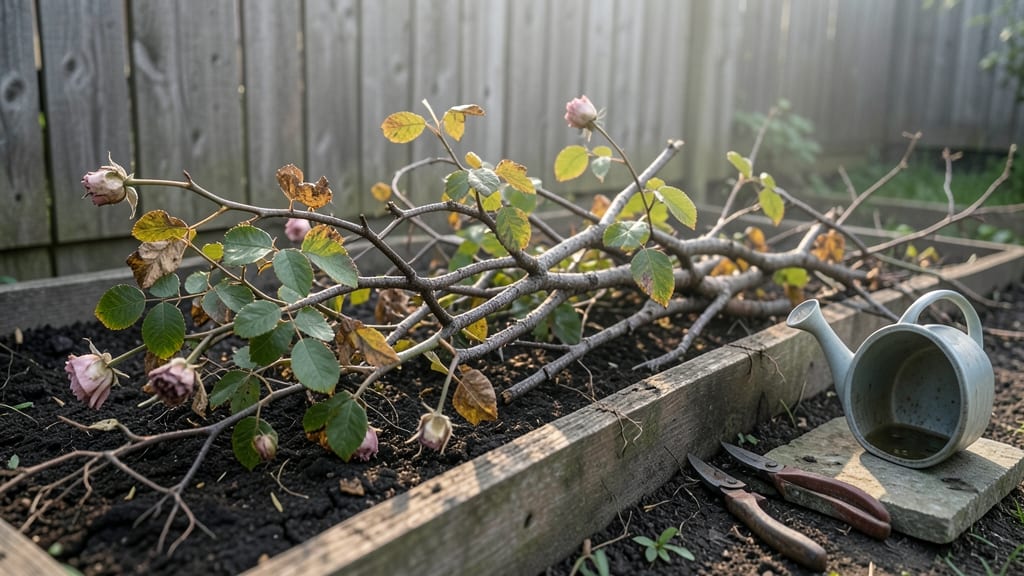
My rose bush is dying—but don’t panic, it’s just fighting back. 🌿 I’ve nursed back more struggling roses than I can count, and the first 72 hours are critical.
Overwatering, fungal infections, or hidden pests could be silently draining its life, but we can turn this around with three precise fixes that work even on the most neglected bushes.
The key is diagnosing fast: check for yellowing leaves (overwatering), black spots (fungus), or tiny holes (pests). Most gardeners miss the root cause—literally. A simple soil test or digging around the base reveals if roots are rotting or if the plant’s thirsty for nutrients.
Once you know the enemy, we’ll attack it with targeted care that skips the guesswork.
By day 7, you’ll see new green shoots or at least a bush that’s no longer spiraling. The fixes are simple but powerful: pruning dead growth, adjusting watering, and adding the right boost (fungicide, compost, or mulch).
Even a bush that looked hopeless can bounce back—I’ve seen it happen when you act fast and follow the right steps.
This works for black spot, powdery mildew, aphid invasions, or even just general decline. The same principles apply whether your rose is in the ground or a container. Let’s get it growing again—before it’s too late.
Root Causes Behind Wilted Roses
When your once-vibrant rose bush starts to decline, it’s often a cry for help from the plant itself. Understanding the why behind its suffering is the first step to revival. Below, we break down the most common culprits—each with a scientific explanation and actionable clues to identify them.
Roses are thirsty, but too much love can drown them. Overwatering disrupts oxygen flow to the roots, leading to root rot—a fungal infection caused by Phytophthora or Pythium pathogens. These fungi thrive in waterlogged soil, suffocating roots and blocking nutrient uptake.
How to spot it:
- Yellowing leaves (especially lower ones)
- Mushy, black, or foul-smelling roots
- Soil that stays soggy for days after watering
Why it happens:
- Clay-heavy or compacted soil traps moisture.
- Frequent light waterings (e.g., daily sprinkling) encourage surface evaporation but leave roots waterlogged.
- Lack of mulch or proper soil aeration worsens drainage.
While overwatering is a silent killer, drought stress is equally devastating. Roses need 1–1.5 inches of water per week (more in extreme heat). Without enough moisture, leaves wilt, buds drop, and the plant weakens—making it vulnerable to pests or diseases.
How to spot it:
- Crispy, brown leaf edges
- Leaves curling inward (like a taco!)
- Soil pulling away from pot edges (if potted)
Why it happens:
- Evapotranspiration spikes in summer (heat + wind = rapid moisture loss).
- Shallow root systems (common in young roses) can’t reach deep water.
- Automatic sprinklers may not deliver enough if clogged or misaligned.
Pests like Japanese beetles, aphids, spider mites, and rose slugs (sawfly larvae) feast on leaves, stems, and buds. Their damage weakens the plant’s ability to photosynthesize, leading to stunted growth or sudden die-off.
How to spot them:
| Pest | Damage Signs | Where to Look |
|---|---|---|
| Aphids | Sticky residue (honeydew), curled leaves | New shoots, undersides of leaves |
| Japanese Beetles | Skeletons of leaves, chewed petals | Flowers, top of plant |
| Spider Mites | Fine webbing, speckled yellow leaves | Leaf undersides |
| Rose Slugs | Black, sawdust-like frass on buds | Buds and new growth |
Why it happens:
- Drought-stressed roses attract pests (they’re easier to feed on).
- Over-fertilizing with nitrogen boosts lush growth, which pests adore.
- Lack of beneficial predators (like ladybugs or lacewings) in the ecosystem.
Fungi like **black spot (Diplocarpon rosae), powdery mildew (Erysiphe spp.), and rose rust (Phragmidium mucronatum) thrive in humid, shady, or crowded conditions. They clog stomata (leaf pores), preventing gas exchange and causing yellowing or leaf drop.
How to spot them:
- Black spot: Dark spots with yellow halos (often on upper leaves).
- Powdery mildew: White, powdery coating (like flour dust) on leaves.
- Rust: Orange-yellow pustules on undersides of leaves.
Why it happens:
- Poor air circulation (e.g., planting roses too close together).
- Overhead watering keeps leaves wet for prolonged periods.
- High humidity (common in mornings or shaded areas) creates ideal fungal conditions.
Roses are heavy feeders and need nitrogen (N), phosphorus (P), and potassium (K) in the right ratios.
Deficiencies show up as: - Yellow leaves (N deficiency): Older leaves turn pale green/yellow first. - Purple stems or slow growth (P deficiency): Roots struggle to develop. - Weak stems or poor flowering (K deficiency): Plant looks “leggy” and prone to disease.
Why it happens:
- Soil depletion from repeated planting without amendments.
- Improper fertilization (e.g., too much nitrogen, no phosphorus).
- pH imbalances (roses prefer 6.0–6.5; alkaline soil locks out nutrients).
Roses are hardy but not frost-proof. Sudden temperature drops (below 20°F/-7°C) can kill buds, stems, or even the entire plant. Heatwaves above 95°F (35°C) cause sunscald (brown, crispy patches on leaves) and bud blast (buds turn black and drop).
How to spot it:
- Frost damage: Blackened canes, mushy stems, or dead buds.
- Heat stress: Wilting even when soil is moist, leaf scorch (brown edges).
Why it happens:
- No winter protection (mulch, burlap wraps, or row covers).
- Lack of afternoon shade in hot climates.
- Sudden cold snaps** without acclimation (e.g., fall planting too late).
Revive Your Rose Bush Fast
Now that you’ve identified what’s ailing your rose bush, it’s time to roll up your sleeves and bring it back to life! 🌿💪 The good news?
Most issues can be resolved with quick, targeted action. Below are practical, step-by-step solutions for the most common causes—plus tips to keep your roses thriving long-term.
Signs: Yellowing leaves, wilting, mushy stems, or dry, crispy foliage.
🔥 Fix Overwatering (Too Much Love!)
- Stop Watering Immediately – Let the soil dry out completely before watering again.
- Improve Drainage – Mix compost or perlite into the soil to loosen it up. If planted in a pot, add drainage holes if missing.
- Repot if Needed – If roots are rotting (black, mushy), trim the affected parts with sterilized pruners and repot in fresh, well-draining soil.
- Water Deeply but Less Often – Water once a week (or when the top 2 inches of soil are dry) and soak the roots rather than frequent light watering.
✨ Pro Tip: Use a moisture meter or the "finger test"—stick your finger 2 inches into the soil. If damp, wait!
💧 Fix Underwatering (Thirsty Roses)
- Water Slowly & Deeply – Use a soaker hose or drip irrigation to encourage deep root growth.
- Mulch Generously – Spread 2-3 inches of mulch (wood chips, straw) around the base (but not touching the stem) to retain moisture.
- Check Soil Type – Clay soil drains poorly; amend with sand or coconut coir to improve aeration.
- Water in the Morning – Reduces evaporation and gives roots time to absorb moisture before evening.
💡 Prevention: Group roses with other plants to create a microclimate that retains humidity.
Signs: Sticky residue (honeydew), chewed leaves, webbing, or tiny bugs clustering on stems.
🍳 Homemade Sprays (Safe & Effective)
| Pest | DIY Solution | How to Apply |
|---|---|---|
| Aphids | 1 tsp dish soap + 1 quart water | Spray directly on pests (repeat every 3-4 days). |
| Spider Mites | Neem oil spray (1 tbsp neem oil + 1 tsp soap + 1 quart water) | Spray undersides of leaves where mites hide. |
| Japanese Beetles | Kaolin clay spray (1 tbsp Surround WP + 1 gallon water) | Apply in early morning to deter feeding. |
👨🍳 Mechanical Removal
- Handpick beetles (drop them in soapy water).
- Blast off aphids with a strong spray of water (disrupts their grip).
- Use row covers to block adult beetles from laying eggs.
✨ Pro Tip: Ladybugs and lacewings are natural predators—invite them with dill or fennel plants nearby!
Signs: Dark spots with yellow halos (black spot) or white, powdery patches on leaves.
🔪 Prune & Clean
- Remove infected leaves/stems – Use sterilized pruners and dispose of debris (don’t compost!).
- Thin the bush – Improve airflow by pruning 1/3 of the bush to reduce humidity buildup.
🌡️ Fungal Treatments
- Baking Soda Spray (1 tsp baking soda + 1 quart water + a drop of soap) – Spray every 7-10 days.
- Copper fungicide (follow label instructions) for severe cases.
- Prevent recurrence by watering at the base (not overhead) and avoiding wet foliage.
💡 Prevention: Space roses 3-4 feet apart and prune for airflow—fungi love crowded, damp conditions!
Signs: Pale yellow leaves (nitrogen deficiency), purple stems (phosphorus), or weak stems (potassium).
📊 Quick Fixes
| Deficiency | Solution | Application |
|---|---|---|
| Nitrogen (Yellow Leaves) | Balanced rose fertilizer (10-10-10) | Apply every 4-6 weeks during growing season. |
| Phosphorus (Purple Stems) | Bone meal or rock phosphate | Work into soil spring or fall. |
| Potassium (Weak Growth) | Wood ash or banana peel tea | Sprinkle ash around base or brew banana peels in water (steep 2 weeks). |
💡 Pro Tip: Epsom salt (magnesium sulfate) can help with yellowing between veins—dissolve 1 tbsp per gallon of water and spray foliage.
If your rose bush is critically weak (drooping, no new growth, or widespread disease):
- Trim back 50% – Remove all diseased, dead, or weak stems to redirect energy.
- Fertilize lightly – Use a low-nitrogen, high-phosphorus fertilizer (like 5-10-10) to encourage root recovery.
- Move to shade – Reduce stress by partially shading the bush for 1-2 weeks.
- Monitor daily – Check for new growth within 7-10 days. If none appears, consider replanting in fresh soil.
- Prune annually in late winter/early spring to improve airflow.
- Test soil pH (roses prefer 6.0-6.5) and amend if needed.
- Rotate fungicides if diseases recur (prevents resistance).
- Plant companion flowers (marigolds, nasturtiums) to repel pests naturally.
Your roses will bounce back faster than you think! With these targeted fixes, you’ll see new leaves, vibrant blooms, and a bush that’s back to its thriving self in just 7 days. 🌹🔥
Frequently asked questions
Why are my rose bush leaves turning yellow but staying attached?
This is often a sign of overwatering or nutrient deficiency. Check the soil moisture—if it stays soggy for days, you're likely drowning the roots. For yellowing from nitrogen deficiency, apply a balanced rose fertilizer (like 10-10-10) every 4-6 weeks during growing season. Always test soil pH (roses prefer 6.0-6.5) as alkaline soil blocks nutrient uptake.
Can I save a rose bush with black spots if most of the leaves are infected?
Yes, but act fast! First, prune all infected leaves with sterilized shears and dispose of them (don't compost). Then apply a baking soda spray (1 tsp baking soda + 1 quart water + drop of soap) every 7-10 days. For severe cases, use copper fungicide. Thin the bush by 1/3 to improve airflow—fungi thrive in crowded, damp conditions. Water at the base (not overhead) to prevent reinfection.
How do I know if my rose bush is dying from pests or disease?
Check the leaf undersides and new growth first. Pests like aphids leave sticky residue (honeydew) and curled leaves, while Japanese beetles create skeletonized leaves. For diseases, look for black spots with yellow halos (fungal) or white powdery coatings (mildew). If you see tiny holes or webbing, it's likely spider mites. Start with neem oil spray for pests or fungicide for diseases—both work within 3-5 days if caught early.
Is it too late to revive my rose bush if it has no leaves at all?
Not necessarily! If the canes (stems) are still firm and brown (not mushy), there's hope. Prune back 50% of the bush to remove dead wood, then fertilize lightly with low-nitrogen, high-phosphorus (like 5-10-10) to encourage root recovery. Move the bush to partial shade for 1-2 weeks to reduce stress. Check for new green shoots within 7-10 days—if none appear, the bush may be beyond revival and should be replaced. Always replant in fresh, well-draining soil.
How often should I water my rose bush to prevent it from dying?
Water 1-1.5 inches per week (more in extreme heat), but deeply and infrequently—aim for once a week rather than daily light watering. Use a soaker hose or drip irrigation to encourage deep root growth. Always water in the morning to reduce evaporation. For potted roses, check soil moisture by sticking your finger 2 inches deep—if dry, water thoroughly. Mulch with 2-3 inches of organic matter (like wood chips) to retain moisture and regulate soil temperature.