
Flowers
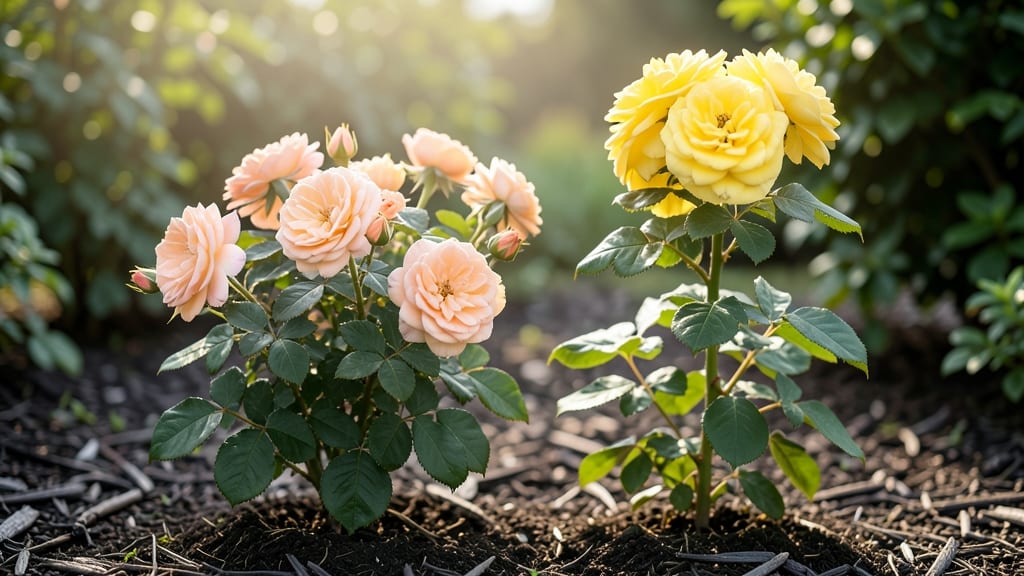
Peach and yellow roses transform any garden border into a sunlit dream. 🌸 Their soft glow creates that "just-picked" freshness, while the contrasting hues add depth and movement to your landscape. We've designed borders that feel like a romantic painting—warm, inviting, and effortlessly elegant.
These roses thrive when paired with lavender, salvia, or dusty miller for texture contrast. Plant them in clusters along fences or pathways where their fragrance lingers in the breeze. For seasonal interest, add spring bulbs like daffodils at their base—when the roses fade in fall, the bulbs take center stage.
You'll create a border that blooms from early summer through frost, with peach roses offering delicate petals and yellow varieties providing bold statement color. The combination attracts pollinators while keeping maintenance simple—just deadhead regularly and watch them flourish.
Works beautifully in both formal cottage gardens and relaxed country-style landscapes. The key is layering heights and textures while letting the roses shine as the star attraction. Here's how to make it work in your space!
Nature’s Color Palette Secrets
Peach and yellow roses paired with complementary blooms create a breathtaking garden border, but their stunning hues don’t happen by accident. These colors are the result of intricate biological processes and environmental influences.
Understanding why they appear this way can help gardeners nurture them—and even encourage more vibrant blooms. Let’s break down the science behind their beauty.
The primary reason peach and yellow roses exhibit their signature tones lies in their genetic makeup. Pigments in rose petals are determined by specific compounds called anthocyanins (for reds/purples) and carotenoids (for yellows/oranges).
Yellow roses, for example, owe their color to high concentrations of carotenoids, particularly lutein and beta-carotene, which reflect yellow and orange wavelengths of light.
Peach-toned roses, on the other hand, often result from a combination of carotenoids and a diluted form of anthocyanins. This mix creates a softer, warmer hue—like a sunset blended with cream. Some roses also produce flavonoids, which can enhance or modify these colors, giving them depth and luminosity.
Pro Tip: 💡 If you’re growing roses from seed or cuttings, remember that color consistency isn’t guaranteed—it’s influenced by the parent plant’s genetics. For predictable hues, opt for grafted roses or named varieties with proven color traits.
Sunlight isn’t just fuel for photosynthesis—it’s also a critical factor in pigment development. Roses need 6 to 8 hours of direct sunlight daily to produce their brightest colors. Here’s why:
- Carotenoid Boost: Sunlight triggers the production of carotenoids, intensifying yellow and peach tones. Shady spots can lead to paler, duller blooms because the plant diverts energy to survival rather than pigment synthesis.
- Anthocyanin Regulation: While yellow roses rely less on anthocyanins, peach roses may develop deeper tones in full sun due to balanced pigment production. Too little light can wash out their warmth.
- Temperature Synergy: Warmth (70–85°F) combined with sunlight optimizes pigment formation. Cooler climates may produce roses with softer, pastel shades unless supplemented with grow lights.
Actionable Tip: 🌡️ Monitor your garden’s sunlight exposure. If your roses are losing vibrancy, consider pruning nearby trees or relocating them to a sunnier spot. A south- or west-facing border is ideal for maximizing color.
Even with perfect genetics and sunlight, roses won’t hit their full color potential without the right nutrients and hydration. Here’s how these factors play a role:
| Nutrient | Role in Color Development | Signs of Deficiency |
|---|---|---|
| Phosphorus | Boosts flower production and brightens yellow hues by aiding energy transfer in cells. | Dull petals, slow growth, purplish leaf undersides. |
| Magnesium | Helps regulate chlorophyll and enhances carotenoid stability, preventing color fading. | Yellowing between leaf veins, weak stems. |
| Iron | Critical for chlorophyll synthesis; indirectly supports vibrant petals by ensuring leaves can photosynthesize efficiently. | Yellowing leaves (chlorosis), stunted blooms. |
| Water Balance | Overwatering or drought stress dilutes pigments or causes uneven color distribution. | Wilting, pale blooms, or dark spots on petals. |
Pro Tip: ✨ Use a balanced rose fertilizer (e.g., 10-10-10) in early spring and switch to a low-nitrogen, high-phosphorus formula (like 5-10-10) when buds form. Mulch with compost to retain moisture and nutrients—this keeps petals lush and colors rich.
The acidity or alkalinity of your soil (pH level) directly impacts how roses absorb nutrients—and thus, their color. Most roses thrive in slightly acidic soil (pH 6.0–6.5), but pH swings can alter pigment production:
- Too Acidic (pH < 6.0): Can lock out essential nutrients like phosphorus and magnesium, leading to washed-out yellows and peach tones.
- Too Alkaline (pH > 7.0): Causes iron and manganese deficiencies, which can turn petals dull or even greenish-yellow.
- Ideal Balance: A pH of 6.0–6.5 ensures roses can absorb carotenoids and flavonoids efficiently, resulting in true, vibrant hues.
Actionable Tip: 📊 Test your soil’s pH with a kit (available at garden centers). To lower pH, add sulfur or peat moss; to raise it, use lime. Amend the soil gradually—sudden changes can stress plants.
By understanding these scientific triggers, you can create the perfect conditions for peach and yellow roses to flourish in their most radiant forms. Whether it’s tweaking sunlight, soil, or nutrients, small adjustments can make a world of difference in your garden’s elegance!
Reviving & Maintaining Your Blooms
Your dreamy peach-hued roses and golden-yellow blooms deserve a little TLC to keep them thriving year after year. Whether you're dealing with wilting petals, pests, or lackluster growth, these practical solutions will help you restore their beauty—and prevent future problems.
Let’s tackle the most common issues with step-by-step fixes and expert tips to ensure your garden stays vibrant and fragrant.
If your roses are drooping or struggling to stand tall, it’s often a sign of stress from overwatering, underwatering, or poor soil drainage.
🔥 Step 1: Check the Soil Moisture
- Stick your finger 1-2 inches into the soil. If it’s soggy, you’re overwatering; if it’s bone-dry, it’s time to hydrate.
- Solution: Water deeply once a week (or more in extreme heat) at the base of the plant, avoiding the leaves to prevent fungal diseases.
👨🍳 Step 2: Improve Drainage
- Roses hate "wet feet." If your garden soil is heavy clay, mix in compost or perlite to aerate it.
- Pro Tip: 💡 Elevate the plant slightly with a mound of soil or a small platform if drainage is chronically poor.
🌡️ Step 3: Support Struggling Stems
- Use soft plant ties or bamboo stakes to gently prop up weak stems without damaging them.
- Avoid: Wrapping too tightly—leave room for growth!
Yellowing leaves, holes in petals, or black spots? Pests and diseases are likely the culprits. Act fast to save your roses!
🔪 Step 1: Identify the Problem
| Issue | Signs | Fix |
|---|---|---|
| Aphids | Sticky residue, curled leaves | Spray with soapy water or introduce ladybugs (natural predators). |
| Powdery Mildew | White powdery coating | Apply neem oil or baking soda spray (1 tsp baking soda + 1 quart water + drop of dish soap). |
| Japanese Beetles | Skewered petals, chewed leaves | Handpick beetles early in the day or use milky spore for long-term control. |
| Black Spot | Dark spots with yellow halos | Prune infected leaves immediately and space plants for airflow. |
🎯 Step 2: Prevent Future Outbreaks
- 💡 Space plants 18-24 inches apart to reduce humidity and improve airflow.
- ✨ Prune regularly—remove dead or diseased branches in late winter or early spring.
- 🌿 Mulch with wood chips or straw to deter pests and retain moisture.
If your roses are losing their peachy-yellow luster, they might need a nutrient boost or better sunlight.
📊 Step 1: Feed for Fullness
- Spring/Summer: Use a balanced rose fertilizer (10-10-10) every 4-6 weeks.
- Fall: Switch to a low-nitrogen, high-phosphorus fertilizer to encourage root growth.
- 💪 Organic Option: Compost tea or fish emulsion for a natural, nutrient-rich feed.
☀️ Step 2: Optimize Sunlight
- Peach and yellow roses thrive in full sun (6+ hours daily).
- If blooms are pale or sparse, relocate to a sunnier spot or trim nearby shade trees.
🥗 Step 3: Deadhead & Prune for More Flowers
- 🔪 Snip off spent blooms just above a 5-leaflet leaf to encourage new growth.
- 🌿 Light pruning in early spring (before new growth) promotes bushier, healthier plants.
With these solutions, your peach and golden roses will bounce back stronger than ever—promising a border that’s not just romantic, but resilient. A little care now means stunning blooms for seasons to come! 🌺✨
Frequently asked questions
What's the best way to pair peach roses with yellow roses for maximum visual impact?
Plant them in odd-numbered clusters (3 or 5 plants) for natural flow. Use peach roses as the "base" with yellow varieties as accents—this creates depth. Add lavender or salvia between them for texture contrast. For height variety, mix with tall grasses like fountain grass or low-growing thymes.
Can peach and yellow roses grow together in the same garden bed?
They share similar care needs (6+ hours of sun, well-draining soil). Just space them 18-24 inches apart to prevent disease spread. Choose varieties with similar bloom times (like 'Julia Child' peach and 'Knock Out Yellow') for cohesive color.
How do I keep these roses blooming all season?
Deadhead faded blooms weekly to encourage reblooming. Fertilize with high-phosphorus food (like 5-10-10) when buds form. Water at the base only (avoid wetting leaves) to prevent fungal issues. Prune lightly in early spring to remove dead wood.
Are peach roses as fragrant as yellow roses?
Peach roses often have a softer, creamier scent (like vanilla), while yellow roses tend to be brighter and more citrusy. For maximum fragrance, choose hybrid teas like 'Peace' (peach) or 'Julia Child' (yellow). Plant them near seating areas or pathways to enjoy their aroma.
What's the best time of year to plant these roses?
Plant bare-root roses in early spring (after last frost) or fall (6 weeks before first frost). Container-grown roses can be planted anytime soil isn't frozen. Amend planting holes with compost and mulch heavily to retain moisture—this helps roots establish faster.