
Shrubs
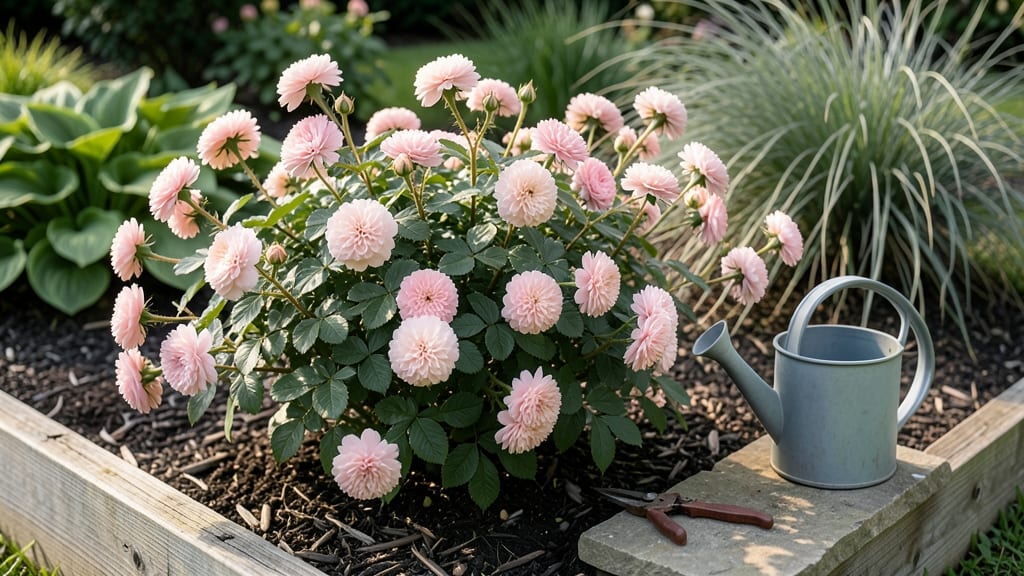
Growing a pompon veranda rose transforms any balcony into a fragrant, colorful oasis. 🌸 These compact beauties thrive in small spaces, spilling over railings with clusters of quilted blooms that smell like a summer stroll through a cottage garden.
They love full sun but tolerate partial shade, making them perfect for urban balconies. The secret to their cascading habit? Prune after blooms fade to encourage bushier growth. Just avoid heavy shearing—these roses reward gentle hands with nonstop flowers from spring through fall.
You’ll end up with a plant that’s disease-resistant and low-maintenance, yet bursts with color in shades of pink, red, or yellow. The fragrance alone makes it worth the effort—imagine stepping onto your balcony to that sweet, old-fashioned rose scent.
Works in containers as small as 12 inches wide, so even tiny patios can host these showstoppers. Here’s how to keep them thriving all season long.
📚 In This Guide
- What you need
- Instructions
- Tips and common mistakes
- Wrapping up and next steps
What you need
- ● Pompon Veranda Rose plant: 1 bare-root or potted specimen (ensure it’s disease-resistant and healthy).
- ● Well-draining potting mix: 2–3 cubic feet (or enough to fill your container). Pro tip: Mix in perlite or sand for aeration!
- ● Container or planter: At least 12–18 inches deep and wide (with drainage holes!).
- ● Slow-release fertilizer: 1 packet (rose-specific or balanced 10-10-10).
- ● Organic mulch: 1–2 inches (e.g., shredded bark or compost).
- ● Garden gloves: 1 pair (to protect your hands from thorns!).
- ● Trowel or shovel: 1 (for planting and mulching).
- ● Watering can or hose with a gentle nozzle: 1 (avoid overwatering!).
- ● Pruning shears: 1 pair (sterilized with rubbing alcohol).
- ○ Support structure (optional): Cage or trellis (for climbing varieties).
- ● Stakes (if your balcony has wind exposure).
- ● Sunlight access: 6+ hours of direct sun daily (south- or west-facing spots are ideal!).
- ● Epsom salt: 1–2 tablespoons (monthly for magnesium boost).
- ● Rose-specific fungicide: 1 bottle (preventative care for humidity-prone areas).
- ● Decorative accents: Solar lights, hanging planters, or a cozy seating nook!
Step-by-step instructions for planting and caring for pompon Veranda roses
Here's how to transform your balcony into a fragrant, cascading rose display—no green thumb required.
🪴 Step 1: Choose the Right Container and Location
Select a container at least 12-15 inches deep with drainage holes—these roses need room for roots to spread. I like half whiskey barrels or deep window boxes because they hold moisture while preventing root rot. Place your pot where it gets 6-8 hours of morning sun (afternoon sun can scorch delicate petals). A spot with afternoon shade works too, but expect slightly fewer blooms.
If your balcony gets windy, anchor the pot with cinder blocks or a weighted stand. These roses cascade beautifully, but strong breezes will snap tender stems. Test your location first by leaving the empty container out for a day—if it wobbles or gets direct afternoon sun, adjust before planting.
🌱 Step 2: Prepare Soil and Plant with Proper Spacing
Fill your container with a mix of equal parts potting soil, compost, and perlite—this gives the roots both moisture retention and aeration. I always add a handful of slow-release rose fertilizer (10-10-10) to the bottom layer before adding soil. The roots will spread outward, so leave 3-4 inches of space between the plant and container edges.
When planting, bury the rose just slightly deeper than its current soil line—this prevents stem rot while encouraging strong root growth. Gently press the soil around the roots to eliminate air pockets, then water deeply until it drains from the bottom holes. You'll know it's right when the top inch feels damp but not soggy.
☀️ Step 3: Water and Feed for Continuous Blooms
Water your Veranda rose every 2-3 days until the top 2 inches of soil feel dry—these roses hate soggy roots but need consistent moisture. I use a drip irrigation system on my balcony because it delivers water slowly at the base, preventing leaf diseases that come from overhead watering. In extreme heat, you may need to water daily, but always check the soil first.
Feed with a liquid rose fertilizer every 2 weeks during spring and summer. I switch to a low-nitrogen formula in fall to encourage blooming over leafy growth. Stop fertilizing completely in winter unless your climate stays above 40°F. The key is consistency—skipping feedings leads to sparse blooms, but over-fertilizing burns roots.
✂️ Step 4: Prune for Shape and Health
Prune your Veranda rose twice a year: once in late winter (just before new growth starts) and again after heavy blooming. Cut back one-third of the oldest stems to encourage new growth, and remove any dead or crossing branches. I always use clean, sharp pruners dipped in rubbing alcohol to prevent disease spread.
Shape the plant by pinching back the tips of new growth to encourage bushier, fuller blooms. These roses naturally cascade, so let the stems grow long but trim any that look leggy or overcrowded. Deadhead spent blooms regularly—this redirects the plant's energy into producing more fragrant clusters instead of seed pods.
🌿 Step 5: Protect and Maintain Through Seasons
In fall, reduce watering as temperatures drop and stop fertilizing by mid-October. If your climate dips below 20°F, move the pot to a sheltered spot or wrap it in burlap to protect the roots. I've kept mine alive through 15°F nights by insulating the pot with styrofoam cups around the drainage holes.
Watch for aphids or spider mites—these love the tender new growth. Spray with neem oil at the first sign of pests, and keep the leaves dry to prevent fungal issues. With proper care, your Veranda rose will reward you with continuous blooms from spring through fall, filling your balcony with a sweet, old-fashioned fragrance.
Tips & tricks for perfect pompon Veranda roses
These simple strategies will help your balcony roses thrive with minimal effort.
Container Depth Matters: The 12-15 inch depth requirement isn't just about roots—it's about creating a stable environment. Shallower containers dry out faster and can't support the plant's cascading growth. I've seen Veranda roses in 10-inch pots struggle with poor drainage, so measure twice before buying. The extra 3-4 inches of space between plant and container edge also prevents root competition that leads to stunted growth.
Sunlight Secret: That 6-8 hours of morning sun is non-negotiable for vibrant blooms, but here's what nobody tells you—position your pot where the morning sun hits the leaves directly, not just the soil. I rotate my containers every few weeks to ensure all sides get equal light exposure. This prevents lopsided growth and maximizes those fragrant clusters.
Watering Wisdom: The 2-3 day watering schedule works perfectly when your soil mix is right, but here's the trick: water at the base using a watering wand or drip system. Overhead watering creates damp leaves that invite fungal diseases. I've had to rescue multiple roses from black spot fungus because of this common mistake—always water where the stems meet the soil, not on the foliage.
Fertilizer Timing: Those 2-week feedings during spring/summer are crucial, but the switch to low-nitrogen in fall is what makes the difference. I've seen roses grow like weeds with too much nitrogen—all leaves, no flowers. The key is consistency: set a calendar reminder for your feedings. Missing even one can result in fewer blooms, and overdoing it burns roots faster than you'd think.
Pro Tips for Pompon Veranda Rose
- These simple strategies will help your balcony roses thrive with minimal effort.
- Container Depth Matters: The 12-15 inch depth requirement isn't just about roots—it's about creating a stable environment.
- Sunlight Secret: That 6-8 hours of morning sun is non-negotiable for vibrant blooms, but here's what nobody tells you—position your pot where the morning sun hits the leaves directly, not just the soil.
Frequently asked questions
Got questions about growing Pompon Veranda Rose? You’re not alone! Here are some of the most common queries—plus straightforward answers to help you cultivate these charming, fragrant beauties with confidence.
How fast does a Pompon Veranda Rose grow, and how big will it get?
The Pompon Veranda Rose is a compact climber, typically reaching 6–10 feet tall with a spread of 4–6 feet when trained. Growth is moderate—expect 12–18 inches per year in ideal conditions (full sun, well-draining soil, and regular watering). Prune lightly after flowering to encourage bushier, fuller growth!
When is the best time to plant Pompon Veranda Rose?
Plant your rose in early spring or fall when temperatures are mild (avoid extreme heat or frost). This gives roots time to establish before summer stress or winter dormancy. If planting in containers, you can also do it in late spring—just keep it shaded until acclimated!
Can I grow Pompon Veranda Rose in a container, and what’s the best pot size?
This rose thrives in containers, making it perfect for balconies or patios. Use a pot at least 12–15 inches wide and deep with drainage holes. Opt for lightweight, breathable materials like fabric or terracotta. Pro tip: Add a rose-specific potting mix with compost for optimal drainage and nutrients.
Why aren’t my Pompon Veranda Rose blooms lasting long?
Short-lived blooms often signal overwatering, poor drainage, or nutrient deficiencies. Ensure your rose gets 6+ hours of sun daily and water deeply but infrequently (let the top inch of soil dry out). Feed with a balanced rose fertilizer every 4–6 weeks during growing season. Deadhead spent blooms to encourage more flowers!
Are there any alternatives to Pompon Veranda Rose for small spaces?
If space is tight, consider these fragrant, compact alternatives:
- ‘The Fairy’ Rose – Dwarf climber (3–5 ft), repeat blooms, and disease-resistant.
- Knock Out® Roses – Bush varieties (3–4 ft), low-maintenance, and bloom all season.
- Clematis ‘Jackmanii’ – Vigorous climber (8–10 ft) but can be pruned smaller.
Wrapping up and next steps
The Pompon Veranda Rose is a stunning addition to any balcony or garden, offering fragrant, cascading blooms that bring charm and elegance to your outdoor space. With the right care—sunlight, well-draining soil, and consistent watering—you’ll enjoy its vibrant clusters year after year. 🌸
Ready to transform your patio? Start by planting your Pompon Veranda Rose in a sunny spot and watch it thrive! Whether you’re a seasoned gardener or just beginning, this beauty is worth the effort—and the sweet, intoxicating scent will reward you every step of the way.