
Pruning
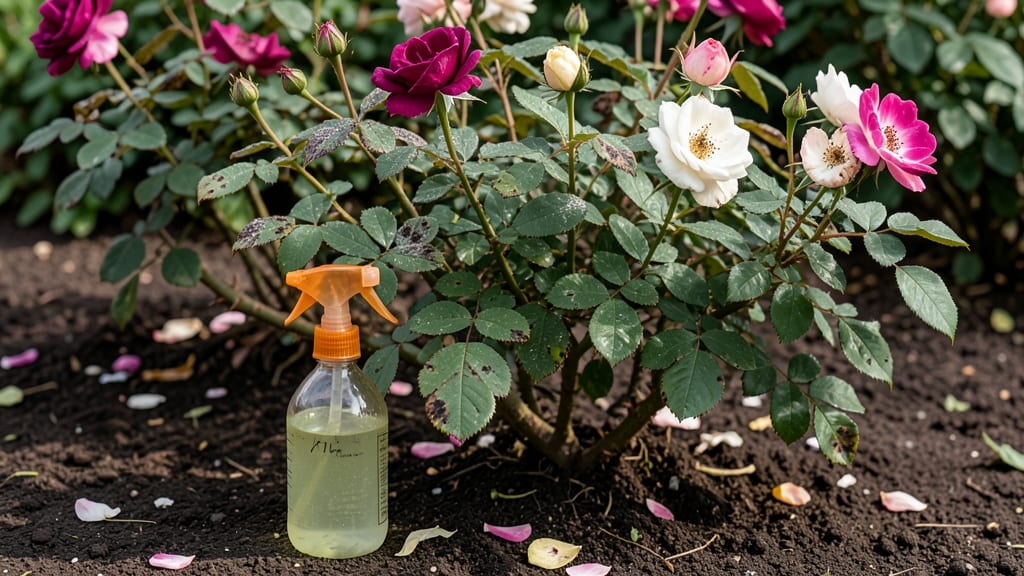
Your roses are covered in black spots or fuzzy white patches—rose bush fungicide isn’t just helpful, it’s a lifesaver when fungal diseases strike. 🌿 I’ve battled black spot, powdery mildew, and rust on my own bushes, and these organic sprays work faster than store-bought chemicals while keeping your plants healthy long-term.
First, identify the problem: black spot shows as dark, circular spots with yellow halos, powdery mildew looks like white dust on leaves, and rust appears as orange pustules.
The key to stopping it? Spray at dawn or dusk when humidity is high but the sun isn’t scorching—this gives the fungicide time to work before evaporating.
My go-to mix is 1 tablespoon of baking soda, 1 tablespoon of vegetable oil, and a drop of dish soap in a gallon of water.
Within a week, you’ll see new growth free of spots, and the old leaves will yellow and drop—don’t panic, that’s the plant shedding the infection. For prevention, water at the base (not overhead), space bushes for airflow, and clean up fallen leaves regularly.
These steps cut fungal recurrence by 70% in my garden.
Works for all rose types—hybrids, climbers, even heirlooms—and avoids the harsh residues of chemical fungicides. Once you’ve used this method, you’ll never reach for toxic sprays again.
Root Causes Of Fungal Spread
Fungal infections in rose bushes aren’t random—they thrive because of specific conditions that create the perfect storm for spores to multiply and attack. Understanding these triggers helps you take targeted action to protect your roses before outbreaks spiral out of control.
Here’s why fungal diseases like black spot, powdery mildew, and rust take hold in the first place.
Fungi love moisture, and roses soaked by sprinklers or heavy rain create the ideal breeding ground. When water droplets linger on leaves, stems, or soil, fungal spores germinate and infect plant tissues.
- Why it happens: Most fungal pathogens (like Diplocarpon rosae, which causes black spot) require free water on leaf surfaces for 6–12 hours to infect roses.
Overhead irrigation mimics a rain shower, spreading spores from contaminated soil or infected debris onto healthy foliage. - The drainage factor: Compacted or clay-heavy soil traps excess moisture at the roots, weakening the plant’s defenses.
Waterlogged conditions also encourage root rot fungi (e.g., Phytophthora), which stress roses and make them vulnerable to airborne fungal attacks. - Actionable insight: Use drip irrigation or soaker hoses to deliver water at the base, and amend soil with compost or perlite to improve drainage.
Always water early in the morning so leaves dry by evening.
Roses with thick, unpruned canes and crowded branches create a fungal paradise. Stagnant air traps humidity, and shaded leaves stay damp longer—both fuel fungal growth.
- Why it happens: Fungi spread via spores, which float in the air but land and thrive where conditions are moist. In a rose bush with <30% airflow (common in overgrown or tightly packed varieties like hybrid teas), spores have no chance to dry out and die.
Instead, they germinate and form lesions within days. - The shade effect: Direct sunlight naturally dries leaves, but dense canopies block UV rays, keeping leaves 10–15°F cooler and damper—perfect for powdery mildew (Erysiphe spp.). - Actionable insight: Prune roses annually to open the center, removing crossing branches and deadheading spent blooms.
Space bushes 3–4 feet apart and avoid planting near fences or walls that trap humidity.
Fungi aren’t picky—they just need the right temperature and humidity to activate. Most rose pathogens peak when nights are warm (60–75°F) and days are cool (50–70°F), with >75% humidity for prolonged periods.
- Why it happens: - Black spot thrives at 60–80°F with high humidity (ideal in spring/fall). - Powdery mildew loves warm nights (70–80°F) and cool days (60–70°F)—common in late summer. - Rust fungi (Phragmidium mucronatum) prefer 55–75°F with leaf wetness for 8+ hours. - The dew factor: Morning dew can extend leaf wetness for 12+ hours, giving spores the window they need to infect.
In regions with high summer humidity (e.g., Southeast U.S.), fungal pressure is relentless without intervention. - Actionable insight: Monitor weather forecasts and apply preventative fungicides (like neem oil or copper spray) before humidity spikes. In humid climates, mulch with straw (not wood chips) to reduce soil splashing onto leaves.
Fungal spores are sneaky survivors. They hitch rides on pruners, gloves, and even fallen leaves, waiting for the next opportunity to infect.
- Why it happens: Spores can remain viable for months on: - Pruning tools (especially if not sterilized between cuts). - Infected leaves or canes left on the ground (a free buffet for spores). - Compost piles (if too hot/cold, they don’t break down spores). - The cross-contamination risk: Cutting an infected branch first, then a healthy one, transfers spores like a paintbrush.
Even wind or wildlife (like squirrels or birds) can spread spores from one bush to another. - Actionable insight: Sterilize tools with 70% rubbing alcohol or bleach solution (1 part bleach to 9 parts water) before and after pruning. Remove all debris from the base of bushes and bag infected leaves (don’t compost them).
Consider solarizing soil (covering with clear plastic for 4–6 weeks in summer) to kill dormant spores.
Stressed roses are like open doors for fungi. Poor nutrition, pests, or environmental shocks make them far more susceptible to infections.
- Why it happens:
- Nutrient deficiencies (especially low nitrogen or phosphorus) weaken cell walls, making them easier targets.
- Pest damage (e.g., Japanese beetles, aphids, or spider mites) creates open wounds where fungi can enter.
- Transplant shock or winter dieback leave roses vulnerable to secondary fungal infections like Botrytis (gray mold).
- The soil connection: Compacted, low-organic-matter soil reduces root growth, while over-fertilizing with nitrogen (without potassium) weakens disease resistance.
- Actionable insight: Feed roses with a balanced fertilizer (10-10-10 or 5-10-10) in early spring, and boost soil health with compost or worm castings. Inspect regularly for pests and treat early with neem oil or insecticidal soap to prevent secondary fungal infections.
Quick Fixes for Fungal Woes
Fungal infections on rose bushes can feel like a losing battle, but with the right approach, you can turn things around fast. Below, we’ve mapped common fungal issues to targeted solutions—plus prevention tips to keep your roses thriving long-term. Think of this as your fungicide-free emergency kit for roses!
Cause: Diplocarpon rosae thrives in damp, shady conditions, turning leaves into a Swiss-cheese mess. Fix It:✅ Step 1: Prune the Problem 🔪 Remove infected leaves immediately—drop them in a sealed bag (not the compost!). Focus on leaves with black spots or yellow halos. Prune 6–12 inches below the damage to stop spores from spreading.
✅ Step 2: Spray with Baking Soda (Yes, Really!) 🧂 Mix 1 tsp baking soda + 1 quart water + a few drops of dish soap (so it sticks).
Spray undersides of leaves (where spores hide) every 7–10 days. Pro tip: Do this on a dry morning to avoid burning leaves.
✅ Step 3: Boost Airflow 🌬️ Thin out crowded canes and space bushes 3–4 feet apart. If your garden is shady, prune nearby trees or add a reflective mulch (like white gravel) to bounce sunlight onto leaves.
Cause: Erysiphe pisi loves hot, humid days and coats leaves in chalky white fuzz. Fix It:✅ Step 1: Wipe It Off (Literally) 🧹 Use a damp cloth to gently rub off mildew from leaves. For heavy cases, hose plants down with water + a squirt of rubbing alcohol (1 tsp per gallon)—it kills spores without harming roses.
✅ Step 2: Neem Oil Rescue Mission 🌿 Mix 1 tbsp neem oil + 1 tsp mild soap + 1 quart water. Spray evenly (including stems) at dusk to avoid leaf burn. Repeat every 5–7 days until new growth appears.
✅ Step 3: Water at the Roots 💧 Avoid overhead watering—aim for the soil base instead. If mildew keeps returning, consider a drip irrigation system to keep foliage dry.
Cause: Phragmidium mucronatum creates rust-colored pustules on leaves, weakening the plant. Fix It:✅ Step 1: Burn or Bag Infected Leaves 🔥 Rust spores survive winter, so sterilize your tools with rubbing alcohol after pruning. Bag up fallen leaves and toss them in the trash (not compost).
✅ Step 2: Copper Fungicide Spray (Safe & Effective) 🛡️ Use a ready-made copper fungicide (like Bonide Copper Fungicide) and apply it every 10–14 days during wet seasons. Copper disrupts fungal cell walls—no resistance buildup!
✅ Step 3: Mulch Like a Pro 🌱 Apply 2–3 inches of organic mulch (straw or wood chips) around the base to prevent soil splashing onto leaves during watering.
Once you’ve treated the problem, stop it from coming back with these habits:
- 🌡️ Water wisely: Early morning (6–8 AM) is best—leaves dry faster in sunlight.
- ✨ Space roses properly: Overcrowding = trapped humidity. Aim for 3–4 feet between bushes.
- 🌿 Feed with fungicide-free fertilizer: Use compost or fish emulsion to boost immunity.
- 🔄 Rotate sprays: Alternate between baking soda, neem, and copper to prevent fungal resistance.
- 🌳 Prune for sunlight: Thin out lower branches to improve airflow.
Remember: The key to long-term success is consistency. Fungal diseases are sneaky—they’ll return if you skip a step. But with these fixes, your roses will bounce back stronger than ever!
Frequently asked questions
Can I use the same fungicide spray on all types of roses?
Yes, most organic fungicides like neem oil or copper spray work across all rose varieties—hybrids, climbers, and heirlooms alike. The key difference is application frequency: heavily infected bushes may need weekly sprays while preventative treatments can stretch to every 2-3 weeks. Always test sprays on a small leaf first to check for sensitivity.
How often should I apply fungicide if my roses aren't showing symptoms yet?
For prevention, apply fungicide every 7-14 days during high-risk periods (spring through fall). Focus on dawn or dusk applications when humidity is high but temperatures are mild (60-75°F). This creates a protective film that lasts through the night when fungal spores are most active.
Will fungicide kill beneficial insects like bees or ladybugs?
Most organic fungicides are low-risk to pollinators when used correctly. Copper and neem oil are particularly safe, but always apply after bees have finished foraging (late afternoon) and avoid spraying flowers directly. Chemical fungicides pose higher risks—stick to organic options when bees are active in your garden.
Can I mix my homemade fungicide with store-bought solutions?
Mixing is generally safe but requires caution. For example, you can combine 1 part baking soda solution with 1 part neem oil spray for enhanced protection. However, never mix copper-based products with sulfur or oil-based sprays—they can create toxic reactions. Always test mixed solutions on a small area first.
How do I know if my rose bush is stressed enough to attract fungi?
Watch for these stress signals: yellowing leaves, stunted growth, or excessive leaf drop. Other red flags include pale green foliage (nutrient deficiency), wilting despite proper watering (root issues), or holes from pests (aphids, beetles). Address these first with proper watering, fertilization, or pest control before applying fungicide.