
Shrubs
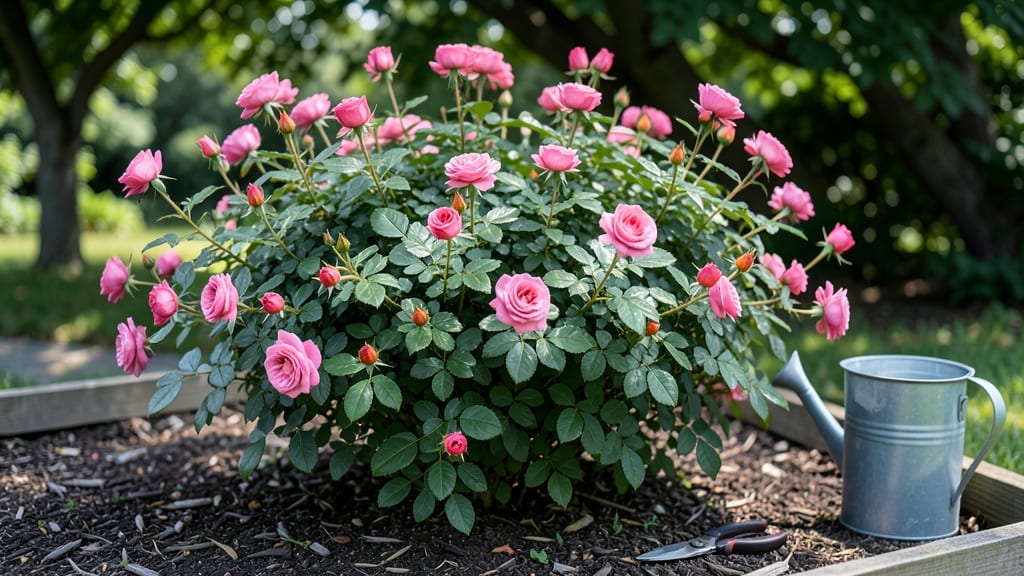
Knockout roses surprise many gardeners by producing bright red rose hips—and these aren't just pretty fruit, they're packed with vitamin C and wildlife value. 🌿 I used to prune them off without thinking, but after learning their benefits, I now encourage every hip to form.
The secret starts with pruning: when you cut back in late winter, you're actually setting the stage for a bumper crop of hips later in the season.
Healthy hips depend on three things: proper pruning, balanced fertilization, and good pollination. Start by pruning in late February or early March—this timing gives the plant energy to focus on both blooms AND hips.
Use a 10-10-10 fertilizer in early spring, then switch to a low-nitrogen formula once blooms appear to support fruit development. Bees love Knockout roses, but if your yard lacks pollinators, hand-pollinate a few blooms with a soft brush.
By late summer, you'll see hips growing where blooms once were. The best ones are firm, bright red, and about ½-inch wide—these are perfect for making tea or jelly. Leave some on the plant for birds and small mammals, but harvest the rest before they split open.
The more you prune correctly now, the more hips you'll harvest next year, creating a self-sustaining cycle of beauty and bounty.
If you've ever wondered why your Knockout roses produce hips inconsistently, it's usually one of three things: pruning too late, over-fertilizing with nitrogen, or poor pollination. The good news? Fixing any of these gives immediate results.
Next time you're sharpening your pruners, think of it as preparing for next year's harvest—because those little red orbs are worth the effort.
📚 In This Guide
- What you need
- Instructions
- Tips and common mistakes
- Wrapping up and next steps
What you need
- ● Pruning shears or loppers: Sharp, bypass-style shears (for clean cuts) or loppers (for thicker stems). Size: 6–8" blades for shears; 8–12" for loppers.
- ● Disinfectant (70% isopropyl alcohol or bleach solution): 1 part bleach to 9 parts water for sterilizing tools between cuts.
- ○ Gloves: Heavy-duty gardening gloves (protects against thorns and debris). Optional: Rose-specific gloves with reinforced palms.
- ○ Pruning sealant (optional): Tree wound paint or pruning paste (for large cuts > ½" diameter).
- ● Buckets or containers: 2–3 gallon-sized buckets for collecting rose hips (or a tarp for bulk harvests).
- ● Markers or flags: Small stakes or colored flags to tag pruned areas (helps track growth patterns).
- ● Timing: Prune in early spring (before new growth) or late winter for best results. Harvest hips in fall (when fully red/orange).
- ● Weather check: Choose a dry, overcast day to minimize stress on the plant.
- ● Safety gear: Safety glasses (if working near eyes) and closed-toe shoes.
- ● Plant health: Ensure your Knockout roses are disease-free (no black spot or powdery mildew). Treat with fungicide if needed before pruning.
- ● 🔥 Sharpen your tools: Dull blades crush stems, inviting disease. Hone shears with a file or sharpening stone before starting.
- ● 🌡️ Work in layers: Remove dead/diseased wood first, then shape the bush, and finally trim for hips.
- ● ✨ Label your cuts: Use markers to note “hip-bearing branches” if you’re unsure which to preserve.
How to prune Knockout roses for maximum rose hips
Here's the method I've used for years to turn my Knockout roses into a hip-producing powerhouse.
✂️ Step 1: Time Your Pruning for Optimal Hip Production
Prune your Knockout roses in late winter or early spring, just as new growth begins but before buds swell. This timing ensures you remove dead wood while leaving plenty of energy for blooms—and hips. I always wait until after the last frost when temperatures stay above 40°F at night, or new growth will get damaged.
Look for canes that died back completely (they'll be brown and brittle) and cut those out first. Healthy canes have green buds along their length—leave these alone. If you prune too early, you risk cutting off buds that haven't formed yet. If you wait too long, you'll encourage leggy growth instead of compact, hip-producing bushes.
☀️ Step 2: Prune for Light and Airflow
Remove one-third of the oldest canes at ground level—these are the thickest, woody stems. Older canes produce fewer hips, and removing them encourages younger, more vigorous growth. Next, cut back the remaining canes by one-third of their height, making cuts just above an outward-facing bud.
Thin out crowded centers to improve airflow—this prevents fungal diseases that can weaken hips. Aim for an open, vase-like shape with branches spreading outward. You'll see stronger stems and more uniform blooms after this pruning. Avoid "heading back" (cutting just above a bud to encourage branching)—Knockout roses don't need this heavy pruning.
🌿 Step 3: Deadhead and Support Hip Development
After the first flush of blooms fades, deadhead spent flowers by cutting the stem back to the first five-leaflet leaf below the bloom. This redirects the plant's energy from seed production to forming new buds—and later, hips. I do this every 2-3 weeks throughout the growing season to keep the plant focused on producing more blooms.
Leave the second flush of blooms on the plant—these will develop into hips. Once hips form (they'll look like small, green berries), stop fertilizing with high-nitrogen feeds. Switch to a low-nitrogen, high-phosphorus fertilizer to encourage fruit development. You'll notice hips turning from green to orange-red as they mature—this is your cue they're ready for harvest.
🪴 Step 4: Protect and Harvest for Next Year
In late fall, after the first frost, prune back any remaining hips that haven't turned fully orange. This prevents them from splitting open and losing seeds. Wrap the base of the plant with burlap or frost cloth if your winters are harsh—Knockout roses are tough, but young canes can get damaged by extreme cold.
Harvest hips when they're fully orange and dry (usually late fall to early winter). Cut them from the stem with 2-3 inches of stem attached—this makes them easier to dry. Spread them on a screen in a cool, dry, dark place for 2-3 weeks until completely dry. Store in an airtight container in a cool, dark place for up to 6 months—they'll keep their vitamin C potency longer than fresh hips.
Tips & tricks for perfect rose hip harvests
These pruning secrets will transform your Knockout roses into a hip-producing machine—without the guesswork.
Timing is Everything: The late winter/early spring window is critical because it balances removing dead wood while preserving buds. I mark my calendar for when nighttime temps stay above 40°F consistently—this is your cue to start. If you prune too early, you might remove buds that haven't formed yet; too late, and you'll encourage leggy growth instead of compact bushes. Use a weather app to track nighttime lows if you're unsure.
Visual Pruning Cues: In Step 2, when cutting back canes by one-third, look for outward-facing buds—they'll grow outward naturally, creating that perfect vase shape. I use a small magnifying glass to spot these buds on thick canes. Also, make sure your cuts are clean and angled—this prevents water from pooling and causing rot. A sharp pair of pruning shears makes all the difference in clean cuts.
Deadheading Discipline: The 2-3 week deadheading schedule is non-negotiable if you want maximum hips. I set a reminder on my phone for every 3 weeks to stay consistent. When you see those green berries forming, that's your plant's way of saying "I'm switching gears to fruit production!" At this point, switch to a high-phosphorus fertilizer to support that transition—your roses will thank you with bigger, brighter hips.
Harvesting Hack: When harvesting in late fall, cut hips with 2-3 inches of stem attached—this makes drying much easier. I use a small basket lined with paper towels to collect them, then spread them on a screen in my garage (cool, dry, and dark). If you're in a humid climate, consider using a food dehydrator set to its lowest setting for faster drying without heat damage.
Pro Tips for Rose Hips On Knockout Roses
- These pruning secrets will transform your Knockout roses into a hip-producing machine—without the guesswork.
- Timing is Everything: The late winter/early spring window is critical because it balances removing dead wood while preserving buds.
- Visual Pruning Cues: In Step 2, when cutting back canes by one-third, look for outward-facing buds—they'll grow outward naturally, creating that perfect vase shape.
Frequently asked questions
Got questions about harvesting rose hips from Knockout Roses? You’re not alone!
Here are answers to the most common queries—so you can prune like a pro and enjoy a plentiful harvest.
Do Knockout Roses actually produce rose hips?
Yes! While Knockout Roses are bred for their disease resistance and continuous blooms, they do produce rose hips after their flowers fade. The hips are smaller than traditional roses but still packed with nutrients. Just be patient—they’ll appear 4–6 weeks after flowering.
When is the best time to harvest rose hips from Knockout Roses?
Harvest rose hips when they turn a deep orange-red or burgundy color and feel slightly soft to the touch (usually late fall to early winter). Wait until the first frost to maximize vitamin C content, but pick them before they split open or attract pests.
Should I prune Knockout Roses differently to encourage more hips?
Not necessarily! Knockout Roses thrive with light annual pruning (removing dead or crossing branches). To boost hips, focus on pruning after blooming (late summer/early fall) to redirect energy toward hip development. Avoid heavy cuts—these roses bloom on new wood!
Can I eat rose hips from Knockout Roses, or are they toxic?
They’re edible and safe! Just ensure they’re pesticide-free (organic roses are ideal). Remove the hairs inside (they can irritate throats) and cook them to soften the texture. Use them in jams, teas, or soups—just like wild rose hips!
What if my Knockout Roses aren’t producing hips?
Check these fixes:
- Lack of sunlight? Knockout Roses need 6+ hours of sun daily.
- Over-fertilizing? Too much nitrogen = more blooms, fewer hips. Use a balanced fertilizer (10-10-10).
- Disease or pests? Prune infected branches immediately and treat with neem oil if needed.
Wrapping up and next steps
Harvesting rose hips from Knockout Roses is a rewarding way to boost your garden’s beauty and your health—no green thumb required! With the right pruning timing, tools, and a little patience, you’ll enjoy abundant, nutrient-packed hips year after year.
Whether you’re brewing tea, crafting jams, or simply admiring their vibrant color, these tips make the process effortless.
Ready to transform your garden into a hip-producing powerhouse? Start by marking your calendar for late summer pruning—then grab your shears and get growing! 🌸✂️