
Pests and Diseases
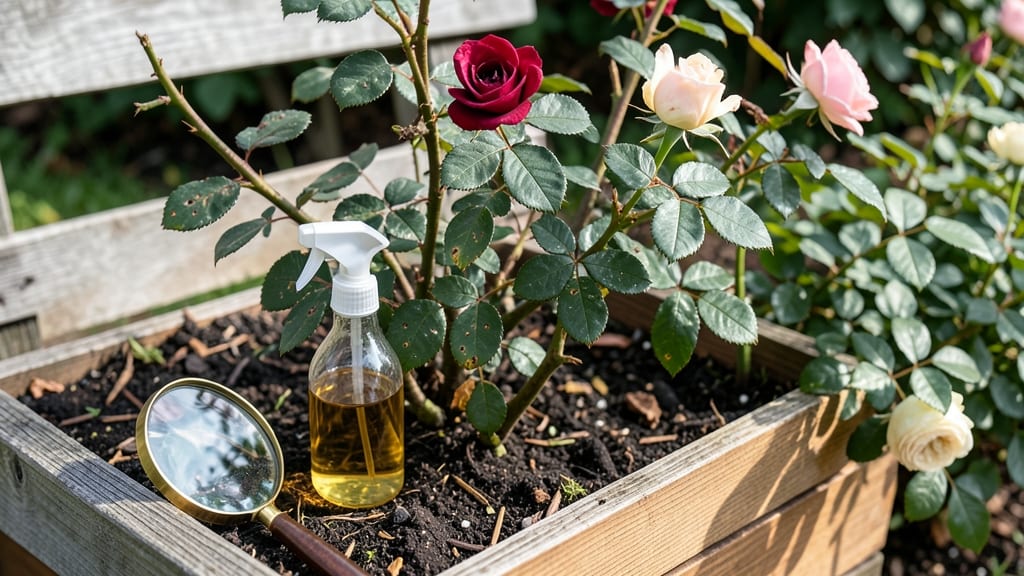
Rose pests and diseases can turn your lush, healthy blooms into a sad, spotted mess—unless you catch them early. 🌿 I’ve seen black spot turn vibrant roses into skeletal branches in just two weeks, and Japanese beetles strip leaves faster than you can say "summer."
The good news? Prevention is simpler than you think, and most problems disappear with a few targeted actions.
Most issues start with stress—too much shade, poor air circulation, or overwatering. Aphids love tender new growth, powdery mildew thrives in humid conditions, and black spot spreads when leaves stay wet.
The key is proactive care: prune for airflow, water at the base, and choose disease-resistant varieties. I’ve kept my roses thriving for years with these basics, and you can too.
By the end of this guide, you’ll spot pests before they multiply and treat diseases before they spread. Think fewer yellow leaves, more buds, and roses that stay vibrant from spring to frost. No more guessing—just clear steps that work, whether you’re dealing with beetles or blight.
We’ll cover organic sprays, cultural fixes, and when to call in reinforcements. Your roses deserve to shine—let’s make that happen without chemicals or chaos.
Hidden Triggers Behind Rose Struggles
Your roses might look stunning one day and wilted the next—and the culprits are often lurking where you least expect them. Understanding why pests and diseases strike is the first step to protecting your prized blooms. Let’s dig into the science behind these silent saboteurs.
Roses thrive in specific conditions, but when weather veers off-course, they become vulnerable. Humidity and heat create the perfect breeding ground for fungal diseases like powdery mildew (Erysiphe necator) and black spot (Diplocarpon rosae).
High moisture levels—from rain, dew, or overhead watering—keep fungal spores damp, allowing them to germinate and infect leaves.
Meanwhile, cold snaps or frost weaken rose canes, making them easier targets for pests like Japanese beetles or rose slugs (Sawfly larvae). Even sudden temperature swings stress plants, lowering their natural defenses.
For example, roses exposed to nighttime temps below 50°F (10°C) for extended periods may struggle to recover, leaving them susceptible to rose rosette virus, spread by errant mite vectors.
Actionable fix: Monitor local forecasts and adjust care routines. Prune for airflow, water at the base (not leaves), and consider shade cloth in extreme heat or humidity.
Healthy soil is the foundation of disease-resistant roses.
When soil lacks essential nutrients or becomes waterlogged or compacted, roots suffocate, and the plant’s immune system weakens. Over-fertilizing with nitrogen (e.g., lawn fertilizer) promotes lush foliage but starves roots of phosphorus and potassium, making roses more prone to canker (Neonectria spp.) and root rot (Phytophthora spp.).
Conversely, poor drainage traps excess moisture, inviting fungal invaders. Even pH imbalances—soil too acidic (<5.5) or alkaline (>7.5)—disrupt nutrient uptake. For instance, roses prefer slightly acidic soil (pH 6.0–6.5).
If pH strays, micronutrients like iron and manganese become unavailable, leaving roses yellowing and stressed—an open invitation for pests like aphids or thrips.
Actionable fix: Test soil annually, amend with compost or organic matter, and use slow-release fertilizers. Raised beds or containers can improve drainage for problem areas.
Pests don’t attack healthy roses—they target stressed or weakened plants. Common stressors include:
- Physical damage (e.g., from pruning cuts, hail, or lawnmowers) creates entry points for bacterial canker (Pseudomonas syringae).
- Water stress (overwatering or drought) disrupts the plant’s ability to produce protective compounds like phenolics, making it easier for Japanese beetles to devour petals.
- Competition from weeds or overcrowded roses forces plants to compete for resources, lowering their resilience to rose slugs or leafhoppers.
Pests also hitchhike on tools, wind, or even birds. For example, rose rosette virus spreads via errant mites carried by the wind, while aphids multiply rapidly in warm weather, draining sap and transmitting viral diseases like aster yellows.
Actionable fix: Inspect new plants for pests, quarantine them for 2 weeks, and maintain a 3-foot pest-free buffer around rose beds. Use reflective mulch to deter flying insects.
Even well-meaning gardeners can accidentally invite problems. Overuse of chemical pesticides kills beneficial insects (like ladybugs or parasitic wasps) that naturally control pests, leading to pest resurgence. For example, broad-spectrum insecticides may wipe out aphid predators, causing an aphid explosion weeks later.
Another mistake? Reusing contaminated tools. Pruners or shears used on infected roses can spread black spot or powdery mildew to healthy plants. Even improper pruning—cutting too close to the bud or leaving stubs—creates wounds that harbor bacterial infections.
Actionable fix: Rotate organic and chemical controls, sterilize tools with rubbing alcohol between uses, and prune with sharp, clean tools at a 45-degree angle, ¼ inch above a bud.
By addressing these root causes—weather, soil, stress, and human habits—you’ll arm your roses with the resilience they need to fight back. Next up: How to fortify your garden before problems strike.
Quick Fixes for Common Rose Issues
When your roses start showing signs of stress—whether it’s chewed leaves, black spots, or wilting stems—acting fast can save your plants. Below are practical, step-by-step solutions to tackle the most common rose pests and diseases, plus prevention tips to keep your garden thriving long-term.
🔥 Japanese Beetles: Stop the Devastation
Japanese beetles skeletonize leaves overnight, leaving behind a mess of lace-like foliage. Act now with these methods:
- Handpick & Drown 👨🍳 Morning or evening, fill a bucket with soapy water and shake beetles off leaves into it. Repeat daily during peak infestation (June–August). Pro tip: 💡 Use a drop cloth under the plant to shake them onto—easier cleanup!
- Neem Oil Spray 🍳 Mix 1 tbsp neem oil + 1 tsp mild soap per quart of water. Spray directly on beetles and undersides of leaves (they hide there!).
Reapply every 3–5 days until gone. Warning: 🌡️ Apply early morning or late evening—neem can harm bees if sprayed during daylight.
- Milky Spore or Beneficial Nematodes 🎯 For long-term control, spread milky spore powder (a natural bacteria) in the soil. It targets beetle grubs underground. Nematodes (microscopic worms) also eat grubs—apply in early summer.
- Traps (Use with Caution!) ⏰ Place Japanese beetle traps away from your roses—they can attract more beetles to your garden if placed too close!
Prevention: ✨ Plant trap crops like marigolds or roses near your garden to lure beetles away. ✨ Encourage natural predators like birds and parasitic wasps by adding birdbaths and native plants.
🕷️ Spider Mites: Revive Dull, Speckled Leaves
Tiny but mighty, spider mites suck sap, causing yellow stippling and fine webbing. Fight back with:
- Blast Off with Water 🔪 Strong spray from a hose (not just a watering can) can knock off mites and eggs. Do this every 2–3 days for a week.
- Insecticidal Soap or Horticultural Oil 🍳 1.5 tbsp soap or oil per gallon of water. Spray until leaves glisten, focusing on undersides. Reapply every 5–7 days for 2 weeks. Pro tip: 💡 Test a small area first—some roses are sensitive to oils.
- Release Predatory Mites 🎯 Phytoseiulus persimilis (a beneficial mite) eats spider mites and their eggs. Release them early in the infestation for best results.
Prevention: ✨ Keep roses well-watered—mites thrive in dry conditions. ✨ Prune regularly to improve airflow and reduce hiding spots.
🍄 Black Spot: Restore Your Rose’s Vibrancy
Black spot causes dark spots with yellow halos, defoliation, and weak growth. Stop the spread with:
- Fungicide Sprays (Copper or Sulfur-Based) 🍳 Baking soda spray (1 tbsp baking soda + 1 tsp soap + 1 gallon water) works for mild cases. For severe infections, use copper fungicide (follow label instructions). Pro tip: 💡 Alternate fungicides to prevent resistance.
- Prune & Dispose Infected Leaves 🔪 Cut off and destroy (don’t compost!) all infected leaves and stems. Sterilize pruners with rubbing alcohol between cuts.
- Improve Air Circulation 🌡️ Space roses 3–4 feet apart and prune for open growth. Avoid overhead watering—water at the base in the morning.
Prevention: ✨ Choose resistant varieties like ‘Knock Out’ or ‘Dr. Huey’ roses. ✨ Apply fungicide preventatively in spring and early summer.
🍄 Powdery Mildew: Clear the White Dust
A white, powdery coating on leaves weakens roses. Scrub it away with:
- Neem Oil or Potassium Soap Spray 🍳 1 tbsp neem oil + 1 tsp soap per quart of water. Spray until leaves are wet, focusing on undersides. Reapply every 7–10 days.
- Baking Soda Solution (Mild Cases) 🍳 1 tsp baking soda + 1 tsp soap + 1 quart water. Spray every 7–10 days in dry weather.
- Prune for Sunlight 🌡️ Thin out crowded branches to let sunlight hit all leaves—powdery mildew loves shade.
Prevention: ✨ Water early in the day so leaves dry quickly. ✨ Space plants properly for airflow.
- 🌿 Mulch properly (2–3 inches) to suppress weeds and retain moisture.
- 🌱 Feed with balanced fertilizer (10-10-10) in early spring and summer.
- 🔄 Rotate treatments to avoid pest/disease resistance.
- 🌡️ Monitor regularly—catch issues early before they spread!
By following these targeted fixes, your roses will bounce back stronger—and with the right preventative care, you’ll enjoy healthy blooms all season! 🌹✨
Frequently asked questions
Why do my rose leaves suddenly develop black spots even though I water them regularly?
Black spot thrives when leaves stay wet for long periods—even from morning dew or overhead watering. The fungus Diplocarpon rosae spreads fastest in humid conditions (70-80% humidity). Water at the base of plants in the morning and prune for better airflow to prevent this. If spots appear, remove infected leaves immediately and apply a copper fungicide.
Can I use the same fungicide spray for both black spot and powdery mildew?
Not all fungicides work equally well for both diseases. Copper-based sprays are effective for black spot but may irritate plants if overused for powdery mildew. For mildew, neem oil or sulfur-based fungicides work better. Always alternate treatments to prevent resistance—try baking soda spray (1 tbsp baking soda + 1 tsp soap per gallon) as a mild, natural option for both.
How do I tell if my rose has spider mites or just dry weather stress?
Check the undersides of leaves for fine webbing or tiny yellow speckles—classic spider mite signs. Dry stress causes uniform browning, while mites create stippled patterns. Hold a white sheet under a leaf and shake—mites will drop like dust. If confirmed, blast leaves with water and apply insecticidal soap (1.5 tbsp per gallon) every 5-7 days.
Are there rose varieties that naturally resist common pests and diseases?
Disease-resistant roses like 'Knock Out' or 'Dr. Huey' are bred to fight black spot and mildew. For pests, varieties with thick foliage or prickly stems (like 'Louis Philippe') deter beetles. Always check labels for "disease-resistant" or "pest-resistant" tags when selecting new plants. Pair resistant varieties with proper care for the best defense.
What's the fastest way to stop Japanese beetles from destroying my roses?
Combine handpicking (drown them in soapy water daily) with neem oil spray (1 tbsp + 1 tsp soap per quart). For immediate relief, wrap stems with yellow sticky traps (place away from roses to avoid attracting more). Long-term, apply milky spore to the soil—it targets beetle grubs. Avoid traps near your garden, as they can lure beetles right to your roses!