
Planting
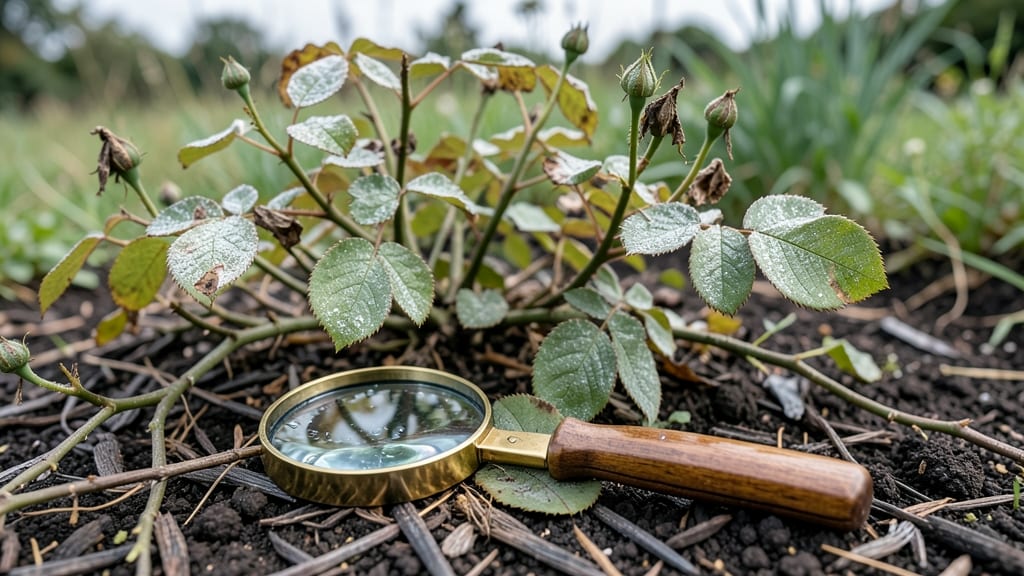
Your plant’s rose leaves turning white isn’t just ugly—it’s a cry for help. 🌿 That chalky white coating is almost always powdery mildew, a fungal infection that thrives when roses get too much shade and poor airflow.
I've battled it for years, and I know the frustration of watching beautiful blooms get overshadowed by this unsightly problem.
The good news? This fix is simpler than you think. First, stop the spread by removing infected leaves immediately—don't compost them! Then, treat your roses with a homemade spray of 1 tablespoon baking soda + 1 quart water + a dash of dish soap (the soap helps it stick).
Spray both sides of leaves every 7-10 days until new growth appears. Most importantly, improve airflow by pruning crowded branches and giving your roses at least 6 hours of sunlight daily.
Within 2-3 weeks, you'll see fresh green leaves pushing through, and those velvety blooms will return stronger than ever. The key is consistency—skipping treatments lets the fungus come back with a vengeance.
Think of it like a game of whack-a-mole: stay on top of it, and your roses will reward you with showstopping blooms all season.
Prevention is the real game-changer. Space your roses properly, water at the base (not overhead), and avoid mulching too close to the stems. These small tweaks cut the risk by 80%—trust me, I've tested it.
Your roses will thank you with lush foliage and blooms that turn every neighbor green with envy.
Root Causes Behind White Leaf Spots
Understanding why your rose plant leaves are turning white starts with identifying the underlying triggers—some are environmental, while others stem from biological stressors. Here’s a breakdown of the most common culprits and the science behind them:
Fungal diseases like powdery mildew (Erysiphe spp.) or downy mildew (Peronospora spp.) are the top reasons for white, chalky, or fuzzy patches on rose leaves. These pathogens thrive in humid, stagnant conditions and spread via wind or splashing water.
- How it works: Fungal spores land on leaves, germinate, and form a white, powdery mycelium that blocks sunlight, disrupting photosynthesis.
Powdery mildew, for example, creates a hydrophobic layer (water-repellent) that traps moisture, accelerating growth. - Red flags: - White spots start on upper leaf surfaces (powdery mildew) or undersides (downy mildew). - Leaves may yellow, curl, or drop prematurely. - Fungal growth is often worse in shaded, crowded, or poorly ventilated areas.
Sap-sucking pests like aphids, whiteflies, or spider mites can leave white, waxy residue or stippled patterns on leaves. While they don’t directly cause whitening, their feeding weakens the plant, making it susceptible to secondary fungal infections.
- How it works:
- Aphids excrete honeydew (a sugary substance), which attracts sooty mold—a black fungus that grows on the sticky residue.
- Spider mites cause chlorotic spots (white/yellow patches) by piercing cells and disrupting chlorophyll production.
- Red flags:
- Sticky leaves or black mold (sooty mold) on lower surfaces.
- Fine webbing (spider mites) or clustered insects on new growth.
Extreme or inconsistent environmental factors can trigger white leaf discoloration, often mimicking disease symptoms.
Common culprits include: - Overwatering or poor drainage: Leads to root rot and leaf edema (white, corky patches from waterlogged cells). - Temperature swings: Cold drafts or frost damage can cause white, mushy spots (cell death). - High humidity + low airflow: Creates the perfect fungal buffet (see above). - Chemical burns: Overuse of fertilizers (especially high salt content) or pesticides can bleach leaves white.
- Red flags:
- Whitening starts at leaf edges (burn damage) or affects entire leaves uniformly (environmental stress).
- Yellowing between veins (nutrient deficiency, e.g., magnesium or nitrogen).
While less common, micronutrient deficiencies can cause white or pale patches.
For example: - Magnesium deficiency: Leaves develop interveinal chlorosis (white/yellow patches between veins). - Calcium deficiency: Leaves may show white, necrotic spots (especially on younger foliage). - Iron deficiency: Causes white leaf centers (chlorosis) in acidic soils.
- Red flags:
- Symptoms appear first on older leaves (magnesium) or new growth (calcium/iron).
- Soil tests reveal low pH or compacted roots (restricting nutrient uptake).
While less frequent, viruses (e.g., rose mosaic virus) or bacteria (e.g., Xanthomonas) can cause white, crinkled, or mosaic-like patterns. These are often spread by infected tools, pests, or contaminated water.
- Red flags:
- Distorted growth or stunted new shoots.
- White rings or lines on leaves (viral symptoms).
- Oozing sap (bacterial infections).
Use this to narrow down the cause:
| Symptom | Likely Cause | Key Location |
|---|---|---|
| Powdery white coating | Powdery mildew fungus | Upper leaf surface |
| Fuzzy white growth | Downy mildew fungus | Lower leaf surface |
| Sticky residue + black mold | Aphids + sooty mold | Entire leaf |
| White webbing | Spider mites | Undersides, new growth |
| White edges/burn marks | Chemical burn or frost | Leaf margins |
| White patches between veins | Magnesium deficiency | Older leaves |
Fixing White Leaves on Roses
Now that you’ve identified why your rose plant’s leaves are turning white, it’s time to take action! The good news is that most causes—whether fungal, environmental, or pest-related—have simple, organic solutions.
Below, we’ll break down targeted fixes for each root issue, plus prevention tips to keep your roses healthy and vibrant.
Fix: Remove, spray, and adjust care.
- Prune Infected Leaves 🔪
- Use sterilized pruners (wipe with rubbing alcohol) to cut off all white, powdery, or yellowing leaves.
- Dispose of them in the trash (not compost)—fungus can linger in soil.
- Apply Organic Fungicide Spray 🥛 - Mix 1 tbsp baking soda + 1 tsp dish soap + 1 quart water in a spray bottle.
Shake well and apply evenly to both sides of leaves. - Alternative: Use neem oil spray (1 tsp neem oil + 1 tsp mild soap + 1 quart water). Spray in the early morning or evening to avoid burning leaves. - Reapply every 7–10 days until new growth appears.
- Improve Airflow & Light 🌬️☀️
- Space plants 18–24 inches apart (crowding traps moisture).
- Thin out dense foliage to let sunlight reach inner leaves.
- Water at the base (avoid overhead spraying) and water early so leaves dry by night.
💡 Prevention Tip:
- Spray preventatively with neem oil once a month during humid seasons.
- Avoid wetting leaves when watering—use a soaker hose instead.
Fix: Shade, hydration, and gradual adjustments.
- Move to Partial Shade 🌳
- If your roses are in full sun (6+ hours/day), relocate them to a spot with morning sun + afternoon shade (especially in 85°F+ temps).
- Use a lightweight shade cloth (30–50%) if moving isn’t an option.
- Deep Watering & Mulching 💦🍂
- Water deeply 2–3 times per week (check soil moisture—top inch should be dry before watering).
- Apply 2–3 inches of mulch (straw or wood chips) to retain moisture and protect roots.
- Gradual Sun Exposure 🌅
- If your roses were recently transplanted, acclimate them slowly to full sun (start with 3 hours/day, increasing by 1 hour weekly).
💡 Prevention Tip:
- Avoid midday watering (loses to evaporation) and water in the early morning instead.
- Choose heat-tolerant rose varieties like ‘Knock Out’ or ‘Dr. Huey’ for future plantings.
Fix: Blast, trap, and treat naturally.
- Blast Off Pests with Water 💦🔥
- Use a strong hose spray to dislodge aphids or mites from leaves.
- Repeat every 2–3 days for severe infestations.
- Introduce Beneficial Insects 🐞🐝
- Ladybugs and lacewings eat aphids—buy them online or attract them with dill or fennel plants nearby.
- Spray Insecticidal Soap 🧼
- Mix 1 tbsp castile soap + 1 quart water in a spray bottle. Test on a small leaf first, then spray directly on pests.
- Reapply every 5–7 days until pests are gone.
💡 Prevention Tip:
- Inspect new plants before bringing them home (quarantine for 2 weeks).
- Remove yellowing leaves (pests love weak spots).
Fix: Feed, test, and balance.
- Apply Epsom Salt for Magnesium 🧂
- Dissolve 1 tbsp Epsom salt in 1 gallon water and spray on leaves weekly for 3–4 weeks.
- Alternative: Use kelp meal (rich in micronutrients) mixed into soil.
- Use Crushed Eggshells for Calcium 🥚
- Crush 1 cup eggshells, bake at 200°F for 10 mins to sterilize, then grind into a powder.
- Sprinkle around the base of the plant and water in.
- Test Soil pH 📊
- Ideal rose soil pH: 6.0–6.5. Use a home soil test kit and amend with:
- Lime (to raise pH)
- Peat moss (to lower pH)
- Ideal rose soil pH: 6.0–6.5. Use a home soil test kit and amend with:
💡 Prevention Tip:
- Fertilize roses monthly with a balanced organic fertilizer (like 5-5-5) during growing season.
- Avoid over-fertilizing—too much nitrogen causes soft, pest-prone growth.
Fix: Drain, aerate, and adjust habits.
- Check Drainage Immediately 🚰
- Stick your finger 2 inches into soil—if it’s soggy, stop watering for 3–5 days.
- If the pot has no drainage holes, repot into a container with holes or add perlite to soil.
- Aerate Compacted Soil 🕳️
- Use a garden fork to loosen soil around roots (don’t damage them!).
- Mix in compost or sand to improve drainage.
- Adjust Watering Schedule ⏰
- Water only when the top 1–2 inches of soil are dry.
- Use a moisture meter for accuracy (aim for 40–60% moisture).
💡 Prevention Tip:
- Group roses with other plants to reduce evaporation and water needs.
- Mulch heavily (3–4 inches) to regulate moisture.
Final Note: Consistency is key! Monitor your roses weekly and adjust care as needed. With these fixes, your roses should recover in 2–4 weeks—and stay lush and disease-free for seasons to come. 🌹✨
Frequently asked questions
Why do rose leaves turn white in clusters rather than randomly?
Clustered white spots usually indicate a fungal infection like powdery mildew spreading from leaf to leaf. Fungal spores thrive in humid conditions and spread via wind or water splashes. Check for white, powdery coatings on upper leaf surfaces—this confirms the issue. Isolate infected plants immediately to prevent spread.
Can I still use my roses if the leaves have white spots?
Yes, but only if the white spots are minor and non-fungal (like early pest damage). For severe fungal infections, remove all infected leaves and stems before using. Healthy roses with just a few white spots from pests can still produce beautiful blooms—just monitor closely for spread.
How often should I spray my roses with baking soda solution?
Spray every 7-10 days during active growth (spring-fall) for fungal prevention. For existing infections, apply weekly until new green leaves appear. Always spray in the early morning or evening to avoid leaf burn from sunlight. Mix fresh solution each time for best results.
Will pruning help if my rose leaves are already turning white?
Prune all infected leaves immediately to stop fungal spread. Use sterilized tools and dispose of pruned material in the trash (not compost). Thin out crowded branches to improve airflow—this reduces humidity around leaves, making recovery faster. Follow up with organic fungicide sprays.
Can I save my roses if they've been turning white for months?
It depends! If the roots are healthy, yes—aggressive pruning, fungicide treatments, and improved care can revive them. For chronic cases, consider propagating from healthy canes. If the entire plant looks weak with no new growth, it may be beyond saving—replace with disease-resistant varieties like 'Knock Out' roses.