
Light Requirements
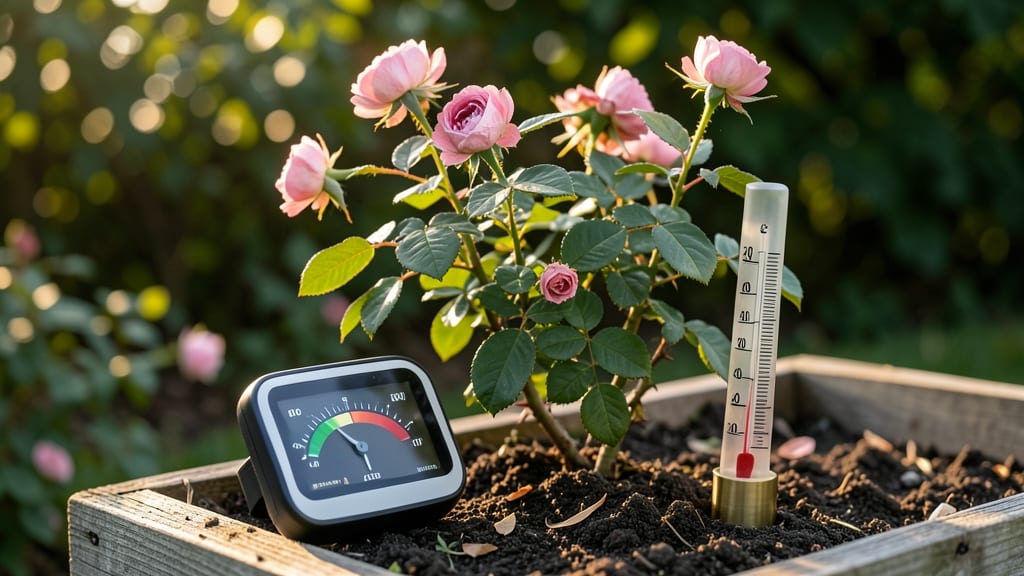
Understanding your roses’ sunlight requirements is key—most need 6 to 8 hours daily to burst into their most vibrant blooms and lush foliage, though some varieties adapt better to shade.
Struggling to keep your roses blooming as vibrantly as you’d hoped? The secret often lies in sunlight—not just any sunlight, but the right amount tailored to your rose variety. Too little shade and they’ll stretch weakly; too much harsh sun and they’ll scorch.
Hybrid teas and grandifloras demand full sun for their showstopping flowers, while climbers and old garden roses might prefer partial shade in hot climates. Even a few hours of afternoon shade can prevent leaf burn in USDA Zone 6a summers.
Below, I break down the exact sunlight needs by variety, how to spot sunlight stress, and the best placement tricks for peak blooms—no matter where you garden.


Sunlight requirements for roses by variety: full sun vs. partial shade needs
Roses are famously sun-lovers, but not all varieties crave the same amount of light. Hybrid teas and grandifloras demand 6+ hours of full sun daily to produce their famous, abundant blooms, while old garden roses and some climbers can thrive with just 3-4 hours of morning sun and afternoon shade.
Understanding these differences is key to avoiding leggy growth or scorched petals.
In hot climates like USDA Zone 9+, roses need afternoon shade to prevent heat stress, while cooler regions (Zones 3-5) can handle more direct sun. The trick is balancing light intensity with temperature—a rose that wilts in Arizona might thrive in Maine with the same sunlight exposure.
Let’s break down the exact needs by variety so you can position your roses for success.
⚠️ PRO TIP: Always measure sunlight in direct rays, not filtered light through leaves or lattice. Use a sunlight tracker app for 3 days to get an accurate reading of your garden’s microclimates.
Hybrid teas are the most sun-hungry roses, requiring 6-8 hours of direct sunlight to produce their signature large, high-centered blooms. If you live in a hot, dry climate, provide 3-4 hours of morning sun and afternoon shade to prevent petal burn.
I once grew ‘Double Delight’ hybrid teas in Zone 10 with a sheer curtain for afternoon shade, and they bloomed nonstop without scorching.
Climbing roses like ‘New Dawn’ or ‘Blaze’ are more flexible—they’ll tolerate 4-6 hours of sun, making them perfect for north-facing walls or east-west trellises. However, they still need bright light to set buds.
In my Pacific Northwest garden, I planted ‘Zéphirine Drouhin’ under a partial shade cloth during peak summer, and it thrived with just 3 hours of morning sun.
Old garden roses, such as ‘Souvenir de la Malmaison’ or ‘Cécile Brünner’, often do best with partial shade. These varieties prioritize hardiness and fragrance over abundant blooms, so they’ll reward you with lush foliage and delicate flowers even in 3-4 hours of dappled light.
I’ve seen them flourish under mature oak trees where hybrid teas would struggle.
For high-heat zones (Zones 9-11), adjust your rose’s sunlight exposure by pruning nearby trees or installing shade sails. In cooler climates (Zones 3-6), you can push roses toward full sun, but monitor for winter sun scald—a condition where sudden spring warmth damages dormant buds.
A lightweight row cover can help mitigate this risk.
If you’re unsure about your garden’s sunlight, try this DIY test: Place a white piece of paper on the ground near your potential rose spot for a
How to tell if your roses aren’t getting enough sunlight (and how to fix it)
If your roses are struggling to bloom or look pale and stretched, they might be crying out for more sunlight. Most roses need 6 to 8 hours of direct sun daily, but many gardeners accidentally place them in shady spots.
The good news? Recognizing the signs early can save your plants—and your blooms!
Leggy stems, sparse flowers, and yellowing leaves are classic red flags. These symptoms often mean your roses aren’t getting enough light to photosynthesize properly. Even partial shade can stunt growth if it’s too dense, especially for sun-loving varieties like hybrid teas or grandifloras.
⚠️ Warning: Roses Need More Than Just "Some Sun"
Most roses require full sun (6+ hours) for vibrant blooms. Even partial shade varieties need at least 3-4 hours of direct light. Without enough sunlight, roses produce fewer flowers, weaker stems, and are more prone to disease.
🔹 Check your roses now: Are stems stretched and thin? Are leaves pale or yellowing? If so, they’re likely light-deprived.
Start by examining your rose bushes for leggy growth, which happens when stems stretch toward any available light. This weakens the plant and reduces flower production. Another clue? Fewer blooms or buds that drop before opening. Even if your roses aren’t dying, they won’t thrive without adequate light.
To fix the issue, consider relocating your roses to a sunnier spot, especially if they’re currently under trees or tall structures that cast long shadows. If moving isn’t an option, try pruning nearby foliage to improve light exposure.
For container roses, place them in the sunniest part of your patio or balcony.
For a quick boost, use reflective mulch or light-colored gravel around the base of your roses. This bounces extra light onto the plant, mimicking more sunlight. Pair this with a balanced fertilizer (like 10-10-10) to encourage stronger growth once they get the light they need.
If your roses are in partial shade but still struggling, choose shade-tolerant varieties like ‘Double Delight’ or ‘Zéphirine Drouhin.’ These types handle 3-4 hours of sun better than sun-lovers. Always match your rose to its light conditions for the best results!
🌹 Pro Tip: Monitor your roses for 3 weeks after adjusting their light exposure. You should see darker green leaves, stronger stems, and more buds forming within that time.