
Pruning
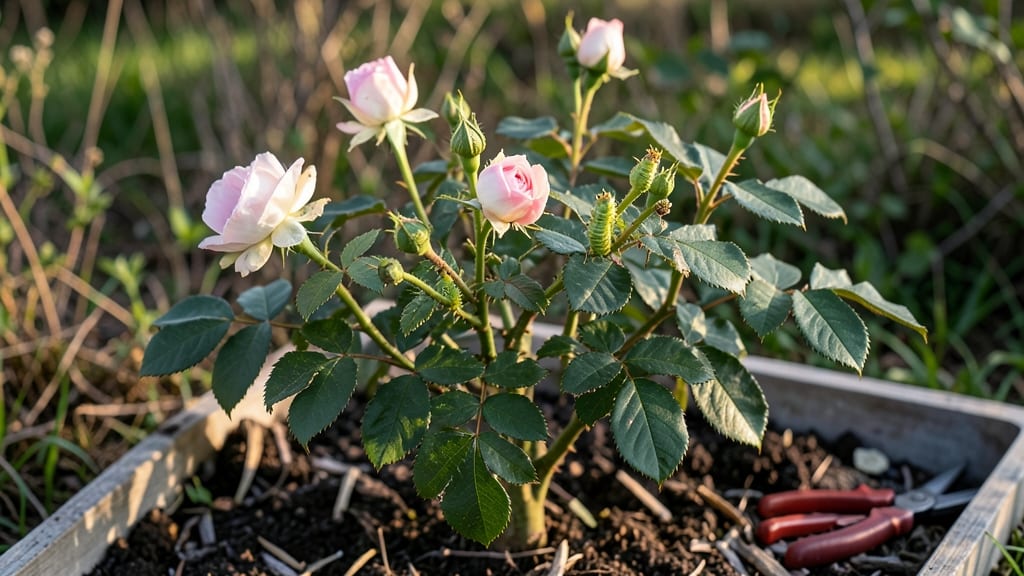
Sawflies on roses turn your blooms into skeleton leaves overnight. 🌿 I’ve watched my prize roses go from lush to ragged in days, and I’ll show you how to stop it before it starts—without harsh chemicals.
These tiny green caterpillars chew through foliage, leaving behind a trail of damage that’s hard to ignore. The key is catching them early. Sawflies lay eggs on the undersides of leaves, and their larvae emerge hungry. You’ll spot them as small, green, worm-like creatures clustered on new growth.
The damage looks like lace—holes and skeletonized leaves—but the good news is, you can outsmart them with simple, organic methods. By the time you’re done reading, you’ll know how to prune strategically, introduce natural predators, and use homemade sprays that work.
Your roses will bounce back with vibrant green leaves and fuller blooms in no time. This works for all rose varieties, from hybrid teas to climbers. Let’s get those sawflies under control before they ruin your season.
The Hidden Triggers Inviting Sawflies
Sawflies may seem like a sudden nuisance, but they’re usually drawn to roses by specific conditions that turn your prized plants into the perfect buffet. Understanding these triggers is the first step to outsmarting them before they strike.
Below, we break down the key reasons sawflies target roses—and how you can disrupt their plans.
Sawflies, particularly the rose sawfly (Macroxyela rosarum), have a one-track mind: your roses. These pests are specialized feeders, meaning they’ve evolved to rely almost exclusively on rose foliage and buds.
Their larvae (the real troublemakers) munch on tender leaves, stems, and flower buds, stripping plants of their ability to photosynthesize and bloom.
Why does this happen?
- Nutrient-rich leaves: Roses are packed with sugars, proteins, and water—an all-you-can-eat buffet for hungry larvae.
- Soft, tender growth: New shoots and buds are irresistible to sawfly larvae, which can’t chew through tougher, mature leaves.
- Lack of natural predators: While roses attract beneficial insects (like ladybugs), sawflies often arrive before these predators can establish a balance.
Actionable insight: If your roses are lush and thriving, sawflies will take notice. Prune strategically to remove overgrowth and encourage older, tougher leaves that deter feeding.
Sawflies thrive in chaotic, unmanaged gardens. When roses (or other host plants) are planted too closely together, they create:
- Microclimates: Dense foliage traps moisture, making conditions ideal for sawfly egg-laying and larval survival.
- Less airflow: Stagnant air prevents beneficial predators (like parasitic wasps) from patrolling effectively.
- Hidden nesting sites: Sawflies lay eggs in crevices or under leaves—overcrowding gives them more spots to hide.
Science note: Studies show that open, well-spaced plants reduce pest pressure by up to 40% due to increased predator activity and drier conditions.
Fix it: Thin out overgrown roses and interplant with non-host plants (like herbs or marigolds) to break up sawfly-friendly zones.
Sawflies are temperature-sensitive. They time their life cycles to coincide with:
- Spring warmth (60–80°F): Eggs hatch faster in heat, leading to explosive larval growth in just 2–3 weeks.
- Morning dew or rain: Moisture keeps eggs and young larvae hydrated, reducing mortality rates.
- Long daylight hours: Sawflies are diurnal, so they’re most active during sunny, humid days.
Pro tip: 🌡️ Monitor your local forecast. Sawflies peak after 3–5 days of warm, wet weather—stay ahead by checking plants daily during these periods.
Mitigation: Improve drainage around roses and avoid overhead watering to dry out foliage faster after rain.
Roses aren’t the only sawfly magnet. Wild roses, blackberries, and even some fruit trees can harbor sawfly populations that spill over to your garden. Here’s how:
- Unchecked infestations: Sawflies in wild areas lay thousands of eggs per season, ensuring some will migrate to your garden.
- Wind dispersal: Lightweight larvae or pupae can hitch rides on breezes, landing on your roses.
- Shared predators: If nearby plants are overrun, beneficial insects may abandon your roses entirely.
Solution: Create a 10-foot buffer zone around your roses with sawfly-resistant plants like lavender, catmint, or non-rose shrubs.
Stressed roses are like open invitations to sawflies. When plants are:
- Nutrient-deficient: Lack of nitrogen or phosphorus makes leaves less tough, making them easier to chew.
- Waterlogged or drought-stressed: Both extremes weaken cellular structure, attracting pests.
- Recently pruned or damaged: Fresh cuts expose sap-rich tissues, which sawflies detect from a distance.
Quick fix: 💡 Boost plant health with a balanced organic fertilizer (like fish emulsion) and mulch heavily to retain moisture without waterlogging.
Quick Fixes for Rose Sawfly Woes
Got sawflies munching on your roses? Don’t panic—these pests are manageable with the right organic approach! Below, we’ve mapped out practical, step-by-step solutions based on the root cause of your infestation, plus prevention tips to keep your roses thriving. No harsh chemicals here—just smart, garden-friendly fixes.
Sawflies lay eggs in clusters, and their larvae can strip a rose bush bare in days. Catch them early with these signs:
- Tiny, saw-like eggs (laid on undersides of leaves or buds).
- Skeletons of leaves (larvae chew edges first, leaving veins intact).
- Black, slug-like larvae (up to ½ inch long, often hiding in new growth).
💡 Pro Tip: Inspect your roses weekly during spring and summer—morning or evening is best when larvae are sluggish.
🔥 Cause: Eggs Laid on New Growth
Fix: Scrape and Squish (or Drown Them) 1. 🔍 Inspect undersides of leaves, buds, and stems for egg clusters (tiny, yellow-orange, and oval).
- 🧼 Scrape off eggs with a soft brush or your fingernail into a cup of soapy water (1 tsp dish soap per gallon).
- 💦 Dump the mixture far from your garden to prevent reinfestation.
Prevention:
- 🌱 Prune regularly to remove potential egg-laying sites.
- 🌿 Use row covers over young rose shoots in early spring to block adult sawflies.
🍳 Cause: Larvae Feeding on Leaves
Fix: Handpick + Natural Predators 1. 👨🍳 Handpick larvae (wear gloves!) and drop them into soapy water or rubbing alcohol (70% isopropyl).
- 🐞 Encourage predators like ladybugs, lacewings, and parasitic wasps—they love sawfly larvae. - Plant dill, fennel, or yarrow nearby to attract them.
- 🌿 Spray with neem oil (1 tbsp per quart of water + a drop of dish soap) early in the morning to suffocate larvae without harming beneficial insects.
Prevention:
- 🌡️ Avoid over-fertilizing—sawflies target stressed, nitrogen-rich plants.
- 🎯 Rotate organic sprays (neem, insecticidal soap) every 5–7 days for best results.
🌱 Cause: Repeated Infestations (Year After Year)
Fix: Break the Life Cycle 1. 🔪 Prune and destroy heavily infested leaves before they fall to the ground (larvae pupate in soil).
- 🌍 Solarize the soil (if possible): Cover bare soil around roses with clear plastic for 4–6 weeks in hot sun to kill pupae.
- 🌿 Plant companion flowers like marigolds or chrysanthemums—their scent repels sawflies.
Prevention:
- ✨ Use kaolin clay (like Surround WP) as a physical barrier—it coats leaves and makes them less appealing to lay eggs.
- 🌿 Space roses properly (3–4 feet apart) to improve airflow and reduce hiding spots.
⏰ Cause: Late-Season Outbreaks
Fix: Traps and Barriers
- 🪲 Set up yellow sticky traps near roses to catch adult sawflies before they lay eggs.
- 🏗️ Install fine mesh netting (like floating row covers) over rose bushes if larvae are already present.
- 🍂 Rake and remove fallen leaves in autumn—larvae pupate in leaf litter over winter.
Prevention:
- 🌿 Plant roses in full sun—sawflies prefer shaded, damp conditions.
- 💧 Water at the base (not overhead) to discourage moisture-loving pests.
Keep sawflies at bay with these easy habits:
- 🌱 Choose resistant varieties like ‘Knock Out’ roses (less appealing to sawflies).
- 🌿 Rotate organic sprays (neem, insecticidal soap, horticultural oil) seasonally.
- 🔍 Monitor weekly—early action is the key to organic control!
- 🌿 Maintain garden hygiene—remove debris and fallen leaves regularly.
💡 Final Reminder: Sawflies are not a death sentence for your roses! With consistent monitoring and organic methods, you can protect your blooms without chemicals. Happy gardening! 🌹
Frequently asked questions
What do sawfly larvae look like on my roses?
Sawfly larvae are small, black, slug-like creatures about ½ inch long with a smooth, shiny body. They cluster on new growth and leave behind skeletonized leaves—chewed edges with intact veins. Check the undersides of leaves where they hide during the day.
How do I tell sawfly damage apart from other pests?
Unlike aphids or spider mites, sawflies create large, irregular holes in leaves rather than tiny specks. The damage looks like lace, and you’ll often spot the black larvae crawling on stems or buds. Japanese beetles chew larger, irregular holes but leave frass (poop) behind.
Are sawflies harmful to humans or pets?
No, sawflies are harmless to humans and pets. The larvae aren’t poisonous, and the adults don’t bite. However, their feeding can stress roses, making plants more vulnerable to disease. Always wear gloves when handling infested foliage to avoid skin irritation from plant sap.
Will neem oil kill sawfly eggs?
Neem oil works best on larvae, not eggs. For eggs, scrape them off leaves with a soft brush and soapy water. Apply neem oil (1 tbsp per quart of water) after eggs hatch to suffocate larvae. Reapply every 5–7 days for best results during active infestations.
Can I use chemical pesticides for sawflies?
Chemical pesticides like pyrethrin can kill sawflies but also harm beneficial insects like ladybugs and bees. For organic control, stick to neem oil, insecticidal soap, or handpicking. If you choose chemicals, apply early morning and avoid spraying when bees are active.