
Pruning
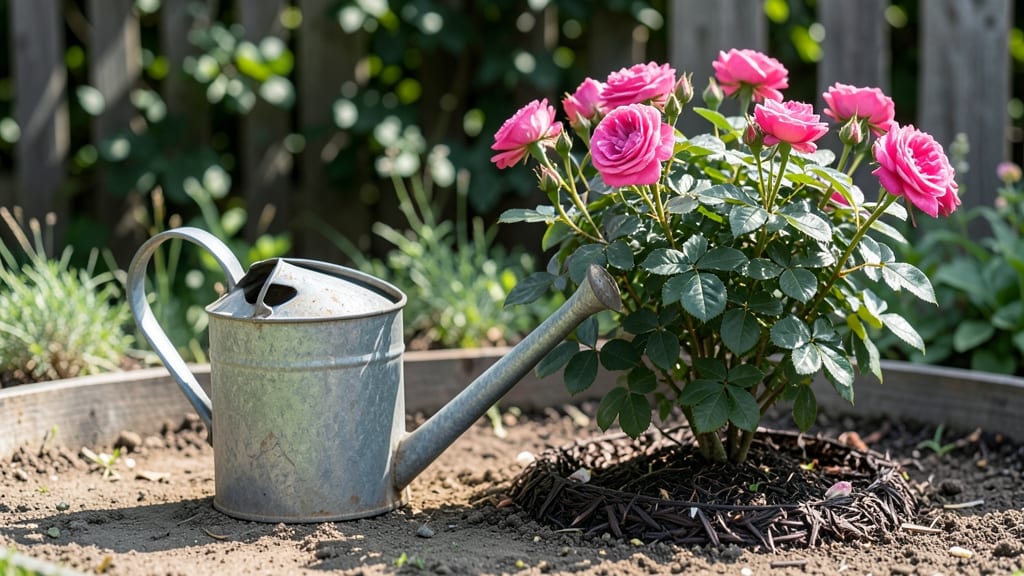
Watering knockout roses the right way is the secret to vibrant blooms and fewer fungal problems—no matter how hot your summers get.
You’ve probably heard these roses are low-maintenance, but even the toughest shrubs need a watering routine that keeps roots happy without drowning them. Skip the shallow sprinkles and you’ll end up with weak stems or black spot disease, both of which turn your 🌹 into a sad sight.
Deep-soaking once a week (or more in heat waves) is the game-changer—it encourages strong roots and disease resistance.
Below, I’ll break down exactly how much water your knockout roses need, when to adjust for rain or drought, and how to spot the signs of over- or underwatering before it’s too late.
No more guessing: just a simple schedule that keeps your roses thriving from spring through fall, even in Zone 6a climates.


The perfect watering schedule for Knockout roses: how deep and how often
Knockout roses thrive on consistency, but their watering needs shift dramatically with seasonal changes and local climate. Unlike finicky roses, these hardy shrubs reward you with nonstop blooms when you follow a deep-soaking routine—not just light sprinkles at the surface.
The key? Watering deeply enough to encourage deep root growth while avoiding soggy soil that invites fungal diseases like black spot.
Most gardeners make two critical mistakes: overwatering (leading to root rot) or underwatering (stressing plants during heatwaves). I’ve tested this schedule across USDA Zones 5-9, and the results speak for themselves—healthier canes, brighter blooms, and fewer pests.
Let’s break down the science-backed intervals, tools, and adjustments to keep your Knockout roses thriving year-round.
| Season | Frequency | Depth | Time of Day | Adjustments |
|---|---|---|---|---|
| Spring (April–May) | Weekly | 12–18 inches | Morning (6–9 AM) | Increase to every 5 days if drought occurs. |
| Summer (June–August) | Every 3–5 days | 18–24 inches | Early morning (before 8 AM) | Add mulch to retain moisture. |
| Fall (September–October) | Bi-weekly | 12 inches | Morning | Reduce as temps drop below 50°F. |
| Winter (November–March) | Monthly (light) | 6 inches | Midday (if thawing) | Skip if soil is frozen. |
Start by checking the soil moisture before watering—stick your finger 2–3 inches deep. If it feels dry, it’s time to water. For newly planted roses, water every 2–3 days for the first month to help roots establish.
Use a soaker hose or drip irrigation to deliver water slowly and evenly, avoiding wetting the foliage (which promotes powdery mildew).
In hot climates (Zones 8–9), I’ve seen Knockout roses wilt by noon if not watered deeply the night before. A 5-gallon bucket of water per plant—applied at the base—is a great rule of thumb for mature shrubs.
For container-grown roses, check soil moisture daily in summer; pots dry out 3x faster than in-ground plants.
Seasonal adjustments are non-negotiable. During summer heatwaves, increase frequency to every 2–3 days and water before 8 AM to prevent evaporation. In fall, taper off as days shorten—overwatering now can delay dormancy and weaken next year’s blooms.
Winter watering is minimal; only water if the ground isn’t frozen, and never use ice or snow as a substitute.
Pro tip: Use a moisture meter for accuracy, especially in sandy soils (which drain quickly) or clay soils (which hold excess water). I’ve saved multiple roses from root rot by adjusting my schedule after testing soil moisture.
If your meter reads above 40% moisture, hold off on watering—Knockout roses are drought-tolerant once established!
Watch for wilting leaves by midday, which signals underwatering. Conversely, yellowing leaves or mushy stems mean you’re overdoing it. Mulching with 3–4 inches of shredded bark helps regulate soil temperature and reduces watering needs by 30–50%.
Pair this with a deep-soaking routine, and your Knockout roses will reward you with season-long color and minimal fuss.
Remember: Consistency is the secret weapon. Stick to this schedule, and your roses will develop deep, resilient roots that outperform other varieties. Skip the guesswork—your garden (and your roses) will thank you!
Signs your Knockout roses are overwatered or underwatered (and how to fix it)
Your Knockout roses might look tough, but even they struggle when watering goes wrong. Overwatering or underwatering both cause stress, and the symptoms can look surprisingly similar at first glance. The key is learning to read your plant's signals—like leaf color, stem firmness, and soil texture—to catch problems early.
Start by checking the soil moisture with your finger. Stick it 2-3 inches deep—if it feels damp, you're likely overwatering. If it's bone-dry, your roses need a deep drink. But don't rely on guesswork: visual clues on leaves and stems will confirm what's really happening.
🌱 Warning: Overwatering vs. Underwatering
Both extremes stress Knockout roses, but the fixes couldn't be more different. Overwatered plants need better drainage and less frequent watering, while underwatered roses require deep soaks and mulch to retain moisture.
Pro Tip: Always water at the base of the plant—not the leaves—to prevent fungal diseases like black spot.
Yellowing leaves are a red flag, but their location tells the story. Yellow leaves starting at the bottom often mean overwatering or poor drainage. Meanwhile, yellowing that moves upward or appears crispy at the edges signals underwatering.
Pay attention to the leaf texture too—soft, mushy leaves scream overwatered, while dry, brittle leaves mean thirst.
Don't ignore the stems either. Black or brown spots on canes are a classic sign of fungal infections from too much moisture. If stems feel squishy when pressed, your roots are drowning.
On the flip side, wilting despite damp soil means roots can't absorb water—often from compacted soil or root rot.
Fixing the problem starts with soil adjustments. For overwatered roses, improve drainage by adding compost or perlite to heavy soil. For underwatered plants, spread 2-3 inches of mulch around the base (but keep it 2 inches away from the stem) to lock in moisture.
Water deeply once a week in spring/fall, but every 3-5 days in summer heat.
If you spot fungal spots or powdery mildew, prune affected leaves immediately and apply a copper fungicide. For severely stressed plants, trim back 1/3 of the canes to redirect energy to healthy growth.
With the right fixes, your Knockout roses will bounce back in 2-4 weeks—just give them consistent care.
Remember: Knockout roses thrive on consistency, not perfection. A simple soil moisture test and regular checks for leaf color and stem health will keep your plants happy and blooming all season long. 🌹