
Plants
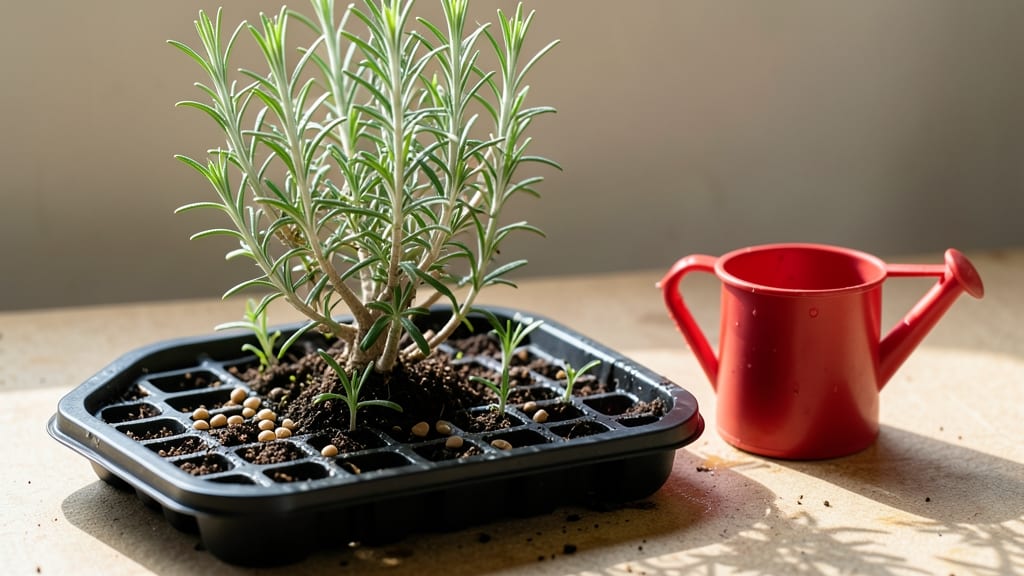
Rosemary seeds look like tiny, elongated teardrop-shaped pods about 1-2 millimeters long, with a light brown or grayish tint and a slightly wrinkled texture when fully dried. They're often mistaken for miniature pinecones but stay much smaller and smoother.
These delicate seeds grow in clusters along rosemary stems, maturing from green to their final dry color over 6-8 weeks. 🌿 Unlike pinecones, they don't open dramatically—they simply dry and release seeds when touched.
I always check for these tiny pods when harvesting rosemary sprigs, as they're a key indicator of a mature, healthy plant ready for propagation.
What's interesting is how their texture changes: fresh seeds feel slightly rubbery, while fully dried ones become almost papery to the touch. This transformation makes them easy to identify even when mixed with other dried herbs.
💡 In This Article
- Identifying Rosemary Seeds vs Other Herb Seeds
- How to Harvest and Store Rosemary Seeds for Planting
Identifying rosemary seeds vs other herb seeds
Rosemary seeds stand out from other herb seeds because of their unique elongated teardrop shape and delicate size. Under magnification, you'll notice their surface has fine vertical ridges—like tiny fingerprints—that run parallel to their length.
These ridges help distinguish them from thyme seeds, which appear more oval and have a smoother, almost glassy texture when dry. 🔍 The key difference lies in their growth origin: rosemary seeds develop in clusters at the stem's base, while thyme seeds form in small, round calyxes that resemble miniature lanterns.
Color plays a crucial role too. Fresh rosemary seeds start green but mature to a muted brown-gray, almost like weathered parchment. Compare this to oregano seeds, which remain greenish-brown with a slightly glossy sheen, or lavender seeds that appear as tiny, papery ovals with a faint purple tint.
The wrinkled texture of rosemary seeds also sets them apart—they feel slightly crinkled between fingers, unlike the smooth, almost waxy surface of basil seeds or the fuzzy exterior of dill seeds.
What makes identification even easier is their growth habit. Rosemary seeds grow upright in dense clusters, often forming small "beads" along the stem. This contrasts sharply with lavender seeds, which scatter freely when the flower heads dry out, or fennel seeds that grow in umbrella-like clusters.
When planted, rosemary seeds require well-draining soil with full sun exposure—a stark difference from herbs like mint that thrive in moist, shaded conditions.
One common mistake is confusing rosemary seeds with pinecone fragments, but there's a simple test: rosemary seeds are 10-20 times lighter than pinecone scales when held in your palm. Their weight difference comes from their hollow, papery structure designed to float on wind currents.
This lightweight quality also explains why they're easily overlooked during harvest—you might need to shake the plant gently to release them from their clusters.
For gardeners, understanding these visual cues helps prevent mix-ups during seed collection. I always recommend using a magnifying glass when sorting seeds, as the subtle differences become more apparent under 2x magnification.
The ridges, color transition, and growth pattern create a distinct "fingerprint" that separates rosemary from nearly every other culinary herb seed.
Here's a quick comparison table to keep handy:
- Rosemary: Teardrop-shaped (1-2mm), brown-gray, wrinkled, grows in stem clusters
- Thyme: Oval (0.5-1mm), smooth, greenish-brown, grows in calyx "lanterns"
- Oregano: Tiny oval (0.3-0.7mm), glossy, greenish-brown, forms in flower heads
- Lavender: Papery oval (0.5-1mm), purple-tinted, scatters freely when dry
The next time you're harvesting rosemary, look for these clusters—your plant's readiness to propagate is literally written in its seeds! 🌱