
Watering
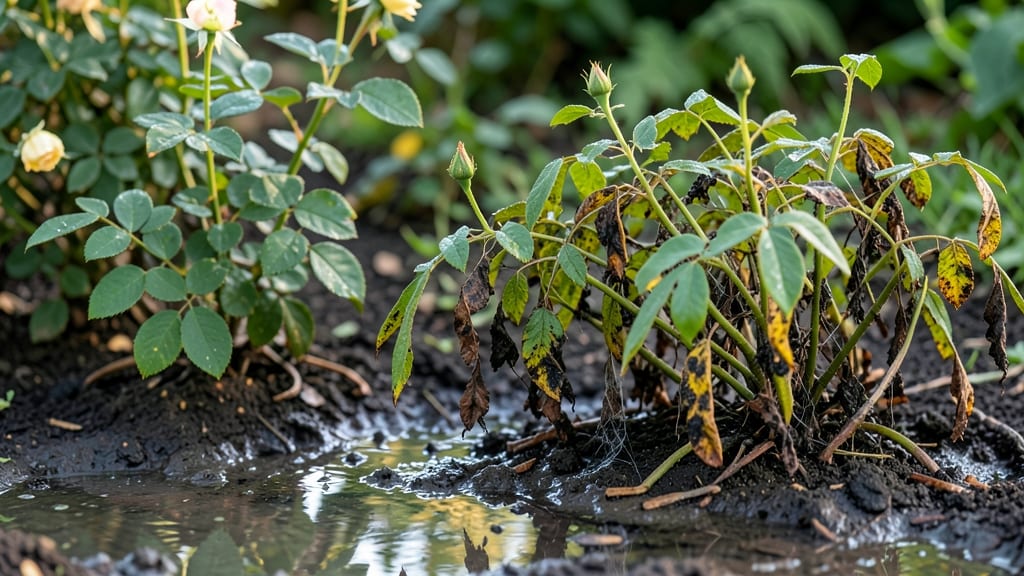
What do overwatered roses look like—drooping leaves that stay limp even when you water them less, like sad, soggy sponges instead of proud, perky blooms? 🌿 The stems turn a sickly yellow or brown, and if you peel back the soil, you’ll find roots that smell foul and look mushy, like overcooked pasta.
This isn’t wilting from heat; it’s a silent cry for help from roots drowning in their own moisture.
Here’s the telltale trio: yellowing leaves, stems that feel soft to the touch, and a musty odor when you dig near the base. Healthy roses have firm stems and roots that smell earthy, not rotten.
The soil itself might stay clumpy and waterlogged, refusing to dry out even days after watering—this is your first warning sign that your roses are getting too much love (and not enough air).
Fix it fast by cutting back watering to once a week (or when the top 2 inches of soil feel dry) and improving drainage. Mix in perlite or coarse sand to break up compacted soil, and prune any blackened or mushy stems to stop the rot from spreading.
Your roses will bounce back within 2-3 weeks if you catch it early—just give them room to breathe.
Pro tip: Stick a finger in the soil before watering. If it’s damp below 1 inch, wait. Overwatering is the #1 way to kill roses, but with these signs and fixes, you’ll save your bushes—and your sanity. Trust the roots: they’ll thank you with stronger blooms by summer.
Common Causes Of Overwatering Roses
Overwatering roses might seem counterintuitive—after all, plants need water to thrive! 🌧️ But when the balance tips too far, your roses send distress signals through wilting, yellowing, or mushy stems.
Understanding the root causes (literally!) helps you adjust care before damage sets in. Here’s why it happens—and how to fix it.
Roses don’t need daily drinks like thirsty pets. Overwatering often stems from well-meaning but overzealous watering schedules. Soil stays soggy when:
- Watering on a strict timetable (e.g., every morning at 8 AM), ignoring weather or soil conditions.
- Using a sprinkler or hose that saturates the entire bed, including roots, without letting the topsoil dry slightly between sessions.
- Ignoring seasonal changes: Roses need less water in cool, humid weather and more during hot, dry spells.
Science behind it: Roots need oxygen to respire. Saturated soil crowds out air, suffocating roots and inviting anaerobic bacteria that release toxic compounds like ethanol and hydrogen sulfide—basically, root rot’s party crashers.
If water pools around your roses’ roots, drainage is the villain. This happens when:
- Containers lack drainage holes, trapping water like a swamp.
- Soil is too dense (e.g., heavy clay or compacted garden soil) that doesn’t let excess water escape.
- Mulch is piled too high, creating a barrier that blocks water from evaporating.
Science behind it: Waterlogged roots can’t absorb nutrients efficiently because oxygen diffusion slows to a crawl. Within days, fungal pathogens like Phytophthora or Pythium move in, breaking down cell walls and turning roots to mush.
Not all overwatering is your fault—sometimes, Mother Nature plays a trick. Watch for:
- High humidity: Air already saturated with moisture means the soil stays damp longer, delaying evaporation.
- Shady spots: Less sunlight = slower evaporation, so water lingers near roots.
- Rainfall + your watering: A 1-inch rainfall can already meet a rose’s weekly needs—adding your hose just drowns them.
Science behind it: Roses in shaded or humid areas have a reduced transpiration rate (less water evaporates through leaves). Their roots, confused by the excess moisture, stop absorbing water efficiently, leading to wilting despite “wet” soil.
Pro Tip: 🌡️ Test your soil’s moisture before watering—stick your finger 2 inches deep. If it’s damp, wait. If it’s dry, water deeply but only until the top 6 inches of soil are moist. A moisture meter (or even a wooden skewer) takes the guesswork out!
How to Fix Overwatered Roses
If your roses are showing signs of too much water, don’t panic—there’s hope! The key is to act quickly and adjust your care routine to restore their health. Below are targeted solutions based on the most common causes of overwatering, along with prevention tips to keep your roses thriving.
When overwatering causes leaves to yellow or stems to soften, your roses need immediate drainage and airflow improvements.
🔥 Step 1: Stop Watering Immediately
- Pause all watering for at least 3–5 days to allow the soil to dry out.
- Avoid watering until the top 1–2 inches of soil feel dry to the touch.
🍳 Step 2: Improve Soil Drainage
- Amend the soil with perlite, sand, or compost to loosen compacted roots.
- If planting in containers, ensure pots have drainage holes and use a well-draining potting mix.
👨🍳 Step 3: Prune Damaged Foliage
- Snip off yellow or mushy leaves with clean pruners to prevent fungal growth.
- Remove any blackened or rotting stems at the base.
⏰ Step 4: Monitor Watering Moving Forward
- Water deeply but infrequently—aim for 1–1.5 inches per week (adjust for climate).
- Water in the early morning to reduce evaporation and fungal risks.
💡 Pro Tip: Use a moisture meter to track soil dampness—overwatering often happens when gardeners rely on a schedule rather than soil conditions.
If roots are mushy, black, or smell foul, root rot has set in. This is serious but can be managed with proper care.
🔪 Step 1: Remove the Rose from the Soil
- Gently dig up the plant, shaking off excess soil to inspect the roots.
- Trim away all black, mushy roots with sterilized pruners—healthy roots are firm and white or tan.
🌡️ Step 2: Disinfect the Plant & Pot
- Soak the remaining roots in a 1:10 hydrogen peroxide-water solution for 10 minutes to kill fungi.
- If repotting, sterilize the pot with bleach or boiling water.
🎯 Step 3: Repot in Fresh, Dry Soil
- Use a fast-draining mix (e.g., 60% potting soil, 30% perlite, 10% compost).
- Plant at the same depth as before and avoid watering for 3–5 days.
✨ Step 4: Adjust Future Watering Habits
- Water only when the top 2 inches of soil are dry.
- Consider a self-watering system with a moisture sensor to prevent overzealous watering.
💡 Pro Tip: If root rot is severe, your rose may not recover. In that case, propagate from healthy cuttings or replace it—some roses are worth saving, but others may be beyond help.
Once your roses are back on track, keep these habits to avoid future issues:
- 📊 Check soil moisture before watering—stick your finger in the soil as a simple test.
- 💪 Use mulch (2–3 inches) to retain moisture without suffocating roots.
- 🥗 Avoid watering leaves—direct water to the base to prevent fungal diseases.
- 🍎 Upgrade your pots if using containers—ensure they’re at least 12 inches deep with drainage holes.
With these fixes, your roses should bounce back in a few weeks. The key is patience and consistency—overwatering damage takes time to heal, but proper care will have them blooming beautifully again.
Frequently asked questions
How can I tell if my rose's wilting is from overwatering vs. underwatering?
Check the soil first—if it's damp below 1 inch deep, you're overwatering. Overwatered roses wilt even when the soil is wet, while underwatered roses wilt with dry, cracked soil. Also, overwatered stems feel soft or mushy when squeezed, while underwatered stems feel dry and crispy.
Can overwatered roses recover if the roots are already mushy?
It depends on how severe the damage is! If only the tips are mushy, prune them off and improve drainage. For advanced root rot (black, foul-smelling roots), you may need to repot in fresh, sterile soil. Start with a 1:10 hydrogen peroxide-water soak for 10 minutes to kill fungi, then monitor watering closely.
Why do my rose leaves turn yellow but stay attached to the plant?
Yellow leaves that stay attached are a classic overwatering sign! The roots can't absorb nutrients when drowned, causing chlorosis (yellowing). Check for waterlogged soil and soft stems—if both are present, you're likely overwatering. Prune yellow leaves and adjust your watering schedule to once a week (or when top 2 inches of soil are dry).
Is it safe to use coffee grounds to fix overwatered roses?
No—coffee grounds are acidic and can worsen drainage issues. Instead, mix in perlite or coarse sand to improve soil aeration. For a natural boost, use compost (1 part) mixed with potting soil (3 parts) to help roots recover without compacting further.
How often should I water roses in containers vs. garden beds?
Container roses need watering every 2-3 days (or when top 1 inch of soil dries), while garden roses thrive on weekly deep watering. Containers dry out faster—use pots with drainage holes and a mix of 60% potting soil and 40% perlite to prevent soggy roots.