
Fertilization
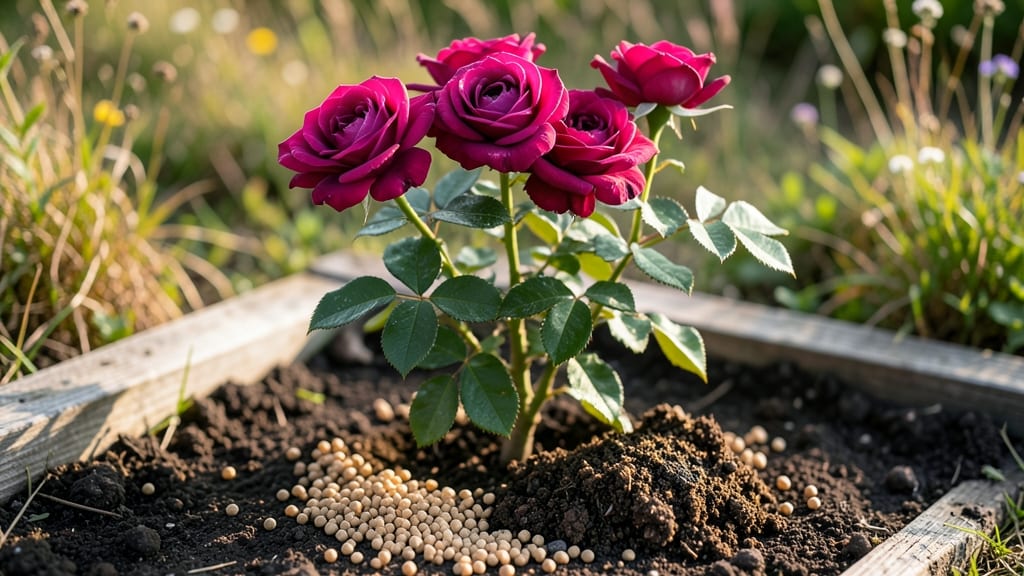
Fertilizing roses in California depends on your micro-climate—coastal fog, Central Valley heat, or desert dryness—each requiring a different timing to avoid burning roots or wasting nutrients.
Picture this: You’ve just planted your 🌹 roses in late winter, eager for blooms, only to realize too late that fertilizing in the wrong month can stunt growth or even kill your plants. California’s mild winters and intense summers mean the perfect schedule isn’t just seasonal—it’s regional.
Here’s the game-changer: A month-by-month guide tailored to your zone, from early spring flushes to summer light feeds, plus when to skip fertilizer entirely to protect your roses during dormancy.
You’ll learn how to read your roses’ signals (yellow leaves? Stunted blooms?), which organic or synthetic fertilizers work best for your soil, and how to adjust for water restrictions—all without overdoing it.
California rose fertilization schedule by micro-climate zone
California’s three distinct micro-climates—coastal, Central Valley, and desert—create wildly different growing conditions for roses. In coastal areas, mild winters and summer fog mean roses stay active longer, while Central Valley heat demands extra nutrients during peak summer. Desert regions require careful watering and feeding to prevent stress.
Your fertilization schedule must adapt to these zones to avoid overfeeding or nutrient burnout.
Roses in coastal zones (USDA 10-11) like San Francisco or Santa Barbara can grow year-round, so their fertilization needs stretch beyond traditional spring-summer cycles.
Meanwhile, Central Valley roses (USDA 9-10) face intense summer heat, requiring light, frequent feedings to prevent leaf scorch. Desert roses (USDA 9-10) in Palm Springs or Death Valley need water-efficient fertilizers with slow-release nutrients to avoid salt buildup.
Here’s how to adjust your fertilization timing based on your micro-climate, including organic vs. synthetic options and dormant-season care.
Key rule for all zones: Never fertilize when roses are stressed—this means drought conditions, extreme heatwaves, or after pruning cuts have healed. Wait 4-6 weeks post-pruning before feeding.
| Micro-Climate | Fertilization Window | Dormant Period | Best Fertilizer Type | Key Adjustments |
|---|---|---|---|---|
| Coastal (e.g., San Francisco, Santa Barbara) | Year-round (light feed every 8 weeks) | None (grows year-round) | Slow-release organic (compost, worm castings) | Avoid heavy nitrogen in winter; use low-N formulas. |
| Central Valley (e.g., Sacramento, Fresno) | Feb-Apr, Jun-Aug (skip May) | Dec-Jan (light dormancy) | Balanced synthetic (10-10-10) or fish emulsion | Add mulch to retain moisture; feed early morning to prevent leaf burn. |
| Desert (e.g., Palm Springs, Death Valley) | Nov-Jan, Mar-Apr (skip summer) | Jun-Oct (heat dormancy) | Slow-release granules (Osmoote) or cactus fertilizer | Water deeply post-fertilizing to leach excess salts. |
For coastal roses, I recommend a year-round light feeding schedule using compost or worm castings every 8-10 weeks. Since these roses never truly dormant, avoid high-nitrogen fertilizers in winter—they encourage leafy growth at the expense of blooms.
Instead, switch to a low-N formula (e.g., 5-10-10) to support root health during cooler months.
In the Central Valley, focus on two main feeding periods: early spring (February-March) for new growth and late summer (August-September) for fall blooms. Skip May entirely—this is when heat stress peaks, and roses prioritize survival over growth.
Use a balanced synthetic fertilizer (like 10-10-10) or fish emulsion for a natural boost.
Desert roses are the most low-maintenance but need precise timing. Fertilize only in cool months (November-April), using slow-release granules like Osmoote. These fertilizers mimic natural rainfall patterns, releasing nutrients gradually. Never fertilize in summer—the heat will burn roots and cause leaf drop.
All California roses benefit from a pre-winter feeding in October-November to build root reserves. Use a low-phosphorus fertilizer (e.g., 5-5-5) to avoid encouraging late-season growth that won’t harden off before winter.
For organic gardeners, bone meal or kelp meal are excellent choices—they add phosphorus for blooms and potassium for cold tolerance.
Pro tip: Mix fertilizer with compost before applying. This improves soil structure and reduces nutrient runoff, which is critical in California’s water-conscious climate. Spread a 2-inch layer of compost around the base of your roses in late winter (February) to kickstart growth.
Watch for over-fertilization signs like dark green leaves, stunted blooms, or leaf curl. If you see these, flush the soil with water to leach excess salts. In desert zones, this is especially important—salts build up quickly in low-organic soils.
🌹
Signs your roses need fertilizer (and when to avoid it)
Your roses might be silently screaming for nutrients—or telling you to back off. Yellowing leaves, stunted growth, or fewer blooms than last year are classic signs your roses need fertilizer.
But in California’s variable climates, timing matters more than you think. Over-fertilizing in summer can burn roots, while skipping spring feedings stunts growth. Let’s decode your roses’ signals and when to act.
First, check the leaf color. Healthy rose leaves are deep green. If you see yellow between veins, it’s often nitrogen deficiency—time to feed. But if leaves turn purple or brown, you’ve overdone it.
This happens when salts build up from too much fertilizer, especially in dry inland areas where water evaporates quickly. Always water after fertilizing to flush excess salts away.
🚨
Never fertilize roses when soil is dry or during peak summer heat (June-August). Inland valleys hit 100°F+, and fertilizer salts can burn roots instantly. Instead, wait until early spring (Feb-March) or late fall (Oct-Nov) for safer feeding. Coastal areas can handle light summer feeding, but always water deeply afterward.
Watch for sparse or weak blooms. If your roses produce fewer flowers or they’re small and pale, they’re likely phosphorus-deficient. This nutrient is crucial for blooming, and roses need it most in spring and early summer.
Use a balanced fertilizer (10-10-10) or organic options like bone meal to boost phosphorus without overloading nitrogen.
Stunted growth is another red flag. If new canes are shorter than 6 inches or soft and leggy, your roses aren’t getting enough nutrients. But here’s the catch: Don’t fertilize in winter (Dec-Feb).
Roses in USDA zones 9-11 stay semi-dormant, and feeding during this time wastes resources. Instead, focus on mulching with compost to feed roots slowly as temps rise.
One of my biggest mistakes? Skipping the soil test before fertilizing. California soils vary wildly—coastal areas often need more nitrogen, while desert regions benefit from phosphorus. Test your soil in late winter (Jan-Feb) to adjust your feeding plan.
If your soil is already rich, you might only need light top-dressing with compost instead of heavy fertilizer.
Finally, pay attention to new growth timing. If your roses don’t sprout until April, they’re playing catch-up. Feed them early (Feb-March) to kickstart growth. But if they’re already growing by January in coastal zones, hold off until you see 2-3 inches of new canes.
This ensures nutrients go to roots, not just leaves.