
Pests and Diseases
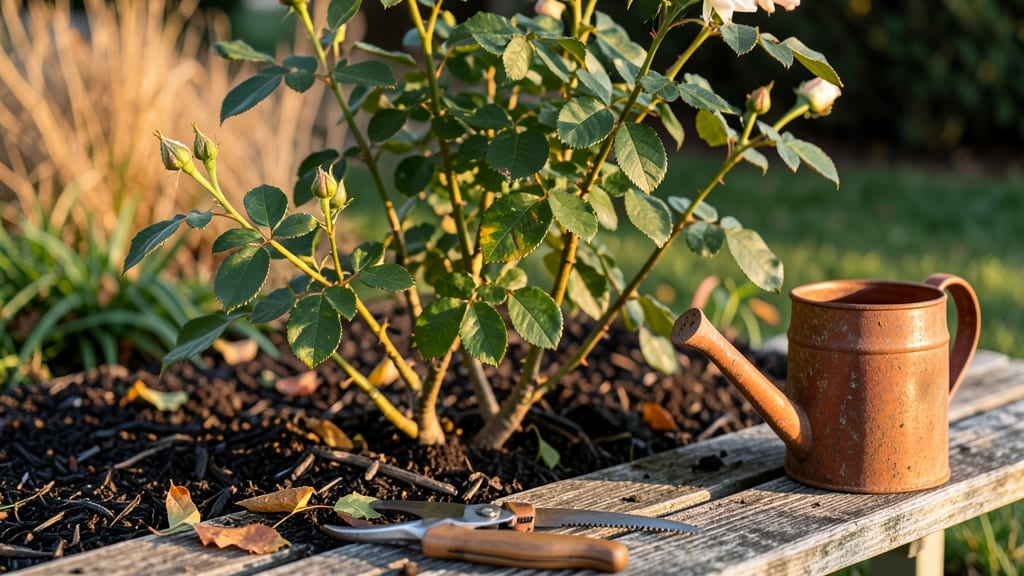
Why is your rose bush not flowering—it’s likely because overwatered roots are starving it of the energy needed to bloom. 🌹 Honestly, I’ve seen this mistake ruin even the hardiest bushes—too much water drowns roots, preventing them from sending nutrients to the stems. where flowers form.
The fix starts with checking soil moisture and adjusting your watering routine before it’s too late.
First, dig down 2 inches—if the soil feels soggy, your roses are getting too much water. Healthy rose roots need well-draining soil and water only when the top inch is dry.
Overwatering also invites fungal diseases like black spot, which weakens the plant further. Prune any dead or diseased canes immediately to redirect energy toward blooms.
Within 4-6 weeks of correcting watering and pruning, you’ll see new growth with buds forming. Feed with a balanced rose fertilizer (10-10-10) every 4-6 weeks during the growing season to give it the nutrients it craves. The key is consistency—roses reward patience with vibrant, repeat-blooming flowers all season.
If your bush is older than 5 years, it might just need rejuvenation. Try renewal pruning in late winter to encourage fresh growth. And remember: morning sun and afternoon shade are non-negotiable for roses. With these fixes, you’ll be picking blooms in no time.
Root Causes Behind Missing Blooms
If your rose bush is putting out lush green leaves but stubbornly refuses to bloom, the issue likely stems from one (or more) of these hidden culprits. Roses are finicky—they demand a delicate balance of care, and even small missteps can send them into "leafy mode" instead of flowering.
Let’s dig into the science behind why your bush is playing hard to bloom.
Roses are sun worshippers—they need 6 to 8 hours of direct sunlight daily to trigger flowering. When light is lacking, the plant shifts energy into leaf production instead of blooms. Here’s why:
- Photosynthesis slowdown: Less light means fewer sugars (the plant’s energy currency). Without enough energy, the bush prioritizes survival over reproduction.
- Hormonal shift: Low light reduces florigen, a flowering hormone. Think of it like a light switch—no light, no bloom signal.
- Weak stems: Shady spots often mean etiolated growth (long, leggy, weak stems) that can’t support heavy blooms.
💡 Pro Tip: If your rose is in partial shade, prune nearby trees or relocate it to a sunnier spot. South- or west-facing spots are ideal in the Northern Hemisphere.
Too much water is a common but deadly mistake—it suffocates roots and starves the plant of oxygen, nutrients, and the stress signals that trigger blooming. Here’s the science:
- Oxygen deprivation: Waterlogged soil creates anaerobic conditions, forcing roots to "hold their breath." Without oxygen, roots can’t absorb nutrients efficiently.
- Nutrient lockout: Excess water leaches vital nutrients (like phosphorus and potassium) that roses need for flower development.
- Fungal infections: Overwatering invites root rot (e.g., Phytophthora), which weakens the plant’s ability to produce blooms.
- No stress signal: Roses bloom in response to mild stress (like slight drought). Constant moisture removes this natural trigger.
🔥 Quick Fix: Check soil moisture by sticking your finger 2 inches deep—if it’s damp, wait to water. Use well-draining soil (add perlite or sand) and water deeply but only when the top inch is dry.
Roses are heavy feeders, and without the right nutrients, they’ll focus on leaves instead of flowers. The key nutrients for blooming are:
| Nutrient | Role in Flowering | Deficiency Signs |
|---|---|---|
| Phosphorus (P) | Essential for energy transfer and flower development. | Dark green leaves, purple stems, weak blooms. |
| Potassium (K) | Helps stress resistance and nutrient uptake. | Yellowing leaf edges, poor bloom quality. |
| Nitrogen (N) – Too Much! | Excess N promotes leafy growth at the expense of flowers. | All leaves, no buds. |
🌡️ Fix It: Use a balanced rose fertilizer (10-10-10 or 5-10-10) in early spring and mid-summer. Avoid high-nitrogen fertilizers like lawn food.
Pruning is essential, but doing it wrong can permanently delay flowering. Roses bloom on new wood (current season’s growth) and old wood (last year’s stems). Here’s what goes wrong:
- Pruning too late: Cutting back after mid-June removes next year’s flower buds.
- Over-pruning: Removing more than 1/3 of the bush reduces energy for blooming.
- Wrong cuts: Pruning too close to the ground or leaving stubs stresses the plant.
✨ Correct Pruning:
- 🔪 Early spring (before new growth): Cut back to outward-facing buds to encourage an open shape.
- 🌿 Deadhead spent blooms: Snip off faded flowers to redirect energy to new buds.
- 👨🍳 Avoid "topping": Never shear roses like hedges—it encourages weak growth.
Hidden invaders like aphids, spider mites, or black spot fungus drain your rose’s energy, leaving it too weak to bloom. Here’s how they sabotage flowering:
- Aphids & mites: Suck sap, causing stunted growth and bud drop.
- Black spot: Fungal infection (Diplocarpon rosae) defoliates the plant, reducing photosynthesis.
- Japanese beetles: Devour petals and leaves, weakening the bush.
🎯 Pest Control:
- Spray with neem oil or insecticidal soap for soft-bodied pests.
- Remove infected leaves and apply fungicide (copper-based) for black spot.
- Set up traps for Japanese beetles in early summer.
Most of these issues are fixable—but the key is acting fast. Start with a soil test, adjust watering, and give your rose the light and nutrients it craves. Before you know it, those lush green leaves will be topped with vibrant blooms! 🌹💥
Revive Your Rose Bush Now
---
If your rose bush is throwing a no-show on blooms, don’t panic—it’s often fixable! The key is identifying the root cause (literally and figuratively) and taking targeted action.
Below, we break down practical solutions for each common issue, from soil fixes to pruning hacks, plus prevention tips to keep your roses blooming like a pro. Let’s get those buds popping!
---
If your rose bush is drowning in soggy soil, it’s time to drain the drama and refresh its roots.
#### 🔥 Step 1: Test the Soil - Stick your finger 2–3 inches into the soil. If it’s muddy or takes hours to dry, drainage is the culprit. - Pro tip: 💡 Use a moisture meter or the "squeeze test"—if water drips out, it’s too wet.
#### 🍳 Step 2: Improve Drainage - Raise the bed: Amend the soil with perlite, coarse sand, or gravel (mix 20% into the top 6–12 inches). - Elevate the plant: If in a pot, add drainage holes or repot with well-draining potting mix. - Mulch smartly: Use gravel or bark chips (not organic mulch) to keep moisture away from roots.
#### ⏰ Step 3: Adjust Watering - Water deeply but less often: Aim for 1–1.5 inches per week (including rain). Let the top 2–3 inches dry between waterings. - Water at the base: Avoid wetting leaves to prevent fungal diseases.
#### 🌡️ Prevention Tips - 🎯 Plant in spring or fall when roots can establish before heavy rains. - ✨ Choose the right spot: Roses need 6+ hours of sun and soil that drains like a sieve.
---
Shady roses? They’re bloom-blocked. Even partial shade can stunt flowers.
#### 👨🍳 Step 1: Assess Light Levels - Full sun = 6+ hours of direct light. If your bush gets <4 hours, it’s the villain. - Test: Use a light meter app or observe shadows—if the bush is in constant shade (e.g., under trees), relocate it.
#### 🌿 Step 2: Prune for Sun Exposure - Thin out dense foliage to let light penetrate. Remove 1/3 of the oldest canes to open the center. - Cut back suckers (shoots growing from the base) to redirect energy to blooms.
#### 🔪 Step 3: Relocate if Needed - Move potted roses to a sunnier spot immediately. - For in-ground roses, consider pruning nearby trees or transplanting (best in early spring).
#### 💡 Prevention Tips - 📊 Plant in full sun from the get-go—roses are divas and demand light. - ✨ Avoid planting near tall structures (fences, walls) that cast permanent shade.
---
Yellow leaves or stunted growth? Your rose might be starving for blooms. Let’s fix its diet!
#### 📊 Step 1: Test the Soil - Use a DIY soil test kit (or send a sample to a local extension office) to check pH and nutrients. - Ideal pH: 6.0–6.5 for roses.
#### 💪 Step 2: Fertilize for Blooms - Spring boost: Apply a balanced fertilizer (10-10-10) when new growth appears. - Bloom season (spring–summer): Switch to a high-phosphorus feed (5-10-5 or rose-specific formula) every 4–6 weeks. - Avoid overdoing nitrogen—it fuels leaves, not flowers!
#### 🥗 Step 3: Organic Alternatives - Compost or worm castings (work into soil in early spring). - Epsom salt (magnesium sulfate): Mix 1 tbsp per gallon of water monthly for green, vibrant blooms.
#### 🎯 Prevention Tips - 🔥 Mulch annually with compost to replenish nutrients. - ✨ Avoid synthetic fertilizers late in the season—they can encourage tender new growth that won’t survive winter.
---
Chewy leaves or black spots? Pests and diseases steal bloom energy. Here’s how to kick them out.
#### 🔪 Step 1: Identify the Culprit - Aphids/Spider Mites: Sticky leaves, webbing. - Japanese Beetles: Skeletons of leaves. - Black Spot: Dark spots with yellow halos. - Powdery Mildew: White, dusty coating.
#### 🍳 Step 2: Natural Remedies - Pests: - Neem oil spray (mix 1 tbsp neem oil + 1 tsp mild soap + 1 quart water; spray weekly). - Introduce predator insects (ladybugs for aphids). - Diseases: - Baking soda spray (1 tbsp baking soda + 1 quart water + few drops of soap) for fungal issues. - Prune infected leaves and dispose of them (don’t compost!).
#### 🌡️ Step 3: Prevent Future Attacks - 💡 Space roses 3–4 feet apart for airflow (reduces humidity and disease). - ✨ Water in the morning to let foliage dry quickly. - 🎯 Clean up debris** in fall to remove overwintering pests.
---
With these fixes, your rose bush should start showing off its blooms in 4–6 weeks. Consistency is key—stick to the plan, and soon you’ll have a rosy reward! 🌹
Frequently asked questions
Why are my rose leaves so big but no flowers?
Your rose bush is likely getting too much nitrogen or not enough sunlight. Excess nitrogen fuels leafy growth while starving flower production. Check for 6+ hours of direct sun daily—partial shade forces roses to prioritize leaves over blooms. Try a balanced fertilizer (10-10-10) instead of lawn food to redirect energy toward flowers.
Can I prune my rose bush in summer to encourage blooms?
Only prune lightly in summer—never after mid-June! Heavy summer pruning removes next year's flower buds. Instead, focus on deadheading spent blooms to redirect energy. For rejuvenation, do a renewal prune in late winter—cut back 1/3 of oldest canes to outward-facing buds for an open shape.
How do I know if my rose bush is overwatered?
Check soil moisture by sticking your finger 2 inches deep—if it's soggy or smells musty, you're overwatering. Yellow leaves with brown edges or wilting despite wet soil are red flags. Let the top 2-3 inches dry between waterings, and improve drainage by mixing perlite or coarse sand into heavy soil.
Will Epsom salt make my rose bush bloom?
Epsom salt (magnesium sulfate) won't directly trigger blooms, but it helps with chlorophyll production and nutrient uptake. Mix 1 tablespoon per gallon of water monthly for greener leaves and stronger stems. For actual blooms, focus on balanced fertilization (5-10-5) and 6+ hours of sunlight daily—those are the real bloom catalysts.
Is my rose bush too old to bloom?
Most roses can bloom for 10+ years with proper care! If your bush is 5+ years old and not flowering, try renewal pruning in late winter—cut back 1/3 of oldest canes to stimulate fresh growth. Older roses may also need more phosphorus (use a 5-10-5 fertilizer) and better drainage to wake up their blooming potential.