
Flowers
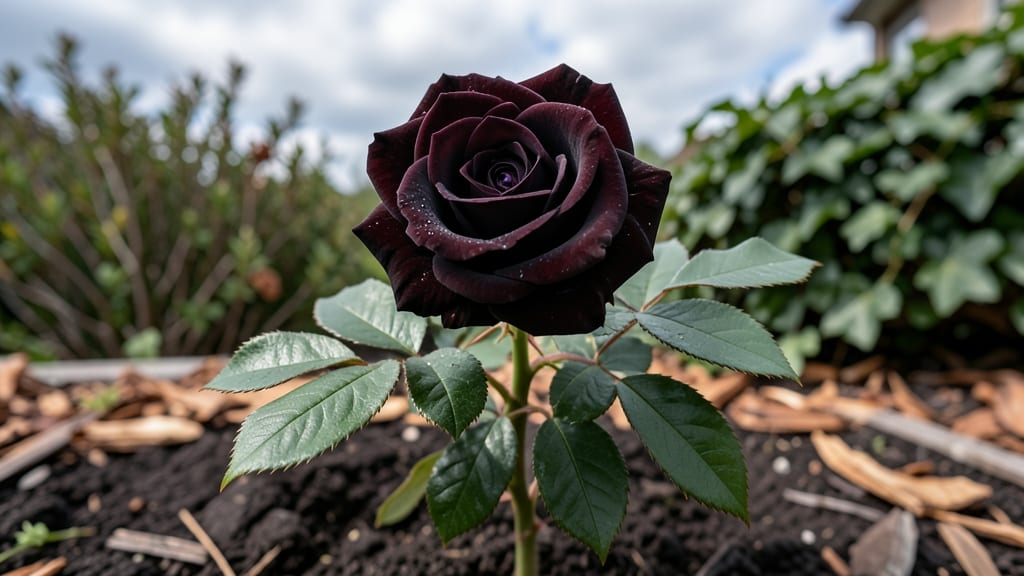
True black roses remain a botanical myth because roses lack the genetic ability to produce melanin, the pigment responsible for deep black hues in nature. 🌹 Instead, what we call "black roses" are actually deep purple or burgundy varieties with near-black appearances due to anthocyanin dominance—a natural pigment that absorbs most visible light.
Breeders have spent decades selectively crossbreeding roses to enhance these dark tones, but even the darkest varieties still reflect some light, preventing true blackness. The velvety texture of these roses also plays a trick on our eyes, making them seem darker than they truly are.
If you're dreaming of a pitch-black rose, you're not alone—many gardeners and florists share this fascination. The closest you'll get are hybrids like 'Black Baccara,' which boasts petals so dark they appear black under most lighting conditions.
These varieties thrive with proper care, including full sun exposure and well-draining soil, but they do require extra attention to maintain their dramatic appearance. The trade-off? Their striking visual impact makes them a favorite for weddings and high-end floral arrangements.
💡 In This Article
- The Science Behind Dark Rose Pigmentation
- Cultivating and Caring for Deep Velvet Roses
The science behind dark rose pigmentation
True black roses don't exist because roses lack the genetic ability to produce melanin—the pigment responsible for deep black hues in nature. Instead, what we perceive as "black" in roses comes from anthocyanins, water-soluble pigments that give flowers their deep colors.
These pigments absorb all visible light except for the wavelengths we see as purple or near-black. The darkest rose varieties, like 'Black Baccara,' contain an exceptionally high concentration of anthocyanins combined with a velvety petal texture that scatters minimal light, creating their illusion of blackness.
The magic happens at the cellular level. Anthocyanins in roses are embedded in the vacuoles of petal cells, surrounded by a fluid that enhances their color intensity. When breeders select for darker roses, they're essentially stacking multiple layers of these pigments.
For example, 'Black Magic' roses have a unique genetic trait that produces a dense layer of anthocyanins near the petal surface, while also containing less chlorophyll, which would otherwise dilute the color.
This combination creates a petal that absorbs approximately 95% of visible light, making it appear nearly black to our eyes.
Light conditions play a crucial role in how dark these roses appear. In natural sunlight, which contains a broad spectrum of wavelengths, the anthocyanins in dark roses reflect only the deepest purples and blues.
However, under fluorescent lighting or in shaded conditions, these same petals can appear slightly reddish or even greenish due to the different light absorption properties. This is why florists often arrange these roses in specific lighting conditions to maximize their dramatic appearance.
The velvety texture also contributes by creating tiny air pockets that scatter less light than smoother petals.
What most people don't realize is that even the darkest roses still reflect some light—they're not truly black. Under a microscope, you'd see subtle shimmering effects from the petal structure that reveal their true deep purple nature. This is why botanists classify these varieties as "near-black" rather than true black.
The closest natural comparison would be certain varieties of blackberries or eggplants, which also rely on anthocyanin concentration for their dark appearance rather than melanin production.
Breeders achieve these intense colors through selective hybridization, often crossing roses with high anthocyanin content from different species. For instance, 'Black Baccara' is a hybrid tea rose developed by crossing multiple dark varieties to concentrate these pigments.
The process involves generations of careful selection, as each crossing must maintain both the color intensity and the rose's structural integrity. This explains why truly black roses remain elusive—the genetic pathways for producing melanin simply don't exist in roses.
Interestingly, the same anthocyanin pigments that create these dark hues also play a protective role for the rose. These compounds act as natural sunscreens, shielding the delicate petals from UV damage while also deterring herbivores.
This dual function explains why roses have evolved to produce such vibrant colors—it's not just for show, but for survival. The darkest varieties represent an extreme adaptation of this protective mechanism, making them both visually stunning and biologically fascinating.