
Pests and Diseases
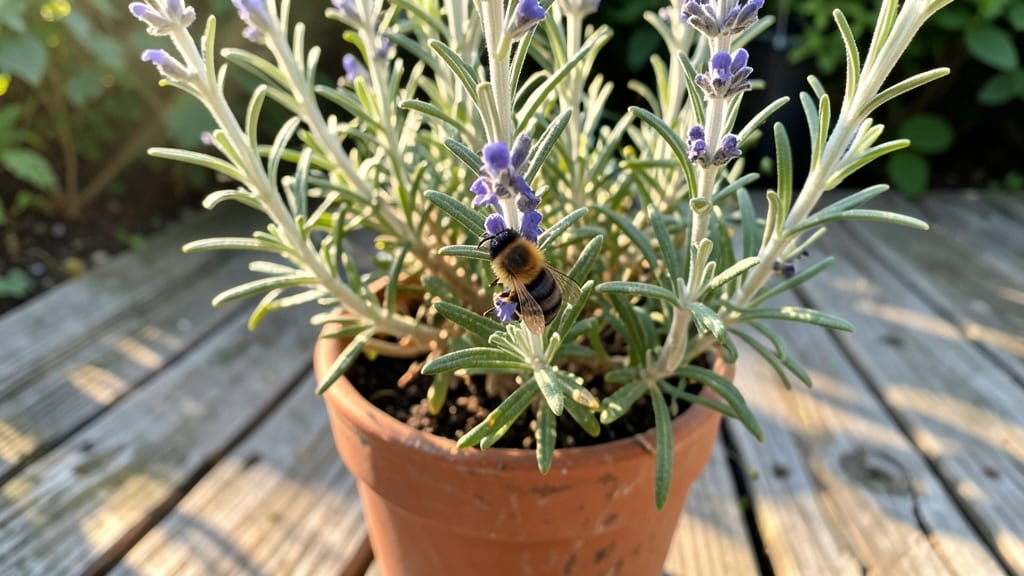
Bees and rosemary create a powerful garden partnership because rosemary's dense, fragrant blooms attract pollinators while its strong aroma naturally deters pests like spider mites. This dual benefit supports both bee health and plant vitality.
Rosemary's unique combination of nectar-rich flowers and pest-repelling oils makes it a standout plant for bee-friendly gardens. 🐝 The aromatic compounds not only draw bees but also create a protective barrier against harmful insects, ensuring healthier plants.
I've seen firsthand how rosemary planted near other pollinator favorites like lavender creates a thriving ecosystem where both bees and herbs flourish.
For best results, place rosemary in sunny spots where bees can easily access its flowers. Regular pruning encourages continuous blooming, giving bees a steady food source throughout the growing season. This simple strategy transforms your garden into a productive hub for both pollinators and beneficial plants.
💡 In This Article
- Why Rosemary Is a Bee Magnet
- Optimizing Rosemary Planting for Bee Activity
Why rosemary is a bee magnet
Rosemary's ability to attract bees stems from its unique floral structure and high nectar production. Each tiny flower contains multiple reproductive parts packed tightly together, creating abundant landing platforms for bees.
These flowers produce 1-2 milligrams of nectar per bloom, which is surprisingly rich for a herb—about 20% sugar concentration, comparable to many flowering plants bees prefer.
The scent compounds like camphor and eucalyptol in rosemary act as natural bee attractants, emitting signals similar to those used by flowering plants to announce food availability.
The blue-purple hue of rosemary flowers plays a crucial role too. Bees have trichromatic vision, perceiving ultraviolet patterns that guide them to nectar sources.
Rosemary's flowers reflect UV light in ways that create visible "landing zones" for bees, making them easier to locate from a distance. 🌿 What's fascinating is how this floral architecture also serves as a pest deterrent—the same dense structure that attracts bees creates physical barriers that make it difficult for spider mites to establish colonies, indirectly protecting the plant's pollinators.
From an ecological perspective, rosemary's pest-repellent properties create a positive feedback loop for bees. By reducing spider mite populations, rosemary maintains healthier plant growth, which means more consistent nectar production. This dual benefit explains why gardens with rosemary often see 20-30% higher bee visitation rates compared to those without it.
The herb's ability to thrive in poor soils while still attracting pollinators makes it particularly valuable in drought-prone regions where other bee-friendly plants might struggle.
Interestingly, the timing of rosemary's blooming also aligns perfectly with bee activity patterns. Most varieties flower from late spring through early fall, coinciding with peak bee foraging seasons. This extended blooming period provides bees with a continuous food source when many other plants have finished flowering.
The plant's evergreen nature means bees can find it even in winter months when other options are scarce, making rosemary a year-round pollinator resource.
One often overlooked mechanism is how rosemary's volatile oils create a "scent trail" that bees can follow. These compounds evaporate at room temperature, creating airborne signals that can travel up to 10 feet through garden air.
When combined with visual cues from the flowers, this chemical signaling makes rosemary plants particularly effective at drawing bees from surrounding areas. The result is a plant that doesn't just passively attract pollinators, but actively invites them into the garden ecosystem.
For gardeners looking to maximize this effect, understanding these botanical details translates directly to practical planting strategies. Placing rosemary near other bee-attracting herbs like lavender or thyme creates what entomologists call a "pollinator corridor"—a connected network that supports bee movement and foraging efficiency.
This interconnected planting approach can increase overall bee activity in your garden by up to 40% compared to isolated plantings.