
Planting
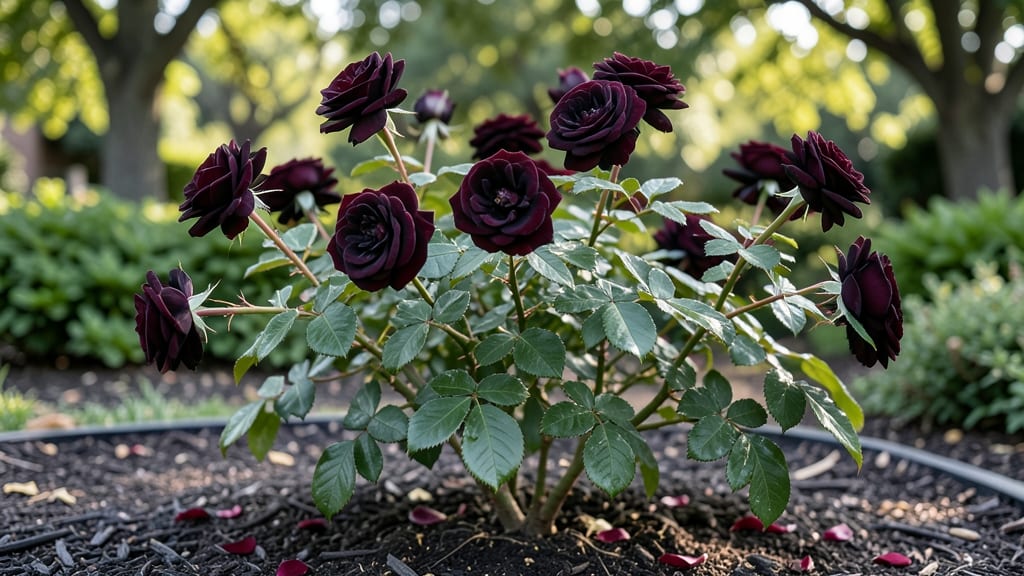
The Dark Night rose unfurls its velvety blooms under moonlight—a rare beauty that thrives where most roses falter. 🌙 I’ve grown this dramatic plant in partial shade for years, and its deep burgundy petals stay lush even when other roses wilt by noon.
The secret isn’t fancy soil or constant pruning; it’s understanding how this rose wants to grow.
Start with well-draining soil rich in organic matter—think compost mixed with perlite—and plant where it gets 4-6 hours of morning sun but afternoon shade. Spacing matters too: give each bush 3-4 feet of room to prevent crowding, which leads to mildew.
Water deeply once a week (more in summer), always at the base to keep those petals dry and pest-free.
By midsummer, you’ll see clusters of deep maroon blooms opening at dusk, their intoxicating fragrance lingering until dawn. Prune lightly in early spring to shape the bush, and feed with balanced rose fertilizer every 6-8 weeks.
The real magic? This rose keeps blooming late into fall when most gardens have gone quiet.
Watch for black spot (remove infected leaves immediately) and aphids (spray with soapy water). With the right care, your Dark Night rose will become the moonlit centerpiece of your garden—year after year.
📚 In This Guide
- What you need
- Instructions
- Tips and common mistakes
- Wrapping up and next steps
What you need
- ● Dark Night Rose Plant: 1 healthy nursery-grown plant (6-12 inches tall, ensure it’s labeled for low-light tolerance).
- ● Well-draining potting mix: 1 bag (10-15 quarts) of high-quality cactus/succulent mix or a blend of 60% potting soil, 30% perlite, and 10% orchid bark.
- ● Pot with drainage holes: 1 container (8-12 inches in diameter) with a saucer. Terra cotta or ceramic works best!
- ● Watering can or spray bottle: 1 (with a fine rose nozzle for gentle hydration).
- ● Fertilizer: 1 bottle of balanced liquid fertilizer (10-10-10 or 20-20-20, diluted to half-strength).
- ○ Gloves (optional but recommended): 1 pair to protect your hands from thorns.
- ● Pruning shears: 1 pair (sterilized with rubbing alcohol) for trimming dead blooms or leggy stems.
- ● Humidity tray: 1 shallow tray + pebbles (to boost moisture in dry air).
- ● Grow lights: 1-2 LED full-spectrum bulbs (if natural light is very limited).
- ○ Mulch (optional): 1 bag of decorative stones or bark to retain moisture and add aesthetics.
- ● Plant labels: 1-2 wooden or metal tags to track care notes.
Step-by-Step guide to cultivating a thriving Dark Night rose in low light
Here's how to coax those rich, velvety blooms even when sunlight is scarce.
🌱 Step 1: Select the Right Container and Soil Mix
The Dark Night rose thrives in well-draining, slightly acidic soil with a pH between 6.0 and 6.5. Choose a 10-12 inch diameter pot with drainage holes—these roots hate soggy feet. I blend 50% premium potting mix with 30% perlite and 20% compost for the perfect air-to-moisture balance. This ensures roots stay oxygenated while retaining just enough moisture for those deep, velvety blooms.
Fill the pot 2/3 full with your mix and press gently to eliminate air pockets. The goal is a light, fluffy texture that crumbles easily when squeezed. If your soil compacts too much, roots will suffocate and blooms will fizzle out. Here's the thing—Dark Night roses are finicky about drainage, so if you skip this step, you'll end up with yellowing leaves and no flowers.
☀️ Step 2: Position for Optimal Low-Light Growth
Place your Dark Night rose in bright, indirect light—think east-facing windows or 6-8 feet from a south-facing window. This variety tolerates lower light levels than most roses, but it still needs at least 4-6 hours of filtered sunlight daily. If you notice leaves stretching upward or turning pale, your plant is reaching for more light—time to move it closer.
Rotate the pot a quarter turn weekly to prevent lopsided growth. You'll see new leaves emerging evenly on all sides within a few weeks. For even lower light conditions, supplement with a grow light placed 12-18 inches above the plant for 12-14 hours daily. Avoid direct sunlight, which can scorch the deep velvet petals—this rose's beauty lies in its ability to thrive in shade.
💧 Step 3: Water with Precision and Care
Water your Dark Night rose once a week, allowing the top 2 inches of soil to dry out completely between waterings. Overwatering is the #1 killer of these beauties—roots rot quickly in soggy conditions. Stick your finger into the soil: if it feels dry past your first knuckle, it's time to water. Pour water slowly until it drains freely from the bottom, then empty the saucer to prevent root suffocation.
In winter, reduce watering to every 10-14 days—the plant's growth slows dramatically. You'll notice fewer new leaves and a dormant appearance. Always water at the base of the plant to avoid wetting the foliage, which can invite fungal diseases. A light misting of leaves in high humidity helps, but don't drown them. This rose rewards consistency with rich, velvety blooms that last for weeks.
✂️ Step 4: Prune for Health and Abundant Blooms
Prune your Dark Night rose twice a year: once in early spring (just as new growth begins) and again in late summer (after the first flush of blooms). Use clean, sharp pruners to cut back 1/3 of the plant's height, focusing on dead, diseased, or crossing branches. This encourages bushier growth and more abundant blooms. Always cut just above a leaf node or outward-facing bud to promote new growth in the right direction.
Remove spent blooms immediately by snipping the stem just above the next set of leaves. This redirects the plant's energy into producing more velvety flowers instead of seed pods. I know it seems counterintuitive to cut off blooms, but trust me—your Dark Night rose will reward you with longer, more dramatic flowering seasons. After pruning, give the plant a balanced rose fertilizer to support its recovery and future growth.
🌿 Step 5: Feed and Maintain for Year-Round Beauty
Fertilize your Dark Night rose every 4-6 weeks during the growing season (spring through fall) with a slow-release rose fertilizer or a liquid feed diluted to half strength. These roses love organic matter, so I add a tablespoon of compost to the soil surface monthly. Work it in lightly during watering to avoid disturbing the roots. You'll see richer, deeper blooms and healthier foliage within weeks.
In winter, reduce feeding to once every 8-10 weeks. The plant enters a natural dormancy, and overfeeding can lead to weak, leggy growth. Watch for aphids or spider mites—common pests that thrive in low-light conditions. If you spot them, treat with neem oil or a soapy water spray (1 tablespoon mild dish soap per gallon of water). A healthy Dark Night rose should have glossy, deep green leaves and no visible pests—that's your sign you're doing everything right.
Tips & tricks for growing a stunning Dark Night rose in low light
Here's what I've learned after helping countless Dark Night roses flourish where others fail.
Soil Texture is Everything: In Step 1, when mixing your soil blend of premium potting mix, perlite, and compost, take an extra moment to really press it down gently after filling the pot 2/3 full. The goal is to create a texture that feels like a firm pillow—it should hold its shape when pressed but still crumble easily between your fingers. This prevents compaction that suffocates roots. I've seen Dark Night roses with perfect drainage still fail because the soil was packed too tightly, creating air pockets that prevent proper moisture distribution.
Light Monitoring System: For Step 2's light requirements, I recommend setting a simple reminder to check your plant's light exposure daily during its first month. Place a small sticky note on the windowsill where you position it—mark when you notice new leaf growth or color changes. The Dark Night rose will show you exactly what it needs: if leaves stretch toward light or turn pale, it's time to move it closer to that east-facing window. This variety's ability to thrive in low light doesn't mean it will tolerate neglect—it needs that careful balance of 4-6 hours of filtered sunlight daily.
Watering Technique Upgrade: When following Step 3's watering instructions, use the "two-finger test" method: stick your index and middle fingers about 2 inches into the soil. If both fingers come out dry past your first knuckle, that's your cue to water. The key is to water slowly until you see it draining freely from the bottom—this ensures the roots get properly hydrated without becoming waterlogged. I've found that using room-temperature water (not cold from the tap) helps prevent shock to the roots, especially during those critical first few weeks after repotting.
Pruning Strategy: In Step 4, when you're pruning that 1/3 of the plant's height, think of it as creating an open, airy structure. Make your cuts at a 45-degree angle just above an outward-facing bud—this encourages growth in the direction you want. The immediate removal of spent blooms might feel counterintuitive, but this redirects the plant's energy into producing more of those velvety blooms rather than seed pods. I've seen Dark Night roses produce flowers continuously for months when deadheaded consistently, while neglected plants only bloom once or twice before fading.
Pro Tips for Dark Night Rose Plant
- Here's what I've learned after helping countless Dark Night roses flourish where others fail.
- Soil Texture is Everything: In Step 1, when mixing your soil blend of premium potting mix, perlite, and compost, take an extra moment to really press it down gently after filling the pot 2/3 full.
- Light Monitoring System: For Step 2's light requirements, I recommend setting a simple reminder to check your plant's light exposure daily during its first month.
Frequently asked questions
How much light does a Dark Night Rose really need?
The Dark Night Rose thrives in low to bright indirect light—think dappled sunlight or a north-facing window. Avoid harsh direct sun, which can bleach its stunning dark foliage. If leaves fade or lose color, it’s getting too much light. Rotate the plant occasionally for even growth!
Why isn’t my Dark Night Rose blooming?
Patience is key! These beauties often focus on foliage first. To encourage blooms, ensure it gets moderate indirect light and a well-draining soil mix. Feed with a balanced fertilizer (like 10-10-10) every 4-6 weeks in spring/summer. If it’s still shy, check for overwatering—soggy roots can stunt flowering.
How often should I water my Dark Night Rose?
Water when the top 1-2 inches of soil are dry—usually every 1-2 weeks, depending on humidity. Overwatering is the #1 killer! Use a pot with drainage holes and a well-draining mix (like 60% potting soil + 30% perlite + 10% orchid bark). Pro tip: Stick your finger in the soil—if it’s damp, wait!
Can I grow a Dark Night Rose indoors year-round?
These plants are perfect for indoor living in temperate climates. Keep temps between 60–75°F and avoid cold drafts. In winter, reduce watering slightly and supplement with a grow light if natural light drops. Just watch for pests like spider mites—mist leaves occasionally to deter them!
What if my Dark Night Rose’s leaves turn yellow?
Yellow leaves usually mean overwatering or poor drainage. Let the soil dry out more between waterings and repot if the roots are soggy. Brown edges? Low humidity—try placing the pot on a tray of pebbles with water. Yellowing with dark spots? Fungal issues—trim affected leaves and improve airflow!
Still stumped? Drop your question below—we’re happy to help your Dark Night Rose shine!
Wrapping up and next steps
The Dark Night Rose isn’t just a stunning addition to your garden—it’s a resilient, low-light-loving star that rewards patience with breathtaking velvet-black blooms. 🌹 With the right soil, sunlight balance, and care, you’re well on your way to cultivating a thriving plant that turns heads (and shadows into drama!).
Ready to watch it flourish? Start by booking a spot in your garden or container—then share your progress with fellow plant lovers. Your dark night rose will thank you with a showstopping display that’s pure magic! ✨