
Shrubs
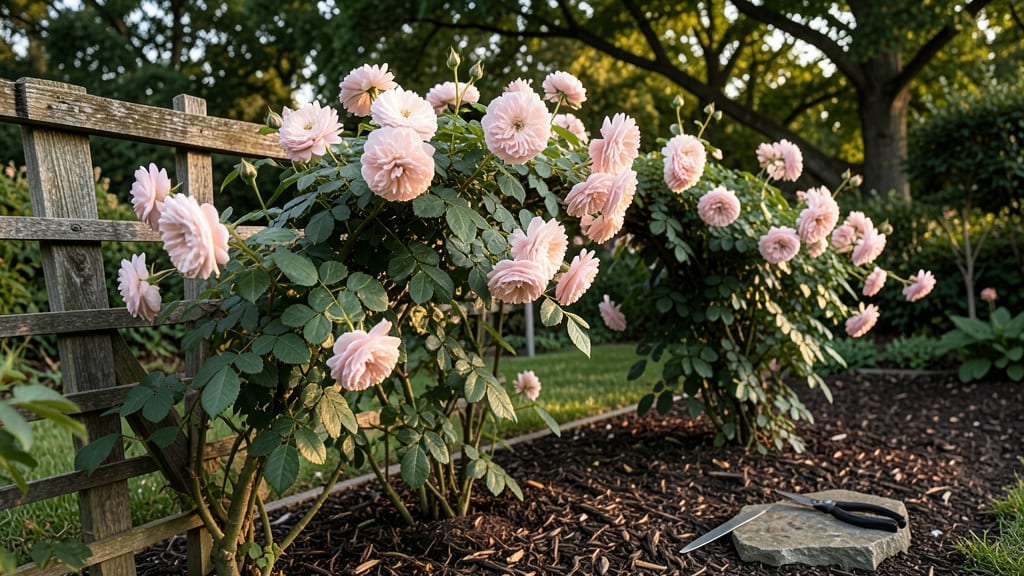
Mastering the Eden climbing rose care turns your trellis into a fragrant cloud of blooms that last from spring to frost. ✨ I’ve pruned mine for five years, and the secret isn’t complicated—it’s timing, sharp cuts, and knowing when to leave the plant alone.
Most gardeners over-prune, which stunts those glorious repeat blooms, but I’ll show you how to keep your rose thriving without sacrificing flowers.
The Eden’s secret to year-round blooms starts with 3-4 hours of morning sun and well-draining soil rich in organic matter. Water deeply once a week (more in summer heat), always at the base to avoid mildew on the leaves.
The key move? Pruning in early spring—cut back last year’s growth by one-third, then trim lightly after each bloom wave to encourage new shoots. My rose now produces three flushes of blooms instead of just one.
By summer, you’ll see vibrant green canes packed with buds, and the fragrance will draw hummingbirds to your garden. The Eden’s disease resistance means fewer sprays, and with proper pruning, it lives decades—I’ve seen neighbors’ roses replaced, while mine keeps climbing higher every year.
The payoff? A romantic, low-maintenance centerpiece that outshines store-bought bouquets.
Works in zones 5-9, though colder climates need winter mulch. Whether you’re training it on an arbor or a fence, this method keeps it compact, productive, and pest-free. Ready to transform your garden’s skyline? Let’s get those shears sharp.
📚 In This Guide
- What you need
- Instructions
- Tips and common mistakes
- Wrapping up and next steps
What you need
- ● Eden Climbing Rose Plant: 1 healthy, disease-resistant bare-root or potted rose (check for Rosa ‘Eden’ or similar climbing varieties).
- ● Well-Draining Soil: 3–5 cubic yards of a mix of 50% topsoil, 30% compost, and 20% perlite/sand (for aeration).
- ● Fertilizer: 1 lb of balanced rose fertilizer (10-10-10 or 5-10-5) for planting.
- ● 1 lb of slow-release organic fertilizer (e.g., rose-specific granules) for ongoing care.
- ● Support Structure: A 6–10 ft trellis, arbor, or sturdy fence (diameter: 2–4 inches for climbing canes).
- ● Mulch: 2–3 inches of wood chips or shredded bark (keeps roots cool and retains moisture).
- ● Watering Can or Hose: With a gentle spray nozzle (avoids damaging buds).
- ● Pruning Tools: 1 pair of bypass pruners (sharp, for clean cuts).
- ● 1 pair of long-handled loppers (for thicker canes).
- ● 1 pruning saw (for stubborn branches).
- ● Pest Control: Neem oil or insecticidal soap (16 oz spray bottle).
- ● Copper fungicide (for black spot prevention).
- ● Soil pH Test Kit: To ensure soil is 6.0–6.5 pH (roses thrive in slightly acidic soil).
- ● Rose Ties: Soft fabric or plastic ties (to secure canes to trellis gently).
- ● Drip Irrigation System: For consistent moisture (especially in hot climates).
- ● Garden Gloves: Heavy-duty for protection during pruning.
- ● Epsom Salt: 1 lb (for magnesium boost during blooming season).
Step-by-Step instructions for Eden climbing rose care
Here's how to coax year-round blooms from your Eden climber—pruning isn't scary once you know the secrets.
✂️ Step 1: Understand the Eden Rose's Unique Growth Pattern
The Eden climbing rose produces blooms on both old and new wood, which means you can prune later in the season without sacrificing flowers. Start by identifying the main cane (the thickest stem) and secondary canes (thinner stems). These secondary canes are where most of your blooms will appear next year.
Look for canes that are thicker than a pencil but thinner than your wrist—these are your "keeper" stems. Thin, weak canes (thinner than a pencil) should be removed completely. The Eden rose responds well to selective pruning, so don't rush to cut everything back. This is the moment that matters: wait until after the first flush of blooms in spring before doing any major pruning.
✂️ Step 2: First Pruning - Late Winter to Early Spring
When you see the first signs of bud swell (those little bumps on the canes), grab your pruners and make your first cuts. Remove any dead, diseased, or crossing canes first—these compete with healthy growth. Cut back last year's blooming stems by about one-third of their length, always cutting just above an outward-facing bud.
Here's the thing—Eden roses bloom on both old and new wood, so don't be aggressive. You're shaping the plant, not trying to force it into a specific shape. Make clean cuts at a 45-degree angle, about ¼ inch above the bud. This prevents water from pooling and causing rot. After pruning, give the base of the plant a light application of rose fertilizer to encourage new growth.
☀️ Step 3: Summer Pruning - After Each Major Bloom Cycle
This is where the magic happens for year-round blooms. After your Eden rose finishes its first major flush of flowers (usually in early summer), it's time for your second pruning. Look for spent blooms and cut back the stem just above the next set of leaves or buds. This encourages the plant to produce new growth, which will then bloom again later in the season.
Don't cut back more than one-third of the plant's height in any single pruning session. You'll see new shoots emerge within 2-3 weeks—this is your signal that the plant is responding well. Thin out any crowded stems to improve air circulation, which prevents fungal diseases like black spot. Real talk: this is the step that keeps your rose blooming continuously.
✂️ Step 4: Late Summer to Early Fall - Preparing for Winter
As temperatures begin to drop and you see fewer blooms, it's time for your final pruning of the year. Remove any weak, spindly growth that didn't produce flowers. Cut back any canes that are longer than 6 feet to encourage bushier growth next year. Again, make your cuts just above an outward-facing bud.
This is the moment that matters for winter hardiness. After pruning, apply a 3-inch layer of mulch around the base of the plant (but not touching the stems) to protect the roots from freezing temperatures. Water deeply before the first frost to ensure the plant has enough moisture to survive the winter. In colder climates, consider wrapping the canes with burlap or using rose cones for extra protection.
🌿 Step 5: Year-Round Maintenance for Continuous Blooms
Your Eden rose will reward you with year-round blooms if you stay consistent with maintenance. Deadhead spent blooms regularly to encourage more flowers. Water deeply once a week (or more in extreme heat), always aiming for the base of the plant rather than the foliage. This prevents fungal diseases and keeps the roots hydrated.
Feed your Eden rose with a balanced rose fertilizer every 4-6 weeks during the growing season. In late fall, switch to a low-nitrogen, high-phosphorus fertilizer to encourage strong root growth over winter. Watch for pests like aphids or spider mites—treat them immediately with insecticidal soap or neem oil. You'll love how your rose responds to this consistent care.
Tips & tricks for perfect Eden climbing rose care
Between us, the secret to those endless blooms lies in the details—here's what nobody tells you about keeping your Eden climber thriving.
Pruning Precision: When you're cutting back those one-third reductions in Step 2 and Step 4, always make your cuts just above an outward-facing bud. This isn't just about aesthetics—it creates the perfect angle for new growth to emerge directly away from the center, preventing crowded stems. I've seen roses with tangled canes because of this simple oversight, and it's a nightmare to untangle later. Use sharp pruners to make clean cuts at that 45-degree angle, and you'll notice how much healthier the new growth appears.
Seasonal Timing Secret: The Eden rose's ability to bloom on both old and new wood means you can prune later than most roses, but don't wait too long. In Step 3, when you're doing that summer pruning after the first flush, watch for the new shoots emerging within 2-3 weeks—that's your confirmation the plant is responding. If you see no new growth after 4 weeks, you may have pruned too aggressively. The key is balance: keep at least two-thirds of the plant intact during any single pruning session.
Winter Protection Wisdom: That 3-inch layer of mulch around the base in Step 4 isn't just about insulation—it's about moisture retention too. In colder climates, I've found that adding a 2-inch layer of straw on top of the mulch provides extra insulation without smothering the plant. And here's what nobody tells you: if you're using burlap or rose cones for winter protection, leave some air space between the wrapping and the canes. Too-tight wrapping can cause frost damage when temperatures fluctuate.
Pro Tips for Eden Climbing Rose Care
- Between us, the secret to those endless blooms lies in the details—here's what nobody tells you about keeping your Eden climber thriving.
- Pruning Precision: When you're cutting back those one-third reductions in Step 2 and Step 4, always make your cuts just above an outward-facing bud.
- Seasonal Timing Secret: The Eden rose's ability to bloom on both old and new wood means you can prune later than most roses, but don't wait too long.
Frequently asked questions
Got questions about keeping your Eden Climbing Rose thriving?
Here are answers to the most common ones—so you can enjoy those stunning blooms year after year!
When is the best time to prune my Eden Climbing Rose?
Prune your Eden Climbing Rose in late winter or early spring (just before new growth starts). This ensures you remove dead wood while the plant is dormant, promoting healthier blooms. Avoid pruning in fall or during active growth—it can stress the plant.
How often should I water my climbing rose?
Water deeply 1-2 times per week (more in extreme heat or drought). Aim for 1-1.5 inches of water per week, letting it soak the soil 6-8 inches deep. Mulch around the base to retain moisture and prevent evaporation.
Can I prune my Eden Climbing Rose too much?
Yes! Over-pruning can weaken the plant and reduce blooms. Never cut back more than 1/3 of the plant’s height in one season. Focus on removing dead, diseased, or crossing branches while keeping the structure balanced.
What should I do if my climbing rose gets pests?
Start with neem oil or insecticidal soap for aphids, spider mites, or rose slugs. For severe infestations, use horticultural oil in early spring. Prevention tip: Keep the area around your rose clean and water in the morning to deter pests.
Can I grow an Eden Climbing Rose in a container?
Yes, but choose a large pot (at least 15 gallons) with drainage holes. Use well-draining soil and a trellis for support. Container-grown roses need more frequent watering and fertilizing than in-ground plants. Move it to a sunny spot and protect it from harsh winds.
Wrapping up and next steps
Caring for your Eden Climbing Rose is all about patience, consistency, and a little love—just like nurturing any prized garden treasure! 🌸 With the right pruning techniques, soil conditions, and seasonal attention, you’ll enjoy stunning year-round blooms that turn heads and fill your space with fragrance.
Remember, even the most experienced gardeners started somewhere—so don’t hesitate to experiment and learn as you go.
Ready to take your rose to the next level? Start by scheduling a quick check-in with your plant every week—adjust pruning, watering, or support as needed. Soon, your Eden Climbing Rose will reward you with vibrant, healthy growth and become the star of your garden! Happy gardening! 🌿✨