
Blooming
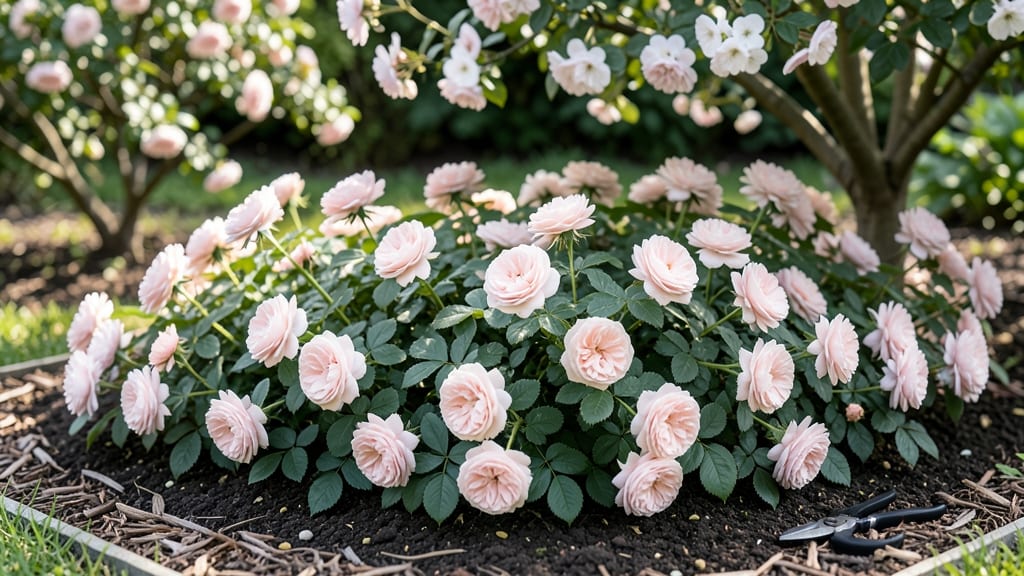
A lush flower carpet of rose apple blossoms and trailing ground covers stitches together my garden’s seasons into one seamless, fragrant masterpiece. create a continuous bloom show from spring through fall.
The magic happens with three key layers: fragrant climbing roses along fences, dwarf apple trees for spring bursts, and creeping thyme or ajuga as the "carpet." Plant roses in drifts of three or more for dramatic effect, while apple blossoms add height and early-season drama.
My garden now stays vibrant even when other plants take a break. You'll end up with a garden that smells like a spring morning—roses release their scent at dusk, while apple blossoms perfume the air in April.
The color shifts beautifully: pink roses fade into white apple blooms, then blend into purple-blue ground cover as summer arrives. Works in small courtyards or large landscapes—just adjust plant sizes. Here's how to make it happen without overcrowding or maintenance headaches.
📚 In This Guide
- What you need
- Instructions
- Tips and common mistakes
- Wrapping up and next steps
What you need
- ● Rose apple plants (Syzygium jambos) – 3-5 mature plants (or 10-15 young saplings for a denser carpet; choose varieties like 'Malay Apple' or 'Java Apple' for vibrant blossoms).
- ● Well-draining soil mix – 50% garden soil + 30% compost + 20% perlite/sand (rose apples thrive in slightly acidic to neutral soil, pH 5.5-7.0).
- ● Organic mulch – 2-3 inches of wood chips or pine straw to retain moisture and suppress weeds.
- ● Slow-release fertilizer – Balanced 10-10-10 or citrus-specific fertilizer (apply sparingly, 2-3 times per year).
- ● Drip irrigation system or soaker hoses – For consistent moisture without overwatering (rose apples love hydration but hate soggy roots!).
- ● Hand trowel or transplanting spade
- ● Garden gloves (to protect from thorns!)
- ● Pruning shears (sterilized with rubbing alcohol)
- ○ pH testing kit (optional but helpful for soil prep)
- ● Stakes or small trellises (if training young plants for a structured look)
- ● Climate suitability: Rose apples flourish in USDA Zones 10-12 (or container-grown in cooler zones with winter protection).
- ● Sunlight: Full sun (6+ hours daily) for optimal blooming.
- ● Spacing: Plant saplings 8-10 feet apart for a lush carpet effect (mature trees can reach 20+ feet!).
- ● Patience: Young plants may take 2-3 years to establish and bloom heavily—worth the wait for that sweet, jasmine-like fragrance! 🌸
How to create a fragrant perennial flower carpet with rose and apple blossoms
This fragrant garden design brings year-round beauty with roses and apple blossoms that thrive together.
🌱 Step 1: Select and Prepare the Planting Site
Choose a location with full sun exposure (6-8 hours daily) and well-draining soil—this is critical for both roses and apple trees, which both hate soggy roots. Test your soil's pH: roses prefer 6.0-6.5 while apple trees thrive at 6.0-7.0. If your soil is heavy clay, amend with 2-3 inches of compost mixed into the top 12 inches of soil.
Mark out a 12-foot diameter circle for your planting area, allowing enough space for mature growth. I like to sketch a rough design first—place the apple tree at the center (it will become the focal point) and arrange rose bushes in a loose ring around it. This creates a natural "carpet" effect where the roses fill in the space between the tree's branches.
🌿 Step 2: Plant the Apple Tree as Your Anchor
Dig a hole twice as wide as the root ball but no deeper—planting too deep suffocates the roots. Gently remove the tree from its container and tease apart any circling roots with your fingers. Position the tree so the graft union (the swollen bump near the base) sits 2-3 inches above soil level—this prevents disease and encourages strong growth.
Backfill with native soil mixed with 5 gallons of compost, tamping lightly as you go. Water deeply to settle the soil, then add a 3-inch layer of mulch (avoid wood chips near the trunk—use straw instead). This protects roots from temperature swings and retains moisture. Stake the tree only if it leans heavily, using a soft tie to avoid girdling the trunk.
🌱 Step 3: Plant Rose Bushes in a Strategic Pattern
Space rose bushes 3-4 feet apart in a loose circle around the apple tree. Dig holes 12 inches wide and deep, then mix the removed soil with 1 cup of bone meal and 1 cup of compost per hole. Place each rose so the graft union sits 1 inch below soil level—this encourages strong root development.
I like to plant climbing roses nearest the tree (they'll weave through branches) and shrub roses toward the outer edge. Water each bush immediately after planting, then add 2 inches of mulch around the base, keeping it 6 inches away from the stem to prevent rot. The mulch will also help suppress weeds, which compete for nutrients.
☀️ Step 4: Establish Watering and Maintenance Routines
Water deeply 2-3 times per week during the first growing season, providing 1-2 gallons per plant each time. You'll know you're doing it right when water drains freely from the bottom of the planting holes—this prevents root rot. After establishment, roses and apple trees are drought-tolerant but will reward you with more blooms if kept consistently moist.
Fertilize in early spring with ½ cup of 10-10-10 fertilizer per rose bush and 1 cup for the apple tree. Avoid high-nitrogen fertilizers—they promote leafy growth at the expense of flowers. Instead, use a balanced formula or organic options like fish emulsion. Prune roses in late winter (before buds swell) to remove dead wood and shape the plant, while apple trees should only be pruned in summer to avoid disease spread.
⏰ Step 5: Layer Seasonal Interest for Year-Round Appeal
To create a true "flower carpet," add companion plants that bloom at different times. In early spring, plant 2-3 dwarf daffodils around the base of each rose—their cheerful blooms appear before the roses wake up. For summer color, tuck in salvia or catmint between roses; these drought-tolerant perennials fill gaps and attract pollinators.
In fall, scatter heuchera or coral bells for their striking foliage, which adds texture when roses go dormant. The apple tree's fall fruit will naturally drop, creating a seasonal display. By winter, the roses' canes and the tree's skeletal branches provide structure, while evergreen ground covers like creeping thyme keep the area lush year-round. This layered approach ensures your "carpet" has something beautiful to offer in every season.
Tips & tricks for perfect flower carpet rose apple blossom designs
Creating a stunning floral display takes thoughtful planning—here’s how to elevate your perennial carpet from good to breathtaking.
Sunlight Strategy: While the instructions call for 6-8 hours of daily sun, I’ve found that morning sun (east-facing) with afternoon shade works beautifully in hotter climates. If your site gets intense afternoon sun, consider adding shade cloth during peak hours—this prevents stress on both roses and apple trees, especially in their first growing season.
Soil Prep Secret: Before amending with compost, I like to add a handful of garden sulfur to the planting holes if my soil tests above 7.0. This helps bring the pH down slightly for roses, which prefer the 6.0-6.5 range. The apple tree will still be happy at 6.0-7.0, but this compromise keeps both plants thriving without constant adjustments later.
Companion Plant Placement: When adding those 2-3 dwarf daffodils around each rose, I space them about 6 inches apart from the rose stems. This gives them room to multiply while still filling gaps between roses. For salvia or catmint, I plant them in clusters of 3-5 near the outer edge of the rose circle—they’ll spread naturally and create a soft, textured border.
Watering Wisdom: The 2-3 times weekly watering routine works perfectly, but I’ve learned to water in the early morning instead of evening. This prevents fungal issues that can develop from prolonged moisture on leaves. If you notice wilting during summer heatwaves, give the apple tree an extra gallon of water—it acts as the anchor and needs consistent moisture to support both its own growth and the surrounding roses.
Pro Tips for Flower Carpet Rose Apple Blossom
- Creating a stunning floral display takes thoughtful planning—here’s how to elevate your perennial carpet from good to breathtaking.
- Sunlight Strategy: While the instructions call for 6-8 hours of daily sun, I’ve found that morning sun (east-facing) with afternoon shade works beautifully in hotter climates.
- Soil Prep Secret: Before amending with compost, I like to add a handful of garden sulfur to the planting holes if my soil tests above 7.0.
Frequently asked questions
Got questions about creating your own flower carpet rose apple blossom display? Here are some of the most common ones—and their answers!
When is the best time to plant rose apple blossoms for a continuous flower carpet?
For year-round blooms, plant in early spring (after the last frost) or late fall (6–8 weeks before frost). Rose apples thrive in warm climates (USDA Zones 9–11), but cold-hardy varieties can be planted in spring only. Space plants 3–5 feet apart for a lush, interconnected carpet effect.
How do I keep rose apple blossoms blooming nonstop?
Prune lightly after each bloom cycle to encourage new growth. Use a balanced fertilizer (10-10-10) every 6–8 weeks and mulch with organic matter to retain moisture. Deadhead spent flowers gently—rose apples are sensitive to aggressive pruning. Pro tip: Plant near a sunny fence or trellis to maximize vertical blooms and create a cascading effect.
Can I mix rose apple blossoms with other flowers for a "carpet" look?
Pair them with creeping thyme, lantana, or dwarf butterfly bush for a low-maintenance, pollinator-friendly carpet. Avoid aggressive spreaders like mint or bamboo, which can overtake rose apples. For contrast, add purple or yellow ground covers (e.g., ajuga or dichondra) to highlight their pink/white blooms.
Why aren’t my rose apple blossoms thriving—are pests the issue?
Common culprits include aphids, scale insects, or whiteflies, which suck sap and weaken plants. Treat with neem oil or insecticidal soap. Yellowing leaves? Check for overwatering or fungal issues—rose apples prefer well-draining soil. Preventative tip: Inspect new plants before transplanting and quarantine them for a week.
Are rose apple blossoms safe for pets or children?
While non-toxic to humans, rose apple (Syzygium malaccense) leaves and seeds contain cyanogenic glycosides in small amounts—harmful if ingested in large quantities. Keep pets (especially dogs) from chewing leaves. For child-friendly alternatives, opt for non-toxic ground covers like sweet potato vine or creeping jenipapo in mixed designs.
Wrapping up and next steps
The flower carpet rose apple blossom isn’t just a garden staple—it’s a fragrant, low-maintenance masterpiece that transforms any space into a living tapestry of color and scent.
Whether you’re a seasoned gardener or a curious beginner, this perennial delivers year-round beauty with minimal effort, proving that stunning landscapes don’t require endless upkeep.
Ready to bring this floral magic to life? Start small—plant a single patch, share your progress with fellow gardeners, or even gift cuttings to friends! Every blossom you nurture is a step toward a vibrant, pollinator-friendly paradise. 🌸✨