
Shrubs
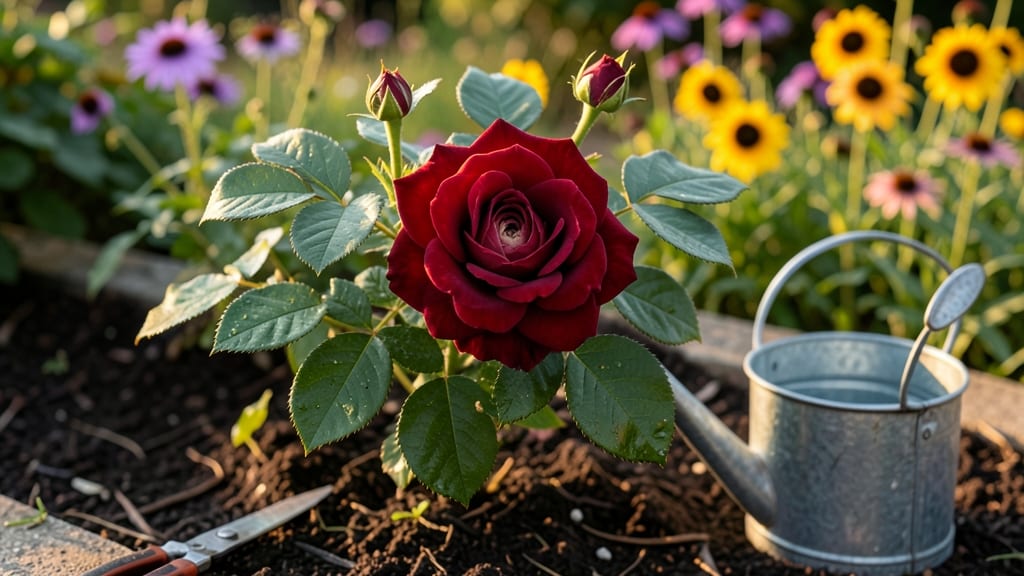
The flower red rose you’ll want in containers is fragrant, hardy, and surprisingly adaptable—like the climbing 'New Dawn' or 'Blaze'—when given the right care. 🌹 I've learned that these varieties aren't just stunning; they thrive in pots with proper attention to soil, sunlight, and pruning. support and attention.
The key difference from other roses? Their compact growth habit and disease resistance make them perfect for small spaces or urban balconies, even in colder climates.
You'll need a 5-gallon container (at least), well-draining potting mix with compost, and a sturdy trellis or cage—nothing fancy. Red roses love 6+ hours of sunlight daily, but they tolerate partial shade better than most varieties.
Watering is the trickiest part: keep soil consistently moist but never soggy, and mulch to retain moisture. That first flush of deep red blooms in early summer is worth every effort.
Pruning in late winter shapes the plant and encourages vigorous growth, while deadheading spent blooms extends the flowering season. The real magic happens in late summer when you'll see new buds forming for a second bloom cycle.
With proper winter protection (like wrapping the pot or moving to a sheltered spot), your container rose will reward you with fragrant blooms for years.
This method works equally well for patio gardens, rooftops, or small yards—no green thumb required. The secret lies in understanding their slightly different needs compared to traditional garden roses. Let's get those roots growing!
📚 In This Guide
- What you need
- Instructions
- Tips and common mistakes
- Wrapping up and next steps
What you need
- ● Red rose bare-root plants or potted roses: Choose disease-resistant varieties like 'Knock Out' or 'Double Delight' for container growing. Quantity: 1–3 plants per container (depending on size).
- ● High-quality potting mix: Use a well-draining blend with perlite or sand (e.g., 50% peat/coir + 30% compost + 20% perlite). Quantity: 1–2 cubic feet per container.
- ● Containers: Select pots with drainage holes, 18–24 inches in diameter for mature roses (or 10–12 inches for dwarf varieties). Material: Terracotta, plastic, or fiberglass.
- ● Slow-release fertilizer: Look for a balanced 10-10-10 or rose-specific formula (e.g., Osmocote). Quantity: 1–2 cups per container.
- ● Organic mulch: Shredded bark or pine straw to retain moisture and regulate soil temperature. Quantity: 2–3 inches.
- ● Garden trowel or transplant spade for digging and planting.
- ● Pruning shears (sterilized with rubbing alcohol) for shaping and deadheading.
- ● pH test kit to ensure soil pH is 6.0–6.5 (roses thrive in slightly acidic soil).
- ● Watering can or hose with adjustable nozzle for gentle hydration.
- ○ Support structure (optional): Cage, trellis, or stake for climbing varieties (e.g., 'New Dawn').
- ● Epsom salt (magnesium sulfate) for occasional foliar feeding (1 tbsp per gallon of water).
- ● Sunlight: 6–8+ hours of direct sun daily (containers need full sun for optimal blooms!).
- ● Hardiness zone: Most red roses thrive in zones 5–10; container-growing extends flexibility for cooler climates.
- ● Wind protection: Place containers in a sheltered spot to prevent drying.
Step-by-step guide to growing fragrant red roses in containers
Here's how I grow lush, fragrant red roses in pots—no garden bed required.
🪴 Step 1: Select the Right Container and Soil Mix
Choose a container at least 18 inches deep with drainage holes—red roses need room for roots to spread. I use a 20-gallon fabric grow bag for airflow and stability. Fill the bottom third with gravel or broken pottery to prevent root rot from water pooling.
For soil, blend 60% high-quality potting mix with 30% compost and 10% perlite. This mix drains well but retains moisture—critical for container roses. Avoid garden soil; it compacts and suffocates roots. Moisten the mix before planting so water soaks in evenly.
🌱 Step 2: Plant Bare-Root Roses at the Correct Depth
Soak bare-root roses in water for 4-6 hours before planting to revive dormant roots. Remove any dead or mushy roots with clean pruners. Dig a hole twice as wide as the root ball and place the rose so the graft union (a slight bump near the base) sits 2 inches below soil level.
Spread roots outward gently and backfill with soil, pressing lightly to eliminate air pockets. The top of the root ball should sit 1 inch below the container rim. Water deeply until it drains from the bottom hole—this settles the soil and removes air gaps. Mulch with 2 inches of pine bark to conserve moisture.
☀️ Step 3: Provide Full Sun and Consistent Watering
Red roses thrive in 6+ hours of direct sun daily. Place containers on a south-facing patio or balcony. If shade is unavoidable, supplement with a grow light for 12 hours/day. Leggy growth or pale leaves mean more light is needed—move the plant closer to the sun.
Water when the top 2 inches of soil feel dry. In summer, this may mean daily watering; in winter, reduce to every 5-7 days. Always water at the base to avoid wetting leaves, which invites fungal diseases. Use a drip irrigation system for steady moisture without overwatering.
✂️ Step 4: Prune and Fertilize for Year-Round Blooms
Prune in early spring to remove dead wood and shape the plant. Cut back 1/3 of the oldest canes to encourage new growth. Make cuts just above an outward-facing bud at a 45-degree angle. Deadhead spent blooms regularly to redirect energy to new flowers.
Fertilize every 4-6 weeks with a balanced rose fertilizer (10-10-10). In summer, switch to a high-phosphorus formula (5-10-5) to boost blooming. Apply fertilizer only when soil is moist to prevent root burn. Stop fertilizing in fall to let the plant harden off for winter.
⏰ Step 5: Protect from Extreme Weather and Pests
Move containers to a sheltered spot during hard frosts or high winds. Wrap the pot in burlap and cover with a frost blanket if temperatures drop below 20°F. In summer, shade cloth (30-50%) prevents leaf scorch from intense afternoon sun.
Watch for aphids or spider mites on new growth. Spray with neem oil or insecticidal soap at the first sign of pests. Avoid chemical sprays—they can harm beneficial insects and leave residues on edible flowers (yes, roses are edible!). Healthy plants resist pests better, so prioritize proper watering and pruning.
Tips & tricks for thriving container-grown red roses
Container roses reward precision—here’s how to avoid common pitfalls and maximize fragrance and bloom.
Container Size Matters: While 18 inches is the minimum, I’ve found that 20-gallon containers (like my fabric grow bags) give roots more room to establish before summer heat stress sets in. If using smaller pots, upgrade to 24 inches deep—shallow roots can’t support heavy blooms. For multiple roses, space containers 18-24 inches apart to prevent root competition and improve airflow between plants.
Soil Mix Secrets: The 60-30-10 ratio of potting mix, compost, and perlite is non-negotiable, but here’s what I’ve learned: Sterilize your potting mix by baking it at 200°F for 30 minutes before mixing to kill fungal spores lurking in store-bought bags. For extra drainage, replace the 10% perlite with hydroponic clay pebbles—they break down less over time and prevent compaction better. Test your mix’s moisture retention by squeezing a handful: it should hold shape but not drip water.
Planting Depth Precision: That 2-inch graft union depth isn’t arbitrary—it’s where the rose’s hardiness meets its delicate upper growth. To mark it, wrap a rubber band around the stem at the graft before planting. After backfilling, press soil firmly around roots to eliminate air pockets (I use my fingers to gently massage the soil). Pro tip: If your container has wheels, add two 1-gallon water jugs to the bottom—this stabilizes the pot while adding 20% more rooting volume without extra weight.
Winter Hardening Strategy: When temps drop below 20°F, I move my roses to an unheated garage wrapped in burlap and frost blanket, but here’s the game-changer: Place a thermometer inside the wrap to monitor internal temps. If it rises above 35°F during the day, the plant sweats and risks fungal rot. For extra insulation, fill empty plastic milk jugs with water and nestle them against the pot—they absorb daytime heat and release it slowly at night.
Pro Tips for Flower Red Rose
- Container roses reward precision—here’s how to avoid common pitfalls and maximize fragrance and bloom.
- Container Size Matters: While 18 inches is the minimum, I’ve found that 20-gallon containers (like my fabric grow bags) give roots more room to establish before summer heat stress sets in.
- For extra drainage, replace the 10% perlite with hydroponic clay pebbles—they break down less over time and prevent compaction better.
Frequently asked questions
Got questions about growing your own fragrant red roses? You’re not alone! Here are answers to the most common concerns—from care tips to troubleshooting—to help your climber thrive in containers all year.
How often should I water my red roses in containers?
Water your red roses when the top inch of soil feels dry—usually every 2–3 days in hot weather, but less in cooler months. Containers dry out faster than garden beds, so check soil moisture daily during heatwaves. Pro tip: Use a moisture meter or stick your finger in the soil to avoid over- or under-watering!
When is the best time to prune red roses for maximum blooms?
Prune your red roses in early spring (just before new growth starts) and again after the first flush of blooms in late spring. Remove dead, crossing, or weak stems to encourage airflow and more flowers. Avoid heavy pruning in fall—it can stress the plant before winter.
Can I grow red roses in containers year-round, even in cold climates?
Yes! Move potted red roses to a sheltered spot (like a garage or under eaves) when temps drop below 20°F (-7°C). Use insulating materials like bubble wrap around the pot or a frost blanket. In mild winters, a thick layer of mulch will help protect roots. Pro tip: Choose cold-hardy varieties like ‘Knock Out’ or ‘Dr. Huey’ for extra resilience!
What should I do if my red roses get aphids or black spots?
For aphids, blast them off with water or use insecticidal soap. For black spot fungus, remove infected leaves immediately, improve airflow, and apply a fungicide (like neem oil or copper spray) every 7–10 days. Prevention tip: Water at the base (not leaves) and avoid overhead sprinklers to keep foliage dry!
Are there red rose alternatives that thrive in containers with less maintenance?
If red roses feel high-maintenance, try ‘Cherokee Rose’ (disease-resistant), ‘The Fairy’ (compact and fragrant), or climbing hydrangeas (like ‘Annabelle’). For bold color with minimal fuss, ‘Knock Out’ roses or coral bells (Heuchera) are great substitutes!
Wrapping up and next steps
The red rose isn’t just a symbol of love—it’s a fragrant, resilient climber that can thrive in containers year-round with the right care! 🌹 From choosing the perfect variety to mastering pruning and troubleshooting pests, you now have all the tools to cultivate a stunning, long-lasting rose bush.
Whether you’re a beginner or a seasoned gardener, the key is patience, consistency, and a little creativity.
Ready to watch your red rose bloom into a breathtaking centerpiece? Start by planting your rose today—give it a sunny spot, well-draining soil, and a little extra TLC, and you’ll be rewarded with velvety petals and intoxicating fragrance. Happy gardening! 🌱✨